
Reviewed · SWEDISH LAPLAND TOURS
Abisko: Ice Climbing for All Levels with Certified Guide
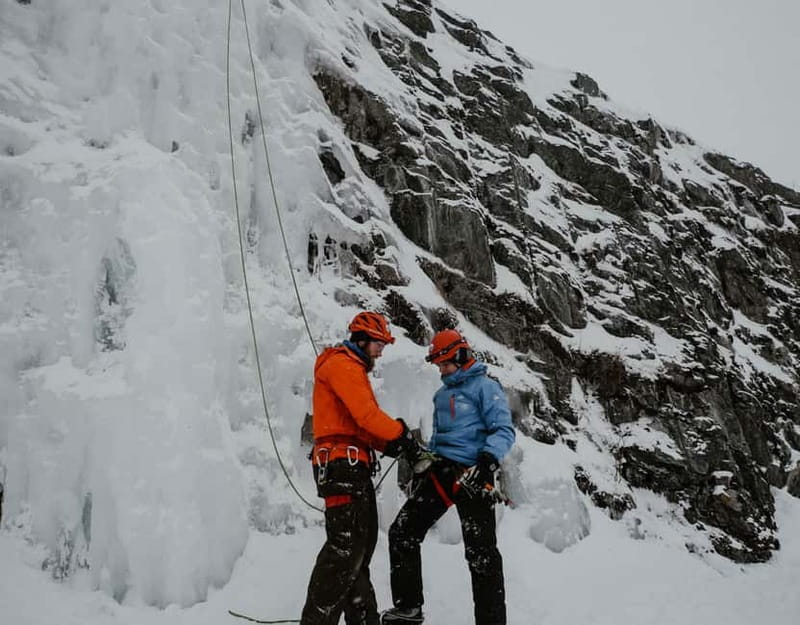
Ice turns a cliff into a playground. This three-hour Abisko adventure lets you learn ice climbing on real frozen walls, with a certified UIAA guide managing the ropes and teaching each move. I like the careful instruction and the short, heated van ride from local hotels. I also like that beginners can climb alongside stronger climbers, since the routes and coaching are adjusted to suit the group.
The main catch is that this remains a physical activity in serious cold. Your forearms may burn, your gloves may get wet, and larger holiday-period groups can mean more waiting between climbs. The icefall location can also vary by season. In early winter, one group climbed close to the road because other areas had not frozen enough.
In This Review
- What Makes This Abisko Climb Worth Your Time
- From Hotel Pickup to the Icefall
- Getting Fitted With Alpine Boots and Crampons
- Your First Vertical Ice Lesson
- Multiple Turns Make the Three Hours Count
- The Guides Create the Right Kind of Confidence
- A Break With Lingonberry Juice and Arctic Views
- Is $121 a Fair Price?
- Who Should Book This Arctic Adventure?
- Six Practical Tips for a Better Climb
- Should You Book Abisko Ice Climbing?
- FAQ
- How long does the Abisko ice-climbing activity last?
- What equipment is included?
- Do I need previous climbing experience?
- Is hotel pickup available?
- What should I bring?
- Can children join the activity?
What Makes This Abisko Climb Worth Your Time
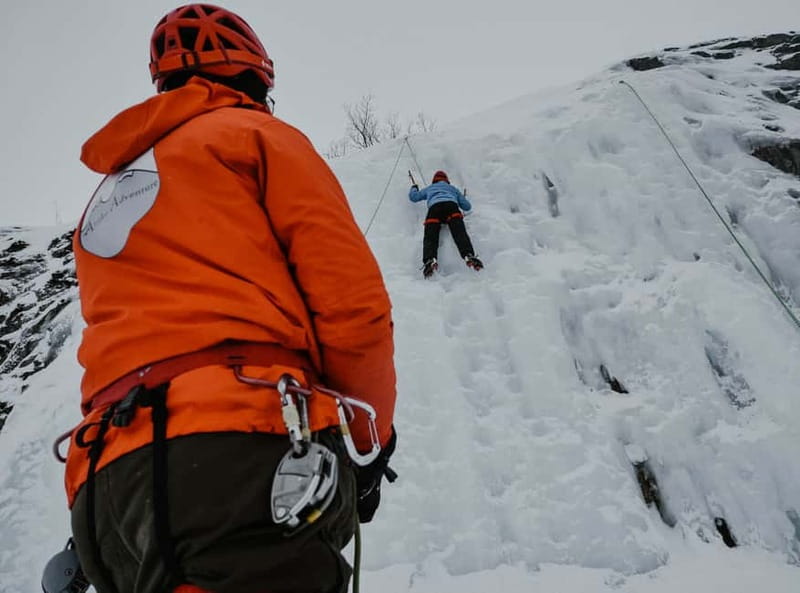
- Three climbing hours after a 10-minute van ride: Most of your booked time is spent at the icefall, not sitting in transport.
- Full technical equipment provided: You receive alpine boots, crampons, a harness, and a helmet.
- Routes for different abilities: First-timers can learn the basics while stronger climbers receive a harder challenge.
- Small groups are a real advantage: More people get multiple attempts when the group size is kept down.
- Patient instruction is the star of the show: Guides including Rebecca, Anne, Sini, Robin, David, Emilia, Anna, and Axel are praised for clear teaching and steady encouragement.
- Warm drinks may appear between climbs: Several participants describe hot lingonberry juice, tea, or fika during the break, sometimes served in a cup you can keep.
From Hotel Pickup to the Icefall
The outing begins at one of the scheduled pickup points in Abisko or Björkliden. Choices include Abisko Mountain Lodge, Abisko Hostel, Abisko Guesthouse, STF Abisko Turiststation, Abisko.net Huskyhostel, Hotell Fjället, Gammelgården Ski Lodge, and Abisko Fjällturer AB.
The timetable matters. For the 9:30 departure, the van leaves Abisko Mountain Lodge and Abisko.net Huskyhostel at 9:30, Abisko Hostel and Abisko Guesthouse at 9:35, STF Abisko Turiststation at 9:40, and Björkliden locations at 9:50. The 14:00 departure follows the same pattern in the afternoon.
You need to be waiting five minutes early. The van stops only at booked pickup points, so do not assume the driver will collect you from a nearby hotel. If you need to change your pickup location, do it at least 24 hours before the start.
The ride to the climbing site takes about 10 minutes. That is just enough time to settle into the heated van and wonder if you have made a terrible decision. You have not. The short transfer keeps the outing efficient and leaves the bulk of the three hours for instruction and climbing.
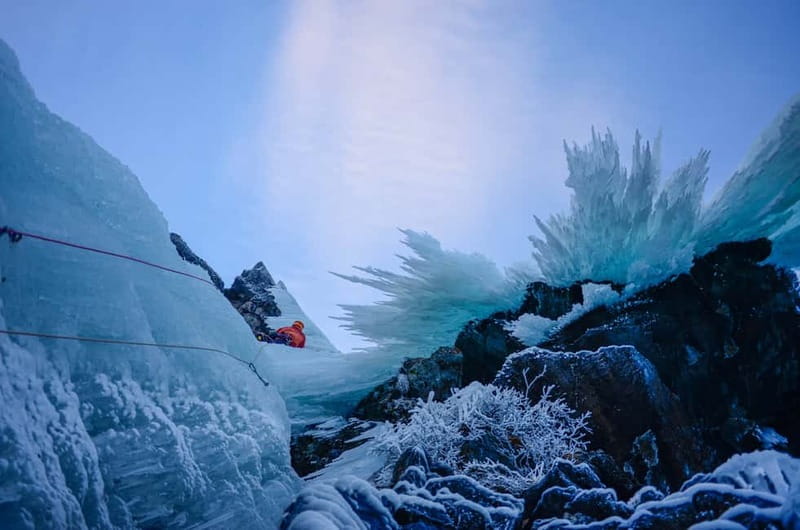
The precise icefall setting can depend on the season. Later winter conditions may allow a more remote-feeling site with several frozen routes. In early winter, the available ice can be closer to the main road. That is less wild, but it is also a practical reminder that this is a natural activity controlled by weather and temperature.
A few more Abisko options to compare
- Abisko: Guided Aurora Chase with Hotel Transfers
★ 4.5 · 311 reviews - Abisko National Park: Scenic Morning Hike with Transfer
★ 4.7 · 172 reviews - Abisko: Aurora Chasing with Snowmobiles
★ 4.6 · 113 reviews
Getting Fitted With Alpine Boots and Crampons
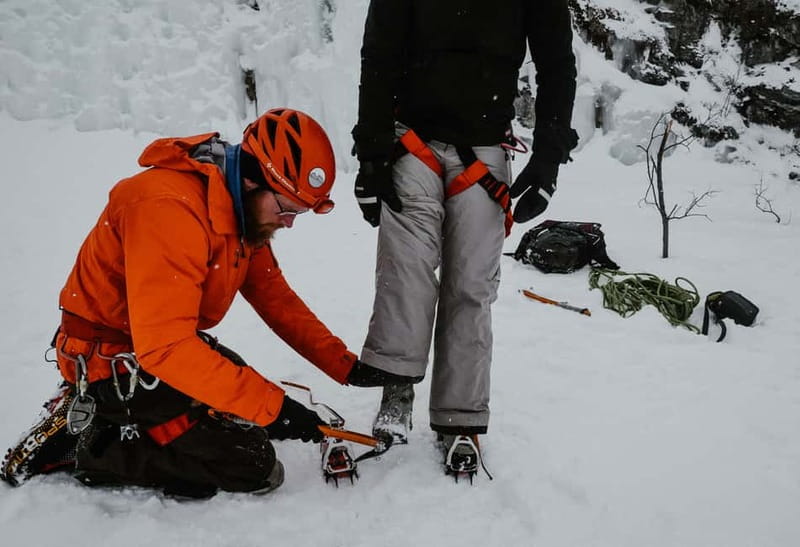
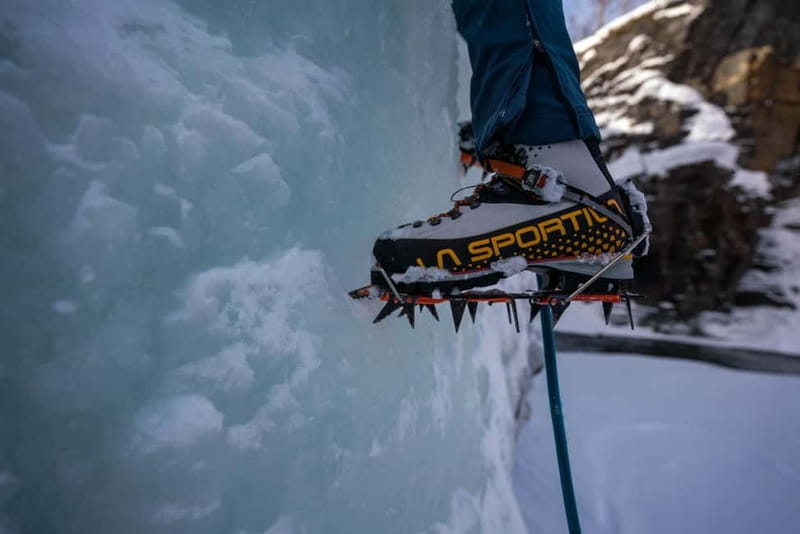
At the climbing site, the guide gets you into the equipment. The package includes alpine boots, crampons, harness, and helmet, so you do not need to rent the technical kit separately.
The boots matter because ordinary winter footwear is not designed to support front-pointing crampons. The crampons give your feet purchase on the ice, while the harness and rope system provide security as you climb. The helmet is essential around a vertical ice wall, where small pieces of ice can fall as the surface is struck.
You must supply your own warm clothing. Bring proper winter layers, insulated outerwear, and gloves that allow you to hold an ice axe. One important practical point comes from a four-star assessment: the supplied gloves were not ideal for gripping the axe. If you have suitable climbing gloves, pack them. Keep a spare pair handy too, since wet gloves can turn a fun session into a cold one.
Alcohol and drugs are not permitted. The activity is also not suitable for children under 10, wheelchair users, people with mobility impairments, people with heart problems, or anyone recovering from recent surgery.
Your First Vertical Ice Lesson
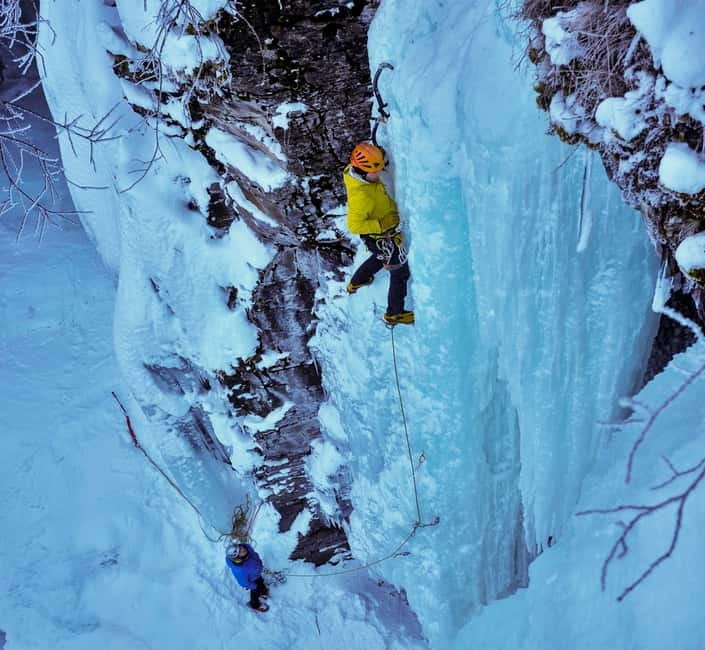
The guide begins with the basic method for moving up ice. You learn how to place your crampons, use the ice axes, position your body, and follow the rope system. The exact lesson will be adapted to your ability, but first-timers should expect a proper briefing rather than a quick safety speech.
That care is one of the strongest reasons to book this activity. Maxine, climbing for the first time, described a detailed introduction followed by coaching during the climb. Martina also praised David for clear explanations, patience, and useful background about ice climbing.
The rope work provides reassurance, but it does not make the climb effortless. You still need to kick your feet into the ice, swing the axes, and keep working upward. Several people described tired forearms after the session. That is normal. Ice climbing looks like a test of arm strength, but good technique matters just as much, and the guides keep reminding you how to improve.
You do not need previous climbing experience. The guides are used to helping people who have never touched an ice axe. At the same time, experienced climbers are not left with a dull beginner route. The available routes can differ in difficulty, and the guide can offer a more demanding line when appropriate.
Multiple Turns Make the Three Hours Count
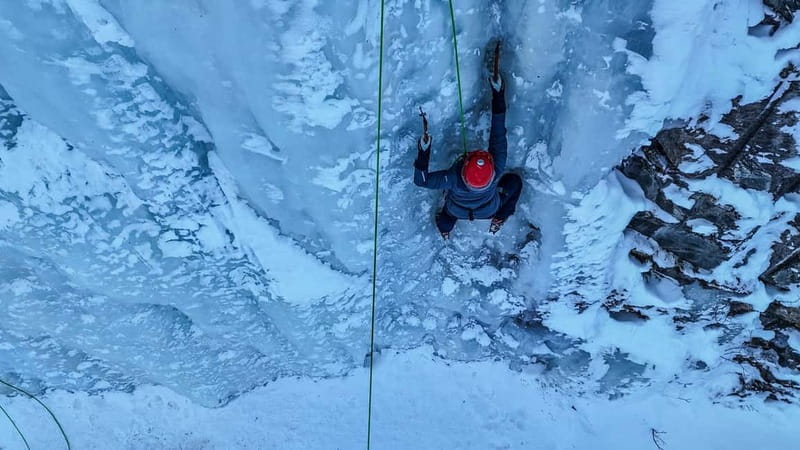
A major benefit of the session is the chance to climb more than once. Many participants completed at least two attempts, and one person climbed three times. With a small group, you spend less time standing around and more time actually practicing.
Your first attempt may feel awkward. The boots are stiff, the crampons feel unfamiliar, and coordinating feet, axes, and rope takes concentration. A second attempt often feels much better because you now understand the rhythm. You can work on technique rather than simply trying not to slide.
The group setup affects the value of the experience. Small groups are included in the booking description, and several accounts praise how often people could climb. A larger New Year group received a less favorable assessment because it created more waiting. If the operator offers different departure dates or group sizes, a quieter period is likely the better choice for active climbing time.
The guides also make space for different energy levels. One participant described being perfectly comfortable skipping a second route after getting tired. That matters. You can challenge yourself without feeling forced to prove anything.
A different sort of day, still within reach:
- Explore the Norwegian Fjords and the Wildlife from Abisko.
★ 4.9 · 109 reviews - Abisko: Guided Autumn Aurora Chase with Hotel Transfers
★ 4.9 · 100 reviews - Abisko: Wilderness Snowshoe Hike
★ 4.8 · 94 reviews - Abisko: National Park Northern Lights Photo Tour
★ 4.6 · 86 reviews
The Guides Create the Right Kind of Confidence
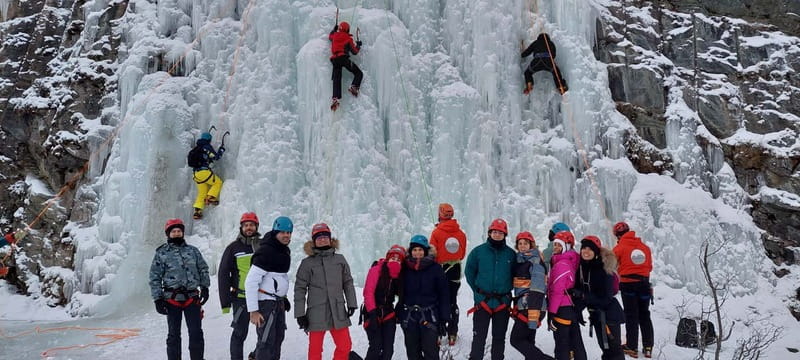
The certified instruction is the backbone of the activity. You are not simply strapped to a rope and pointed toward a wall. The guides watch your movement, give corrections, and encourage you when the climb becomes difficult.
David is praised for being cheerful and supportive. Anna is described as patient, clear, and good at giving each person an appropriate challenge. Robin and Emilia are praised for making the group feel comfortable. Rebecca, Anne, and Sini are credited with professional, helpful instruction. Axel receives special mention for warm drinks, efficient organization, and making first-timers feel secure.
Those names matter because guide quality can make or break an activity like this. Ice climbing has a psychological hurdle as well as a physical one. You may know that the rope is secure and still hesitate before your first swing. Calm coaching helps you focus on the next step rather than the drop below.
The instruction is available in English and Swedish. Guides may vary by date, so you cannot book a specific instructor based on the information provided. Still, the repeated praise for different members of the team suggests consistent training rather than one exceptional guide carrying the whole operation.
A Break With Lingonberry Juice and Arctic Views
The climbing does not need to be nonstop for three hours. Several participants describe a warm break midway through, with tea, hot lingonberry juice, or fika. This is especially welcome when your gloves are damp and your arms are tired.
Fika is a distinctly Swedish pause for coffee or something small to eat, though the exact food and drink included are not formally specified. Do not count on a full meal. Food and drinks are listed as excluded, so bring your own snacks if you need them. The warm drink reported by several people appears to be a thoughtful touch, but it should not replace proper winter clothing.
The setting adds much of the appeal. One person described views toward the Lapporten, the famous mountain gateway near Abisko, while climbing on routes suited to several skill levels. You get the satisfying contrast of technical movement in your hands and wide Arctic scenery around you.
The precise view depends on the climbing site and conditions. If the ice is close to the road early in the season, you may not get the sense of isolation you imagined. Still, the activity remains unusual: you are not watching the frozen north from a warm window. You are standing on crampons and learning to move up ice.
Is $121 a Fair Price?
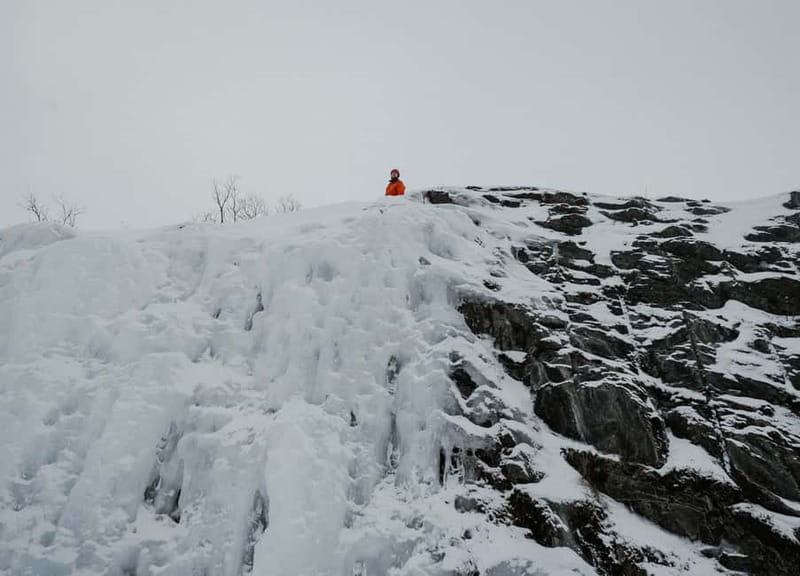
At $121 per person, this is not a cheap way to fill an hour. It is a fair price if you value instruction, transport, and equipment in one package.
The fee includes a certified UIAA guide, alpine boots, crampons, harness, helmet, hotel pickup, hotel drop-off, and a three-hour guided session. Buying or renting that equipment independently would be inconvenient, especially for a one-time introduction. You also avoid arranging transport to an icefall and figuring out a safe rope system yourself.
The value improves when you get multiple climbs. A short first attempt would feel expensive, but two or three turns, route coaching, and a warm break make the outing feel like a proper activity rather than a quick photo stop.
The price is less attractive if you dislike cold-weather exertion or mainly want sightseeing. You will need to provide your own warm clothes, and the physical effort is real. This is an activity purchase, not a passive excursion.
Free cancellation is available up to 24 hours before the start, and you can reserve now and pay later. That flexibility helps if your Abisko plans depend on weather or train connections. Check the available start times when booking, since the duration is three hours and the morning and afternoon departures follow fixed pickup schedules.
Who Should Book This Arctic Adventure?
I would recommend it to adults and children aged 10 or older who want a hands-on Arctic experience. It suits you especially well if you are curious about climbing but have no previous experience. The guides are prepared to explain the equipment from the beginning, and the rope system lets you attempt a genuine ice wall in a controlled setting.
It also works for mixed-ability couples and families. One family with a 10-year-old child reported that everyone enjoyed the experience. Another family included a 55-year-old parent and an 11-year-old child, both of whom managed their first climb with help from the instructor.
You should have enough mobility to put on technical gear, stand in crampons, and climb a vertical ice face. The activity is not suitable for wheelchair users or people with mobility limitations. People with heart problems or recent surgery should not book it.
If your main goal is a demanding athletic session, you may want to ask about the group size and route options before booking. If you want a first taste of ice climbing with a guide who can adjust the challenge, the format is a strong fit.
Six Practical Tips for a Better Climb
- Bring gloves that grip: Ice axes are easier to control with suitable climbing gloves. Pack a dry spare pair.
- Wear warm layers: Warm clothing is not included, and you will spend time standing still while another person climbs.
- Arrive five minutes early: The van follows a strict schedule and stops only at booked points.
- Expect tired forearms: The activity is fun, but repeated axe swings and pulling can leave your arms sore.
- Use the first climb as practice: Do not judge your ability by the opening attempt. The equipment feels strange at first.
- Bring a snack: Food and drinks are not included, even though warm drinks or fika may be offered during some sessions.
Should You Book Abisko Ice Climbing?
Book it if you want to do something active, unusual, and distinctly northern. The strongest part is not simply reaching the top. It is learning a new skill under a guide who can keep a mixed group safe, involved, and moving at its own pace.
I especially like the combination of short transport, supplied equipment, certified instruction, and several chances to climb. The repeated praise for guides such as Anna, David, Rebecca, Robin, Emilia, and Axel gives the experience a reassuring human side.
Skip it if you want a quiet sightseeing tour, have mobility or heart concerns, or dislike cold and strenuous activity. Also keep seasonal conditions in mind: early winter may place the climb near the road, while later freezing conditions can offer more route choices.
For most physically able beginners aged 10 and up, $121 is a reasonable price for a three-hour introduction to ice climbing in Abisko. Bring warm clothes, arrive on time, and expect your arms to complain the next morning.
FAQ
How long does the Abisko ice-climbing activity last?
The guided experience lasts three hours. The van ride to the icefall takes about 10 minutes, followed by a similar return journey.
What equipment is included?
The activity provides alpine boots, crampons, a harness, and a helmet. A certified UIAA guide is also included.
Do I need previous climbing experience?
No. The session is adjusted for different experience levels, and the guides teach the basic techniques before you climb.
Is hotel pickup available?
Yes. Pickup and drop-off are available at selected locations in Abisko and Björkliden, including Abisko Mountain Lodge, Abisko Hostel, Abisko Guesthouse, STF Abisko Turiststation, Hotell Fjället, Gammelgården Ski Lodge, and other listed points.
What should I bring?
Bring warm clothing. You should also consider bringing suitable gloves for gripping an ice axe and a spare pair in case your first pair gets wet. Food and drinks are not included.
Can children join the activity?
Children under 10 cannot participate. Children aged 10 and older may join, provided they meet the physical requirements of the activity.
New around Abisko
- From Abisko: Kärkevagge Valley & Trollsjön Lake Guided Tour★ 5.0 · 4 reviews
- Abisko: Snowmobile Sled Expedition with Snack and Hot Drink★ 3.7 · 17 reviews
- Abisko: Photo Hike with Professional Photographer★ 4.9 · 12 reviews
- Abisko Arctic Ecology and Northern Lights Tour★ 4.8 · 7 reviews
- Abisko: Northern Lights Hike with Husky Puppies★ 4.9 · 17 reviews
- From Abisko: Explore the Icehotel★ 4.2 · 16 reviews
- Abisko: Ice Fishing Experience★ 4.8 · 24 reviews
- Abisko: Great Outback Snowmobile Tour with Lake Abiskojaure★ 5.0 · 24 reviews
Swedish Lapland Tours, compared.

Guided Snowmobile Tour and Swedish Fika Experience
Read our review →
Browse the lists this tour appears in