

Reviewed · ARCHIPELAGO CRUISES
Culinary Kayaking Adventure – Saint Anna Archipelago of Sweden
Four days, countless islands, one campfire kitchen. This Saint Anna Archipelago trip combines gentle wilderness travel with serious outdoor cooking. I love the small group of no more than eight people, and I love that the food is not an afterthought: you forage, prepare, and share meals with guides who know how to make a campfire feel like a proper kitchen. The calm water, bird sanctuaries, old wooden houses, and bare outer islands give the trip a pleasing variety.
The main consideration is that this is still a kayaking and camping trip. You need to be at least 18, weigh no more than 120 kilograms, and have a genuine interest in cooking. Beginners can join, but long paddling days, changing weather, and helping with camp are part of the deal. Warm clothing matters, as one participant learned the hard way.
In This Review
- What makes this four-day trip special
- Why the food changes the whole adventure
- Day 1: Forested islands and a sea meadow
- Day 2: Bird sanctuaries, calm water, and open woodland
- Day 3: The outer archipelago and a fisherman’s feast
- Day 4: A canal exit and the return to the mainland
- How hard is the kayaking?
- Camping comfort and the gear provided
- What the $1,954.27 price really covers
- Getting to Norrköping without a car
- Who will enjoy this most?
- Booking details worth knowing
- Should you book this Saint Anna adventure?
- FAQ
- Where does the tour begin?
- How long does the experience last?
- What airport is most convenient?
- Can I reach Norrköping from Stockholm Arlanda Airport?
- Are kayaking beginners allowed to join?
- What is the maximum group size?
- What meals are included?
- Are flights and airport transfers included?
- What is the cancellation policy?
What makes this four-day trip special
- Wild food is part of every day: Forage sorrel, chives, juniper, oregano, ground-ivy, mushrooms, berries, rose hips, hawthorn, barberries, and other edible plants.
- A tiny group keeps things personal: The maximum of eight people makes it easier to learn kayaking, cooking, and plant gathering without feeling lost in a crowd.
- The camp kitchen is a major attraction: Helena prepares impressive meals over a fire, including homemade jam, pickles, and dishes built around local ingredients.
- You see several sides of Saint Anna: Paddle through forested inner islands, bird sanctuaries, deciduous woodland, and the wind-shaped outer skerries.
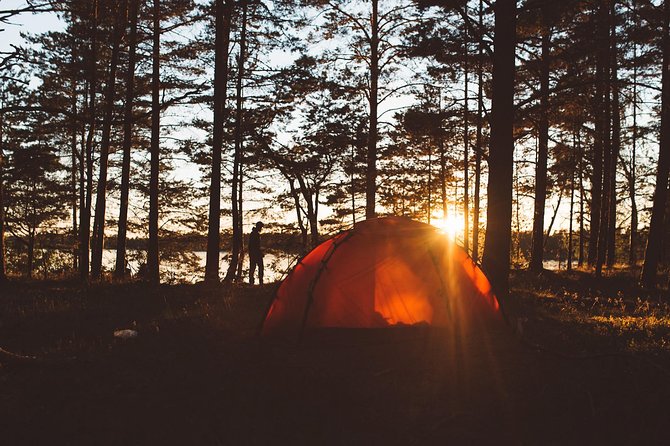
- The gear is taken seriously: Comfortable mattresses, good tents, quality kayaking equipment, and carefully planned camps make the wilderness easier to enjoy.
- Norrköping is the practical starting point: Pickup is at 10 a.m. from the train station or a hotel or hostel, with useful rail connections from nearby airports and Stockholm.
Why the food changes the whole adventure
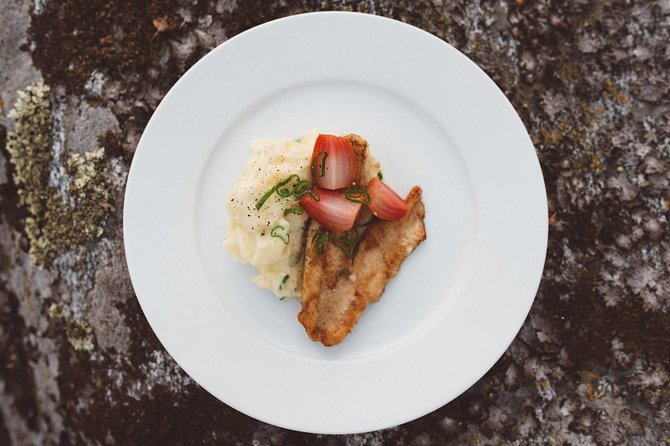
Many kayaking trips treat meals as fuel. This one makes food the central activity after the paddling ends. You gather plants, learn what can be used, and help turn simple ingredients into a shared dinner. That gives the trip a steady rhythm: paddle, explore, gather, cook, eat, and sleep beside the water.
Helena is the culinary guide, and the food is one of the strongest reasons to consider the price. The meals are described as impressive even by ordinary kitchen standards, which makes the campfire setting all the more unusual. Expect three breakfasts, three lunches, and three dinners, along with coffee or tea and alcoholic beverages.
The menu also reflects the place. You may use sorrel, orpine, chives, juniper berries, oregano, and ground-ivy. On the first day, the group gathers rose hips, hawthorn, and barberries near a sea meadow. At camp, you may help make jam, pickles, or preparations for the next day.
This is not a passive tasting tour. You are expected to help. That is a benefit if you want to learn outdoor cooking, but it may feel like work if you hoped to sit back while someone else handles every meal. The social side is important, too. The group cooks together, sets up camp, and shares the evening around the food.
More archipelago sailings from Sweden:
- Guided 5-Day Kayak & Wildcamp the Archipelago of Sweden
★ 5.0 · 73 reviews - Stockholm: City Archipelago Sightseeing Cruise with Guide
★ 4.3 · 10,798 reviews - Stockholm: Archipelago Boat Tour
★ 4.4 · 3,110 reviews
Day 1: Forested islands and a sea meadow
Pickup begins at 10 a.m. in Norrköping. You can be collected at the train station or at a hotel or hostel of your choice. From there, the trip moves toward the inner archipelago, where large wooded islands and old wooden houses create a slower, older-looking Sweden.
The first paddle is relatively short, which gives beginners time to get comfortable with the kayaks and the route. The setting is sheltered by the larger islands, and you begin among a mix of forest and settled countryside rather than immediately heading into the most exposed water.
Lunch comes beside a sea meadow. This is one of the more distinctive habitats in Saint Anna, where plants able to tolerate salt grow along the water’s edge. You forage there for edible greens and old island plants such as rose hips, hawthorn, and barberries.
That detail matters. You are not simply passing pretty scenery while someone explains it from a distance. You are learning how the local environment can contribute to a meal. The experience connects the plants to the people who once lived on these islands and used what was available around them.
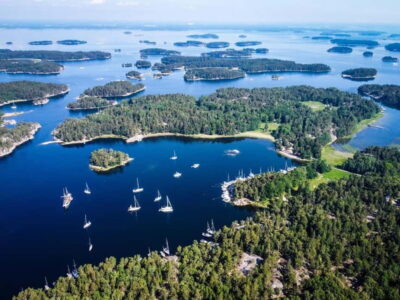
The afternoon paddle leads farther into the inner archipelago. Islands stretch in every direction, and the route begins to feel like a waterborne maze. This is a good point to appreciate the guide’s role, since kayaking in a scattered island system is more involved than following a straight shoreline.
By late afternoon, you reach the first camp. The culinary guide is already preparing the evening meal and ingredients for the next day. You help gather and prepare sorrel, orpine, chives, and juniper berries.
The first night sets the tone for the rest of the trip. You are not staying at a conventional hotel and returning to a restaurant. You sleep in camp and take part in the practical work that makes the meal possible.
Day 2: Bird sanctuaries, calm water, and open woodland
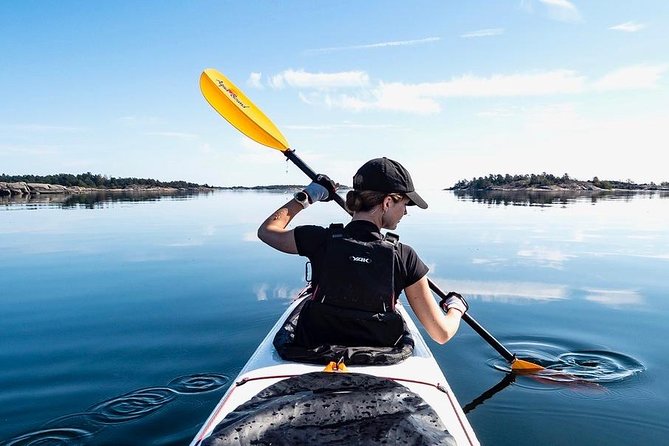
Day two begins beside the sea. If conditions are calm, the view from the tent may be a mirror-like stretch of water reflecting the sky. A morning swim is offered as a refreshing start, though you should decide for yourself based on the weather and your comfort.
After breakfast, you paddle through bird sanctuaries and tight groups of small islands. Sea eagles are a likely sight, and seals may appear if you are fortunate. The appeal here is not a single landmark. It is the chance to move quietly through habitat where the birds and marine life are the main event.
The middle archipelago has a different feel from the inner section. Islands become smaller and more numerous, and the water route keeps changing. You get a stronger sense of the region’s scale without needing to cover huge distances on foot.
The second camp is reached in the early afternoon. Its setting differs from the first camp, with deciduous trees, open glades, and grazing animals rather than pine trees and moss. That change gives the trip a useful variety. It also creates better conditions for looking for mushrooms, berries, and meadow herbs.
Oregano and ground-ivy are gathered for dinner. You may find the contrast interesting: one moment you are paddling through bird habitat, and later you are sorting plants for a meal beside camp. The trip keeps asking you to pay attention to small details.
The base-camp approach is especially practical. One participant praised having a fixed camp while heading out on daily expeditions. That arrangement reduces the pressure of packing every item into a kayak each morning, and it lets you spend more time exploring the islands rather than constantly managing luggage.
Day 3: The outer archipelago and a fisherman’s feast
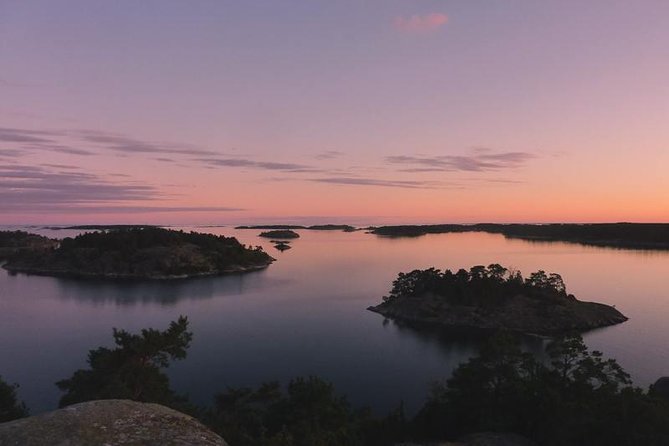
If the weather allows, day three reaches the outer archipelago. This is the most exposed and dramatic section of the route, with hundreds of tiny, mostly barren islands and sparse wind-shaped pines.
The scenery becomes simpler and more open. Instead of forest filling the horizon, you see low islands, salt-resistant plants, and a wide blue horizon. The solitude can be striking, but the conditions can also be more demanding. The itinerary calls this a strenuous paddle, so this is the day when your basic fitness and willingness to keep working matter most.
Weather controls this part of the route. If wind or sea conditions are unsuitable, the group may not go out to the outer islands. That is not a flaw in the trip. It is a sensible safety choice, but you should understand that the full route depends on nature cooperating.
After the longer paddle, you return to camp in the late afternoon. A local fisherman arrives with the catch of the day, and the group prepares a final feast. The wider Do the North team may join for the evening, giving the last night a more social character.
This meal adds another local connection to the trip. Foraging introduces you to small edible plants, while the fisherman’s catch connects dinner to the surrounding sea. The result is a meal that feels tied to the islands rather than taken from a standard camping menu.
More paddling routes near Sweden:
- Stockholm: Winter Kayaking, Swedish Fika, and Hot Sauna
★ 5.0 · 817 reviews - 1-Day Small-Group Stockholm Archipelago Kayak Tour
★ 5.0 · 266 reviews - Stockholm: Archipelago Islands Kayak Tour and Outdoor Picnic
★ 4.9 · 227 reviews - Stockholm City Kayak Tour
★ 5.0 · 194 reviews
Day 4: A canal exit and the return to the mainland
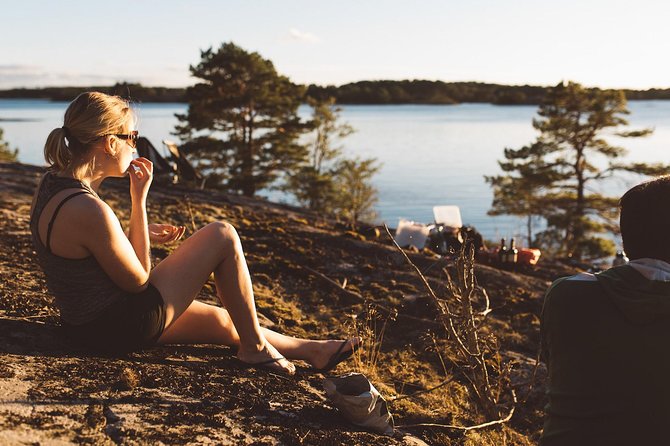
The final morning begins with breakfast and the job of packing camp. You then paddle toward a different mainland site from the one where you started.
The route passes new bird sanctuaries as the archipelago begins to close around you. A narrow canal carries the group out of the island maze. Then the setting changes quickly, with cabins and old houses appearing in a bay.
That ending gives the journey a clear sense of transition. You start among settled inner islands, spend several days in increasingly remote areas, and return through the water to ordinary life. The final paddle is listed at about 12 hours, though the overall day includes packing, meals, and the transfer from the water.
The experience ends with you carrying home more than photographs. You have practiced camp cooking, learned how edible plants are used, and seen how quickly the Saint Anna Archipelago changes from wooded and inhabited to spare and exposed.
How hard is the kayaking?
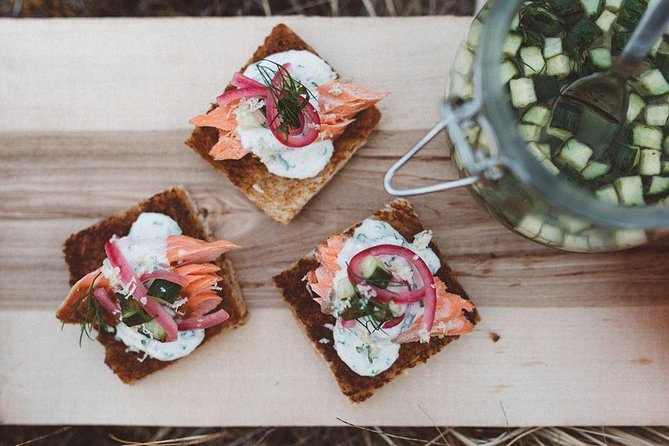
Beginners are welcome, and most people can take part. The wording matters, though. Beginner-friendly does not mean effortless. You will paddle for several days, and day three can be strenuous if the route reaches the outer archipelago.
The guides provide orientation and explain the equipment clearly. Rob is described as both kayaking guide and chef in one account, while Thomas, also written as Tomas, has guided the kayaking and wilderness side of the trip. The names suggest that the exact guide team may vary, but the important point is that you receive instruction and practical support at the start.
You should bring suitable warm clothing. One person needed extra help because they had not packed warmly enough. Another participant slipped and injured a wrist, and Thomas made a birch splint before arranging a water taxi so that the injured person could leave while the group continued kayaking.
That incident offers a useful picture of the trip’s limits and strengths. It is an outdoor activity with genuine physical risks, not a soft adventure ride. At the same time, the guides appear prepared to respond when something goes wrong.
The maximum group size is eight. That is large enough for a social atmosphere but small enough for the guide to notice how you are doing. It also means your attitude affects the trip. The best experience will come if you are ready to help with camp, cooking, and shared tasks.
Camping comfort and the gear provided
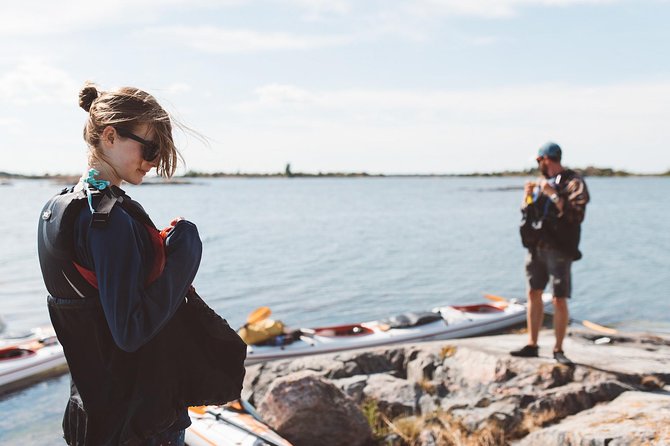
You sleep on uninhabited islands in tents. The accommodation is basic in location but not careless in execution. The equipment includes good-quality tents, comfortable mattresses, and proper kayaking gear.
A handmade table decorated with birch boughs was one memorable camp detail. It sounds small, but it captures the spirit of the trip. The team puts thought into making camp feel welcoming rather than simply functional.
Still, you should set realistic expectations. This is not a hotel with a private bathroom, room service, or a dry indoor lounge. The trip includes outdoor living, and rain can affect the experience. One group dealt with 36 hours of rain, yet the camp kitchen continued producing strong meals.
Pack for changeable conditions, especially warm layers and clothing suitable for paddling and camp work. The supplied information does not specify a full packing list, so ask the operator what personal equipment you need to bring before departure.
What the $1,954.27 price really covers
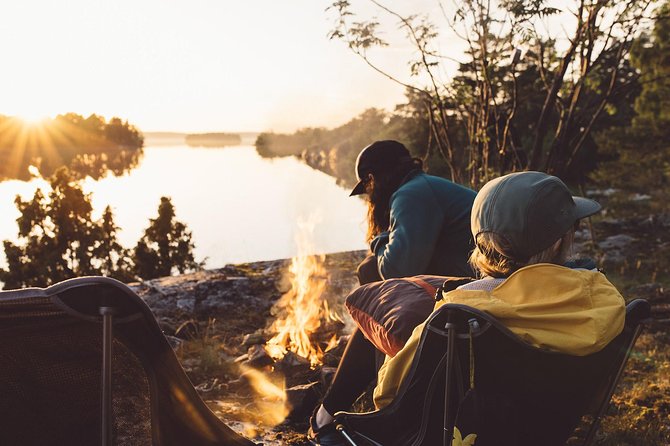
At $1,954.27 per person, this is a costly short trip. The price makes more sense when you look at what is bundled into four days: private round-trip transfers, hotel pickup and drop-off, a driver and guide, a local guide, kayaking equipment, camping gear, three breakfasts, three lunches, three dinners, coffee or tea, and alcoholic drinks.
You are also paying for a very small group and for staff who handle the route, camp setup, food planning, foraging guidance, and safety support. A normal self-guided kayak rental would cost far less, but it would not give you this level of instruction, transport, meal planning, or culinary teaching.
The value depends on your priorities. If you mainly want to paddle and sleep outdoors, the price may feel high. If you want an organized wilderness trip with excellent food and no need to arrange transfers, meals, route planning, or equipment, the package is easier to justify.
Flights and airport transfers are not included. You need to budget for getting to Sweden and then reaching Norrköping. The operator recommends arriving the night before, which is sensible for a 10 a.m. pickup.
Getting to Norrköping without a car
Norrköping is the main meeting point. Stockholm Skavsta Airport is the easiest airport option for many people, with a shuttle taking about 55 minutes to Norrköping. This is particularly useful for flights from London Stansted and similar routes.
From Stockholm Arlanda, a direct train to Norrköping takes about two hours. If you fly into Linköping City Airport, Linköping is about 25 minutes from Norrköping by train, followed by a short taxi ride from the airport to the station.
Norrköping itself is worth an overnight stay. It has restaurants and a notable waterside setting, so arriving the evening before is not merely a logistical nuisance. It gives you a calmer start and avoids the risk of a delayed flight ruining the pickup.
Pickup is offered from the train station or a hotel or hostel in Norrköping. Confirm the exact arrangements when booking, particularly if you are staying outside the central area.
Who will enjoy this most?
I would recommend this trip to adults who like good food, quiet nature, and hands-on activity. You do not need advanced kayaking experience, but you should be comfortable with several days of paddling and the possibility of a demanding day.
It suits people who enjoy learning by doing. You will likely get more from it if you want to identify plants, prepare ingredients, help with meals, and take part in camp life. Couples, friends, and families with adult children can all fit the format, provided everyone is willing to share the work.
It is less suitable if you want a fixed bed, a predictable weatherproof schedule, or a purely sightseeing-based holiday. The outer archipelago depends on conditions, and camp life always asks for some flexibility.
The trip also works well for food-focused visitors who want something more memorable than a restaurant meal. Helena’s cooking is repeatedly praised for its quality, creativity, homemade touches, and use of local ingredients. That is the heart of the experience.
Booking details worth knowing
The minimum age is 18, and the maximum listed weight is 120 kilograms. Most people can participate, and kayaking beginners are welcome, but you need a genuine interest in cooking.
Confirmation is provided when you book. Pickup starts at 10 a.m. in Norrköping, and the experience lasts approximately four days. The listed inclusions cover meals and transfers, but not flights or airport transfers.
Free cancellation is available if you cancel at least 24 hours before the local start time. Cancellations or changes made inside that 24-hour window are not accepted for a refund.
Should you book this Saint Anna adventure?
Book it if you want a small-group wilderness trip where the meals are as important as the scenery. The combination of bird sanctuaries, sea meadows, outer skerries, foraging, campfire cooking, and strong local support is unusual.
Think twice if you dislike camping, shared chores, or long paddling days. Also ask about the expected guide team and personal packing list before paying, since weather can shape the route and conditions on the outer islands.
For the right person, the price buys a rare kind of holiday: you do not simply look at the Saint Anna Archipelago. You move through it slowly, gather part of your dinner from it, and leave with practical outdoor cooking skills.
FAQ
Where does the tour begin?
Pickup is at 10 a.m. in Norrköping, either at the train station or at a hotel or hostel of your choice.
How long does the experience last?
The experience lasts approximately four days.
What airport is most convenient?
Stockholm Skavsta Airport is conveniently located between Stockholm and Norrköping. An airport shuttle takes about 55 minutes to Norrköping.
Can I reach Norrköping from Stockholm Arlanda Airport?
Yes. A direct train from Stockholm Arlanda Airport to Norrköping takes about two hours.
Are kayaking beginners allowed to join?
Yes. Beginners are welcome, but you should have a genuine interest in cooking and be prepared for several days of paddling.
What is the maximum group size?
The experience has a maximum of eight travelers.
What meals are included?
The package includes three breakfasts, three lunches, and three dinners. Coffee or tea and alcoholic beverages are also included.
Are flights and airport transfers included?
No. Flights and airport transfers are not included.
What is the cancellation policy?
You can receive a full refund if you cancel at least 24 hours before the experience begins. Cancellations or changes made less than 24 hours before the start time are not accepted for a refund.
New around Sweden
- Visit the Sami and Reindeer in a Day Trip from Abisko★ 4.5 · 13 reviews
- The Battle of Visby: A Self-Guided Walking Tour Game★ 4.0 · 2 reviews
- Arlanda Express Train Airport and Stockholm City Transfer★ 5.0 · 3 reviews
- Private Walking Tour of Visby with Cathedral and Gardens★ 5.0 · 11 reviews
- Stockholm Top attractions all-inclusive Gran Tour Winter Edition★ 5.0 · 6 reviews
- Airport Transfer: Airport ARN to Stockholm by Business Car★ 4.0 · 3 reviews
- Stockholm Airport Arlanda Arrival transfer to Stockholm by Sedan★ 5.0 · 2 reviews
- Snowmobile tour★ 5.0 · 13 reviews
Archipelago Cruises, compared.
City Archipelago Sightseeing Cruise with Guide
Read our review →
1-Day Small-Group Stockholm Archipelago Kayak Tour
Read our review →Browse the lists this tour appears in