
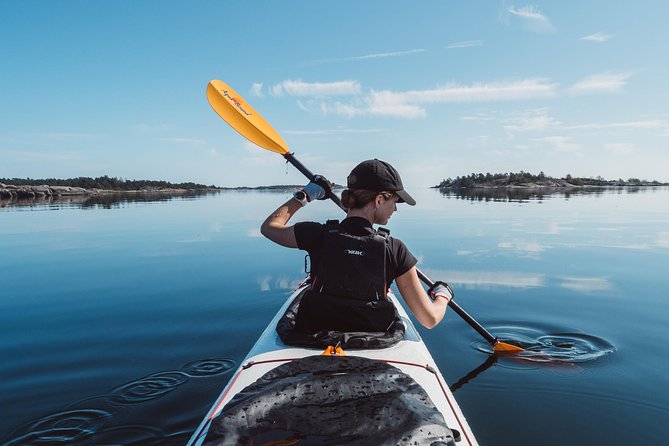
Reviewed · ARCHIPELAGO CRUISES
Guided 5-Day Kayak & Wildcamp the Archipelago of Sweden
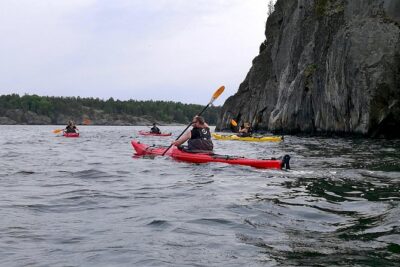
Five days, one kayak, and a sea of islands. This small-group trip through Sweden’s Saint Anna and Gryt archipelagos pairs top-quality gear with real wild camping, so you can focus on paddling, wildlife, and the next good campsite. I especially like the eight-person limit and the fact that every breakfast, lunch, dinner, snack, and hot drink is included.
The main tradeoff is effort and exposure. Some days are strenuous, and the route can reach open water where wind and waves matter. You need to be at least 18, comfortable with a five-day outdoor trip, and ready to sleep in simple island camps rather than a hotel.
In This Review
- Five details that shape the experience
- What you are signing up for
- Day 1: From Norrköping to the first island camp
- Day 2: Open water, bird colonies, and Kupa Klint
- Day 3: Harstena village and a night on Ytterö
- Day 4: The exposed crossing to Häradskär
- Day 5: Fångö copper mine and the paddle back
- Gear, food, and camp life
- Price, transport, and who gets good value
- Booking advice and cancellation
- Should you book this Sweden kayak tour?
- FAQ
- How long is the kayaking and wild camping tour?
- How many people can join the tour?
- Where does pickup take place?
- Are meals included?
- Is kayaking and camping equipment included?
- What happens if the weather is poor on day four?
Five details that shape the experience
- Only eight paddlers: The small group gives the guide room to offer personal help and keeps the expedition friendly rather than crowded.
- Premium equipment included: Kayaks, camping gear, cooking equipment, dry bags, food, and water are supplied.
- Wild Sweden by kayak: You move through forested islands, bare skerries, nature reserves, and open sea with no road access.
- Three memorable island stops: Harstena brings a historic village and bakery, Fångö offers an abandoned copper mine, and Häradskär has a remote red lighthouse.
- All meals are covered: Five breakfasts, five lunches, and five dinners are included, along with snacks, coffee, tea, soft drinks, and bottled water.
- Weather shapes the route: The guides can attempt Häradskär only when conditions allow, which is sensible on this exposed edge of the archipelago.
What you are signing up for
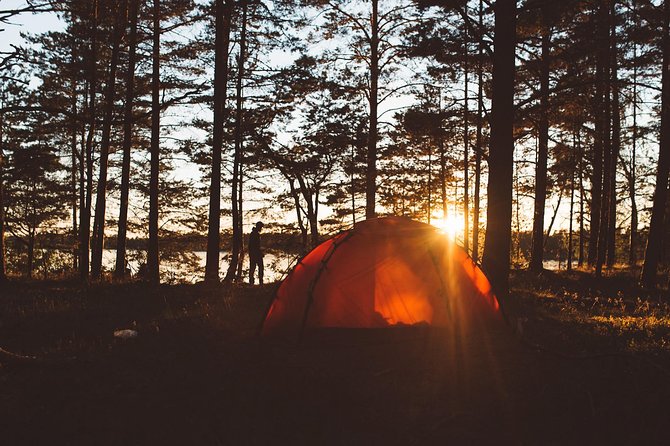
This is not a sightseeing cruise with a paddle attached. You load a kayak, carry your camping kit, paddle for several hours, help settle into camp, and live outdoors for five days. The reward is access to islands and shorelines that are hard to reach in any other practical way.
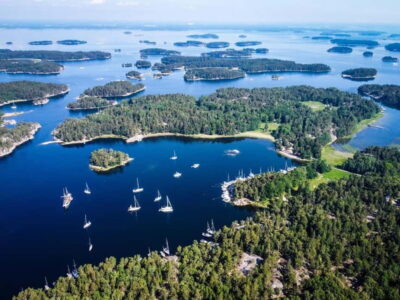
The route begins near Saint Anna and moves through the outer archipelago toward Missjö, Harstena, Ytterö, Häradskär, and Fångö. The scenery changes as you go. Early sections pass through sheltered bays and wooded islands. Later sections open onto low, weather-shaped skerries with little protection from wind.
The group size matters here. With a maximum of eight people, the guide can keep an eye on paddling technique, weather, route choices, and camp work without managing a small fleet. It also means your social world for five days is compact. That can be a pleasure if you like easy conversation and shared tasks, but less appealing if you need lots of privacy.
This trip is suitable for most adults, but the supplied information does not promise an easy beginner route. One first-time kayaker found the experience manageable, and the guide Rob was praised for helping a complete beginner feel at ease. Still, the outer archipelago includes strenuous paddling and exposed crossings, so ask the operator about current conditions if you have doubts about your fitness.
More archipelago sailings from Sweden:
- Culinary Kayaking Adventure – Saint Anna Archipelago of Sweden
★ 5.0 · 7 reviews - Stockholm: City Archipelago Sightseeing Cruise with Guide
★ 4.3 · 10,798 reviews - Stockholm: Archipelago Boat Tour
★ 4.4 · 3,110 reviews
Day 1: From Norrköping to the first island camp
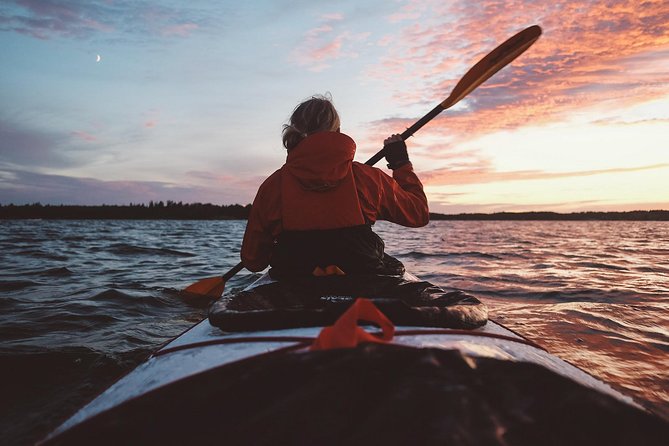
Pickup begins at 10:00 a.m. in Norrköping, either at the train station or at your hotel or hostel. From there, return transport takes you to the Saint Anna launch area. This is a useful setup because you do not have to arrange a separate transfer to a remote shoreline with a pile of outdoor gear.
At the launch, the food, water, kayaks, camping equipment, and cooking kit are ready. You repack clothing into dry bags and load the boats. That small detail is worth noting. Dry bags are not just a nice extra in an island expedition. They keep clothing and sleeping items protected when everything shares one narrow kayak.
The first paddle begins in a sheltered bay. You soon round the opening islands and see the archipelago spread in every direction. This is a gentle way to get your bearings before the route becomes more exposed.
The group then heads toward Aspöja through clusters of forested islands and small islets. Ducks, swans, and grey herons breed in the area, while white-tailed eagles are seen regularly because they nest in nearby large trees.
A break in the Uggelholmarna Nature Reserve adds variety to the day. The reserve has 300-year-old pine and linden trees, with open woodland suitable for a short walk. You are not just paddling past scenery here. You get a chance to stretch, step ashore, and see the older character of these islands from land.
The evening goal is the sheltered water between Lammskär and Kalvskär, followed by the small islands south of Aspöja. This is known for fine sunset views. After your first day of loading, paddling, cooking, and setting up camp, that quiet island setting should feel well earned.
The listed timings are broad rather than precise. The opening launch section is shown as about two hours, while the Aspöja portion covers much of the day. You should keep the day free and avoid making tight evening plans.
Day 2: Open water, bird colonies, and Kupa Klint
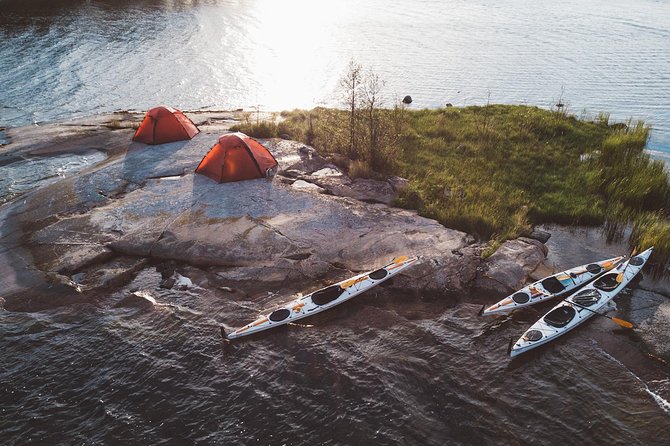
Day two shifts from wooded shelter to the outer archipelago. The paddle southeast toward Sodling passes wind-shaped islets with little vegetation and a broad sea horizon. This is the day when the trip feels most like a true expedition.
The wildlife list is impressive, but sightings are never guaranteed. You might see seals, gulls, Arctic terns, black guillemots, mergansers, velvet scoters, eiders, shelducks, oystercatchers, and redshanks. White-tailed eagles and great cormorants are common in the area, while Arctic skuas and ospreys are possible.
The open setting also brings the tour’s main physical challenge. There is less shelter, and the day is described as strenuous. Wind can change the feel of a route quickly, so the guides’ decisions matter. A calm sea can make the outer islands magical. Rougher conditions can turn the same crossing into hard work.
The reward is Kupa Klint, a famous navigation mark and lookout. From here, you can see the many skerries of the Missjö Archipelago spread below. The area is known for its finely cut pattern of rocks, channels, and low islands.
The guides use their familiarity with the area to find a protected camp near Missjö. That practical skill is more important than a grand speech or a packed schedule. After a long paddle, a sheltered place to sleep and cook is exactly what you want.
Day 3: Harstena village and a night on Ytterö
The route turns south toward Harstena, the most visited island in this part of the archipelago. You enter through a narrow inlet, where the village appears ahead in a compact and picturesque cluster.
Harstena gives the trip a welcome cultural pause. You can visit the museum in the old school, walk through the village, and buy cinnamon swirls from the bakery. These details make the stop feel connected to island life rather than simply another photo break.
The village is described as seemingly frozen in time, but do not expect a large attraction complex. Its appeal lies in scale and atmosphere. After two days of open-water paddling, walking among homes, a museum, and a bakery gives your legs a break and adds a human note to the journey.
From Harstena, the kayaks head southeast toward Ytterö. This island has smooth rocky beaches and old, twisted pine trees. It sits closer to the open sea, so the campsite offers a stronger sense of distance and exposure.
The evening is built around simple pleasures: a high viewpoint, the horizon, waves against smooth rocks, and bird calls from the surrounding islets. This is wild camping in its most appealing form. There is no need to invent entertainment when the shore provides the soundtrack.
It is also worth keeping expectations realistic. Wild camping means basic comfort and shared camp duties. The supplied equipment is high quality, but premium gear does not turn an island campsite into a hotel room. You should pack light, keep clothing organized in dry bags, and expect to spend time outdoors in changing weather.
More paddling routes near Sweden:
- Stockholm: Winter Kayaking, Swedish Fika, and Hot Sauna
★ 5.0 · 817 reviews - 1-Day Small-Group Stockholm Archipelago Kayak Tour
★ 5.0 · 266 reviews - Stockholm: Archipelago Islands Kayak Tour and Outdoor Picnic
★ 4.9 · 227 reviews - Stockholm City Kayak Tour
★ 5.0 · 194 reviews
Day 4: The exposed crossing to Häradskär
Day four is the route’s boldest option. The aim is Häradskär, home to an old lighthouse on the outer edge of the archipelago. The crossing happens only if weather conditions permit, and that qualification is important.
You pass Gubbö and climb its hill for a view across the islands. The route then moves through the clusters around Laxvarp before the guides assess the final approach. This is a good example of responsible guiding. Reaching the advertised landmark is less important than making a sound decision about wind, waves, and group safety.
If conditions are suitable, you make the exposed crossing and see the red iron lighthouse appear on the island. Häradskär is described as the last outpost in this direction, surrounded by open sea, flat rocks, bird calls, and the steady crash of waves.
Few people reach such a place by ordinary sightseeing transport. The effort is the point. You have paddled there under your own power, and the lighthouse marks the farthest reach of the expedition.
Still, this may be the day that separates an enthusiastic beginner from a well-prepared one. If the guides turn back or change the route because of weather, that is not a failed day. It is part of traveling responsibly by kayak in exposed water.
Day 5: Fångö copper mine and the paddle back
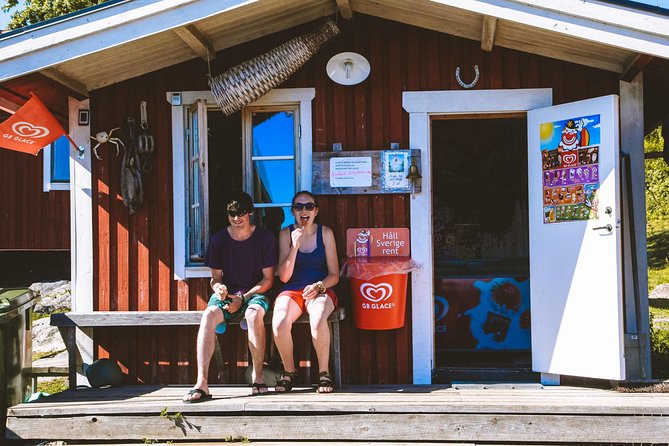
The final morning begins at a campsite south of Fångö. After breakfast and a last swim, the group starts back toward the mainland.
The stop at Fångö’s abandoned copper mine gives the final day a different subject. Until now, the focus has been wildlife, village life, and remote shorelines. The mine adds a reminder that people have worked these islands as well as passed through them.
You round Fångö and paddle through a small canal toward Fyrudden. From there, the final stretch runs west to the mainland finish point. The day lasts about six hours, including the visit and return paddle, so you still have a substantial morning and afternoon on the water.
The emotional shape of the last day is easy to understand. Five people, or at most eight, have shared food, route choices, weather, camp setup, and long hours in kayaks. By the finish, you are likely to know the group well. That is one of the strongest reasons to choose a small expedition over a larger organized outing.
Gear, food, and camp life
The equipment package is one of the tour’s best features. High-quality kayaking, camping, and cooking gear is included, along with dry bags, food, and water. Buying comparable equipment for one five-day trip would be hard to justify for many people, particularly if you do not already kayak or camp.
You should still bring suitable personal clothing and prepare to pack carefully. Your clothes go into dry bags at the launch, so choose items that work outdoors and organize them before the first paddle. The information supplied does not provide a detailed personal packing list, so ask the operator what clothing, footwear, and sleeping items you need to bring.
Food is provided throughout the expedition. The package includes five breakfasts, five lunches, five dinners, snacks, coffee, tea, soft drinks, and bottled water. This makes the $1,629.22 price easier to assess. You are paying not only for guiding, but also for transport, boats, camping equipment, cooking equipment, meals, and route planning.
The food received especially strong praise, described as unusually good for a wilderness trip. That matters. After several hours of paddling, a proper meal is part of the experience, not a minor convenience.
Alcoholic drinks are not included, though they are available to purchase. Flights and airport transfers to Norrköping are also your responsibility.
Price, transport, and who gets good value
At $1,629.22 per person, this is a serious purchase. It makes the most sense if you would otherwise need to rent or buy kayaking and camping equipment, arrange transport to Saint Anna, plan meals, and work out a safe route through a complicated island system.
The price also includes an experienced kayaking guide and a detailed guide book. You are paying for practical judgment as much as for scenery. On a route with sheltered bays one day and open-water crossings the next, local route knowledge has real value.
Norrköping is fairly easy to reach. From Stockholm Skavsta Airport, a shuttle takes about 55 minutes. From Stockholm Arlanda, a direct train takes about two hours. Linköping City Airport is about a 25-minute train ride from Norrköping, while Norrköping Airport is about a 10-minute taxi ride into town.
Pickup is at 10:00 a.m., so plan your arrival carefully. The return transport to Saint Anna is included, but the airport connection before and after the tour is not.
This experience suits you best if you:
- Want a real outdoor trip rather than a short kayak lesson
- Like small groups and shared camp life
- Are happy to paddle for several hours a day
- Value premium equipment and included meals
- Enjoy birds, remote islands, and simple historic sites
- Can accept a route that changes with weather
It may not suit you if you need private rooms, fixed daily distances, or an easy schedule. The minimum age is 18, and the route includes strenuous and exposed sections.
Booking advice and cancellation
The experience is commonly booked about 44 days ahead, which gives you a useful planning guide. Booking early is sensible because the group is capped at eight.
Free cancellation is available if you cancel at least 24 hours before the 10:00 a.m. start time. Changes or cancellations made within 24 hours are not accepted for a refund, with cut-off times based on local Swedish time.
The tour is offered in English and confirmation arrives when you book. Most adults can participate, but the physical demands make it wise to discuss your experience and current fitness with Do the North AB before committing.
Should you book this Sweden kayak tour?
I would recommend it to an active adult who wants the outer Swedish archipelago without buying a boat, planning meals, or solving the route alone. The combination of eight-person groups, excellent equipment, strong food, and remote campsites gives the price a solid practical basis.
I would pause if you are new to outdoor travel but unsure about exposed water, or if the thought of several demanding paddling days sounds tiring rather than exciting. Ask about expected conditions and personal gear before booking.
For the right person, this is not just a kayak rental with camping added. It is a tightly organized route through wooded islands, bird-filled skerries, historic villages, a copper mine, and a far-off lighthouse. The 5 out of 5 rating from 73 published responses and a 100 percent recommendation record support the strong impression: this is a well-run adventure with guides, food, and equipment that earn their keep.
FAQ
How long is the kayaking and wild camping tour?
The experience lasts approximately five days, from pickup in Norrköping at 10:00 a.m. on day one through the final paddle to the mainland on day five.
How many people can join the tour?
The tour has a maximum of eight travelers. This keeps the group small and allows for more personal attention from the guide.
Where does pickup take place?
Pickup is offered in Norrköping at 10:00 a.m., either at the train station or at any hotel or hostel.
Are meals included?
Yes. The tour includes five breakfasts, five lunches, five dinners, snacks, coffee, tea, soft drinks, and bottled water.
Is kayaking and camping equipment included?
Yes. An experienced kayaking guide provides top-quality kayaking, camping, and cooking equipment, along with a detailed guide book.
What happens if the weather is poor on day four?
The attempt to reach Häradskär depends on weather conditions. The guides assess the route before making the exposed crossing, so the exact plan can change if conditions are unsuitable.
New around Sweden
- Visit the Sami and Reindeer in a Day Trip from Abisko★ 4.5 · 13 reviews
- The Battle of Visby: A Self-Guided Walking Tour Game★ 4.0 · 2 reviews
- Arlanda Express Train Airport and Stockholm City Transfer★ 5.0 · 3 reviews
- Private Walking Tour of Visby with Cathedral and Gardens★ 5.0 · 11 reviews
- Stockholm Top attractions all-inclusive Gran Tour Winter Edition★ 5.0 · 6 reviews
- Airport Transfer: Airport ARN to Stockholm by Business Car★ 4.0 · 3 reviews
- Stockholm Airport Arlanda Arrival transfer to Stockholm by Sedan★ 5.0 · 2 reviews
- Minivan Arrival Transfer Stockholm Airport ARN to Stockholm City★ 4.5 · 8 reviews
Archipelago Cruises, compared.
City Archipelago Sightseeing Cruise with Guide
Read our review →
1-Day Small-Group Stockholm Archipelago Kayak Tour
Read our review →Browse the lists this tour appears in