
Reviewed · GAMLA STAN OLD TOWN WALKS
Private blood, ghosts and folklore Old Town 2h Stockholm tour
Death has a long memory here. This private walk through Stockholm links the Old Town to Swedish tales of ghosts, curses, water spirits, trolls, and the dead. I like the private format, which lets you ask questions and set the pace, and I like the unusual focus on folklore rather than another standard sightseeing walk. The main drawback is that the title suggests two hours, while the tour is listed at about one hour and 30 minutes, with roughly 75 minutes of scheduled stops.
I also like the route’s clear sense of place. You begin at Stortorget, pass through old lanes, reach the waterfront, and finish by Saint Jacob’s Church near Kungsträdgården. Still, you should book with the right expectations: this is a storytelling walk, not a theatrical haunted-house show, and one disappointed participant felt the tales were too limited.
In This Review
- Key things to know before you book
- A dark introduction at Stortorget
- Prästgatan and the lane called Hell
- Iron, doors, and newborn protection
- Water spirits at Logårdstrappan
- Kungsträdgården and Sweden’s darker creatures
- Saint Jacob’s Church and the power of the threshold
- How the route works in real time
- What $188.16 per person gets you
- Who will enjoy this private walk
- Booking advice and cancellation terms
- Should you book this Stockholm ghost tour?
- FAQ
- Where does the tour begin?
- Where does the tour end?
- How long does the tour last?
- Is this a private tour?
- What is included in the price?
- Can I cancel for a full refund?
Key things to know before you book
- Stortorget sets the grim tone: Learn about executions, the Stockholm Bloodbath era, and old beliefs about the magical use of human remains.
- The folklore is distinctly Swedish: Expect stories of the Tomte, Näcken, Skogsrået, Myrling, trolls, elves, and other vaesen.
- The route is mostly outdoors: Stops take place in squares, lanes, by the water, in a park, and outside a church.
- A private guide changes the experience: Your own group can ask questions instead of following a fixed public-tour script.
- The walk ends outside the Old Town: Saint Jacob’s Church is about a 10-minute walk from the starting point.
- The price suits a small group: At $188.16 per person, the value depends heavily on how many people share the private booking.
A dark introduction at Stortorget
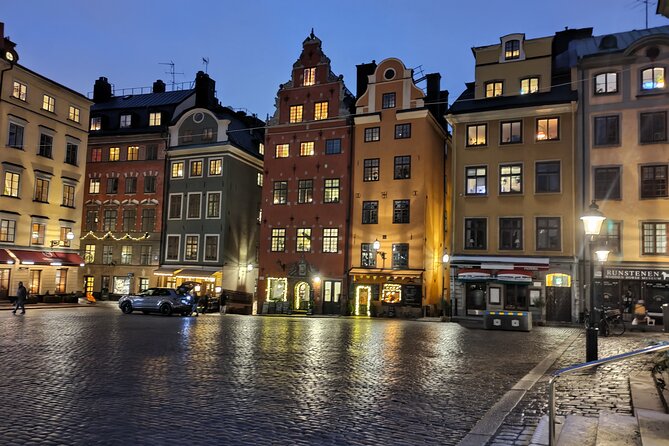
Your walk begins at the Nobel Prize Museum in Stortorget, the Old Town’s famous main square. This is a useful place to start because the setting is handsome and open, yet the subject quickly turns grim.
The guide talks about the execution of roughly 90 people around the time the Danish King Kristian took Stockholm. The discussion also reaches the Stockholm Bloodbath, curses, and older beliefs about the magical powers of blood and body parts. The point is not simply to list deaths. You hear how people once connected the remains of the dead with spells, protection, healing, or misfortune.
I find this opening especially useful because it places Swedish folklore beside documented history. The square is not treated as a pretty photo stop alone. Its stones become a stage for stories about power, punishment, and public fear.
The stop lasts about 10 minutes and has no admission fee. Since it is outdoors, you can see the square without spending extra money, though the quality of the experience depends on how clearly the guide explains the historical background. One piece of practical advice: come ready to listen closely. The themes involve executions and the treatment of bodies, so this is not a gentle introduction for young children or anyone who dislikes macabre subjects.
More Private Tours in Stockholm
- Stockholm: Old Town Private Walking Tour
★ 4.7 · 675 reviews - Stockholm Private Golf Cart Tours
★ 5.0 · 452 reviews - Stockholm Private Golf Cart Tours
★ 4.8 · 444 reviews
Prästgatan and the lane called Hell
From Stortorget, the group walks along Prästgatan. This narrow Old Town street once included an area known as Hell, associated with the people who lived there.
The stop is brief, about 10 minutes, but it gives the route a more intimate feel. A broad square can support a public event and a large crowd. A tight lane suggests private lives, cramped homes, and the old habit of giving places names loaded with warning.
I like this part because it moves away from the headline history of kings and battles. The guide uses a small section of the city to discuss how ordinary people understood danger and social boundaries. You are not only hearing about supernatural creatures. You are also hearing how fear could become attached to a street.
The drawback is simple: there is limited information provided about the exact tales told here. If you want a long, detailed account at every stop, this may feel short. The walk works better as a connected chain of stories, with Prästgatan serving as a transition between public violence and household superstition.
Iron, doors, and newborn protection
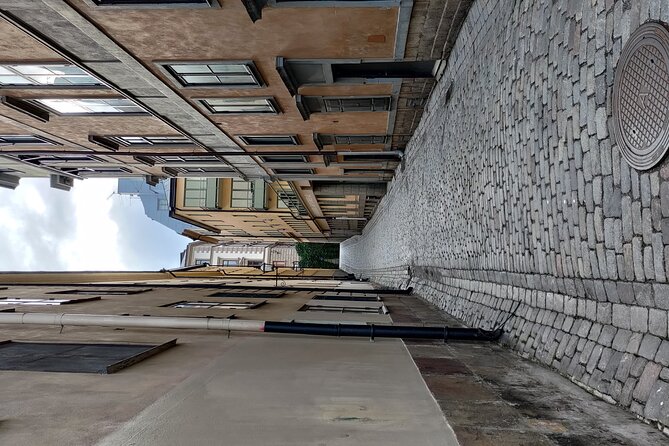
The next Old Town stop centers on the doorway of a house. Here the guide explains the use of iron as protection against vaesen, supernatural beings from Swedish folklore.
You hear about elves arriving with the mist, perhaps understood as restless souls that have not found peace. The Swedish Tomte also enters the story. Many people know the Tomte today as a friendly Christmas figure, but older folklore gives this household spirit a more complicated role. The guide also discusses doors, newborn children, baptism, trolls, and the Devil.
This is one of the most practical sections in the folkloric sense. You learn what kinds of protection people believed a home required, especially during the vulnerable period before a baby was baptized. A doorway becomes more than an entrance. It is a weak point between the safe interior and threatening forces outside.
The stop lasts around 10 minutes. It takes place outside, so you will not enter a private home or a museum room. That limitation matters. The guide can point out architectural details and explain the beliefs, but you should not expect objects, displays, or reconstructed rituals.
For me, this is the kind of story that makes an old city more interesting. You begin to notice thresholds, metal fittings, fog, and the symbolic role of a front door. It is also a good section for anyone interested in family customs and domestic folklore, not only ghost stories.
Water spirits at Logårdstrappan
The route then reaches Logårdstrappan, where the subject turns to supernatural beings connected with water. This change of setting gives the walk a clear rhythm. After blood in the square and protection at the door, the route moves toward the dangers of the waterfront.
The guide introduces Näcken, the bäckahästen, the Swedish version of a kelpie, the Sjörå, and the skepps-rå. These beings were linked with rivers, lakes, seas, boats, and drowning. Some lured people into deep water. Others were connected with the hazards faced by those who worked or traveled on the water.
This stop lasts about 10 minutes. The location matters because the stories are easier to picture beside water than in a lecture room. You can connect the old fears to a real physical setting, even though the tour does not include a boat ride or an indoor presentation.
I appreciate the way this section broadens the idea of a ghost tour. Swedish folklore is not limited to dead people haunting buildings. It includes spirits tied to nature, work, weather, and places where accidents could happen. The stories also show how communities explained danger before modern science and safety systems.
Keep in mind that the stop is still mainly spoken storytelling. If you expect special effects or visible supernatural sites, you may find the presentation understated. The appeal lies in the folklore and the guide’s delivery.
More old town walks in Stockholm:
- Stockholm Gamla Stan: Old Town Walking Tour with Local Guide
★ 4.7 · 1,714 reviews - Walking Tour of Stockholm Old Town
★ 5.0 · 1,175 reviews - The Original Stockholm Ghost Walk and Historical Tour – Gamla Stan
★ 4.5 · 1,165 reviews - Stockholm: Royal Djurgården Boat Tour
★ 4.1 · 682 reviews
Kungsträdgården and Sweden’s darker creatures
At Kungsträdgården, the subject expands to other Swedish vaesen. This is the longest stop, at about 20 minutes, and it gives the guide more time to explain several creatures and the fears attached to them.
The Skogsrået, also called the huldran, is described as a dangerous forest being. You also hear about the Myrling, an undead child, along with creatures connected to blood, death, and misfortune.
This is likely the strongest section for people who want folklore rather than a simple list of famous Stockholm ghosts. The stories show how old Swedish beliefs divided the world into safe and unsafe places. Forests, water, fog, childbirth, churches, and doorways all carried their own threats.
The location in a city park creates an interesting contrast. You are surrounded by central Stockholm, yet the stories reach back to a time when the forest felt much closer and less controlled. I like that contrast. It lets you consider how old beliefs survive even after the setting has changed.
The stop may also be the point where the tour feels most like a folklore lesson. If you want only bloody crimes and haunted buildings, names such as Skogsrået and Myrling may seem like a detour. If you want to understand Swedish supernatural tradition, this is valuable material.
Saint Jacob’s Church and the power of the threshold
The final stop is outside S:t Jacobs Kyrka, also called Saint Jacob’s Church. This section lasts about 15 minutes and returns to the protective role of doors and sacred buildings.
The guide discusses the church door, weak points in the church, exorcism connected with a child’s baptism, and ways a person might punish a worst enemy. These subjects bring together several ideas from earlier in the route: vulnerable thresholds, the danger surrounding an unbaptized child, and the use of ritual against perceived evil.
Because the tour stays outside, you will not receive an interior church tour as part of the experience. That is worth noting if you want architecture or religious art. The church mainly serves as the final setting for stories about spiritual protection and conflict.
The ending location is practical. You finish just outside the Old Town on the north side, beside Kungsträdgården. From there, it is about a 10-minute walk back to the starting point. You can also continue exploring the area rather than retracing the route.
How the route works in real time
The six stops add up to about 75 minutes of scheduled discussion. Walking between them brings the total closer to the listed 90-minute duration. The experience is described in its title as a two-hour tour, so check the confirmed timing when you book and do not assume you will receive a full two hours of guided storytelling.
The route begins in the Old Town and ends outside it. That makes it easy to combine with other sightseeing, but you should plan your day around the one-way finish. If you leave a bag, meet friends, or have a restaurant booking near Stortorget, allow time to walk back.
The tour is private, so only your own group participates. That is a major advantage for a subject that depends on questions and atmosphere. You can ask for more detail about the Stockholm Bloodbath, Swedish spirits, church customs, or the meaning of a particular term without worrying about delaying a large crowd.
The guide handles navigation, which is helpful in the Old Town’s winding streets. You do not need to study a map in advance. The meeting point is the Nobel Prize Museum at Stortorget 2, and the final point is Saint Jacob’s Church at Västra Trädgårdsgatan 2A.
The tour is near public transportation, and most people can participate. Service animals are allowed. No admission tickets are required at the listed stops, and the guide is included.
What $188.16 per person gets you
At $188.16 per person, this is not a bargain if you are booking alone or with only one other person. The price becomes easier to justify when divided among a larger private group, especially if you value having the guide’s full attention.
You are paying for more than a walk between landmarks. You receive a private guide, a planned route, local folklore, historical context, and the convenience of not having to research or navigate. For a group with a strong interest in dark history, that can be worthwhile.
Still, I would compare the price with your expectations. There are no museum admissions, food, transport, costumes, or theatrical effects included. The experience is built around the guide’s storytelling. A gifted guide can make a short stop memorable. A less effective presentation could leave you feeling that the tour was too thin for the cost.
One participant found the tour name misleading and expected more gruesome and intriguing stories. The concern is fair. The route includes blood, executions, ghosts, curses, and death, but it also spends substantial time on folklore creatures and household protection. You should book it as a guided exploration of Swedish dark tradition, not as a nonstop crime chronicle.
The provider responded that the city has many additional bloody stories, including the Stockholm Bloodbath, the killing of King Gustav III, a lynch mob, the death of a noble, and tales concerning the executioner. That response also points to a useful question to ask your guide at the start: how much time will be given to historical crimes compared with supernatural folklore?
Who will enjoy this private walk
I would recommend this experience to you if you enjoy:
- Swedish folklore and regional supernatural traditions
- History presented through stories rather than dates alone
- Small private tours where you can ask questions
- Old Town walks with an unusual theme
- Ghosts, curses, executions, and stories about protection
- A route that ends near Kungsträdgården rather than returning to its start
It suits couples, families with older children, and small groups of friends who already know they enjoy eerie subjects. The private arrangement is also useful if your group has different levels of interest. One person can ask about history while another asks about the Tomte or water spirits.
I would hesitate if you want a polished stage show, a long museum visit, or a tour devoted only to famous murders. The stops are short, the storytelling is outdoors, and the final experience will depend strongly on the guide’s ability to bring the material to life.
The positive side is clear. One participant praised the host for being friendly, accommodating, and well informed, and recommended the walk for learning more about Stockholm. That is the kind of experience this tour aims to provide: a personal conversation with a guide who can adjust the focus.
Booking advice and cancellation terms
You receive confirmation when booking. The experience offers free cancellation if you cancel at least 24 hours before the local start time. Cancellations or changes made within 24 hours are not refunded or accepted.
A minimum number of participants is required. If the provider cancels because that minimum is not reached, you are offered another date or experience, or a full refund. These terms are worth checking before you commit, especially if the walk is part of a tightly scheduled Stockholm visit.
Should you book this Stockholm ghost tour?
Book it if you want a private, story-led walk that combines Stockholm’s violent past with distinctly Swedish folklore. The best parts are the setting-based tales: blood and executions at Stortorget, protection at an Old Town doorway, water spirits at Logårdstrappan, and supernatural beings in Kungsträdgården.
I would treat the price as reasonable for a larger private group, but harder to justify for one or two people. I would also confirm the expected duration and tell the guide whether you prefer documented crimes, ghosts, or folklore creatures.
For the right audience, this is an engaging way to see familiar Stockholm places from an unsettling angle. Just do not expect every minute to be gruesome. The tour’s real subject is how Swedish people once explained death, danger, nature, and the unseen world.
FAQ
Where does the tour begin?
It begins at the Nobel Prize Museum, Stortorget 2, in Stockholm’s Old Town.
Where does the tour end?
It ends outside Saint Jacob’s Church at Västra Trädgårdsgatan 2A, beside Kungsträdgården. The finish is about a 10-minute walk from the starting point.
How long does the tour last?
The experience is listed as approximately one hour and 30 minutes. The individual stops total about 75 minutes, with walking time between them. The tour title refers to two hours, so confirm the final timing when booking.
Is this a private tour?
Yes. Only your group participates, and the private format allows you to ask questions during the walk.
What is included in the price?
A guide is included. Admission tickets are not needed for the listed stops, which take place outdoors.
Can I cancel for a full refund?
Yes, if you cancel at least 24 hours before the experience start time. Cancellations or changes within 24 hours are not refunded, and the experience requires a minimum number of participants.
New around Stockholm
- World War II Stockholm Old Town Walking Tour and Army Museum★ 4.6 · 4 reviews
- 3 Hours Guided Shopping Tour in Stockholm Thrifting Stores★ 5.0 · 4 reviews
- Scandinavian Art, Architecture and Design Tour in Stockholm★ 4.5 · 11 reviews
- Private Tour: Swedish History Day Trip to World Heritage Candidate Markim-Orkesta from Stockholm★ 5.0 · 8 reviews
- Wolf and Wildlife Tracking in Sweden★ 5.0 · 9 reviews
- Drottningholm Palace Private Guided Tour★ 4.5 · 15 reviews
- Voyage of the Vikings: Guided Exploration Through Sweden’s Past★ 5.0 · 2 reviews
- Vaxholm Day Trip From Stockholm: Cruise, Fortress, Swedish Fika★ 5.0 · 2 reviews
Gamla Stan Old Town Walks, compared.
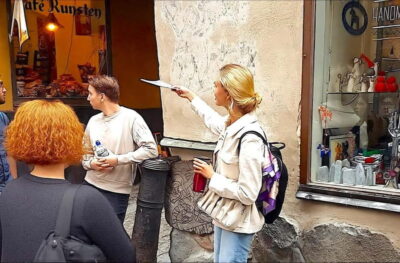
Stockholm Gamla Stan: Old Town Walking Tour with Local Guide
Read our review →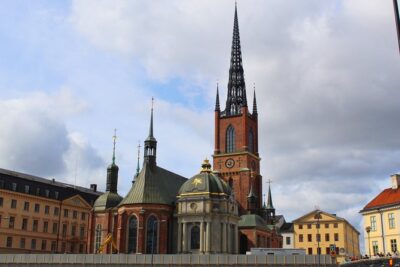
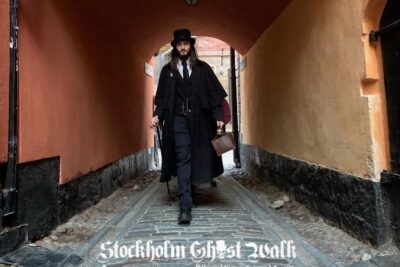
The Original Stockholm Ghost Walk and Historical Tour – Gamla Stan
Read our review →
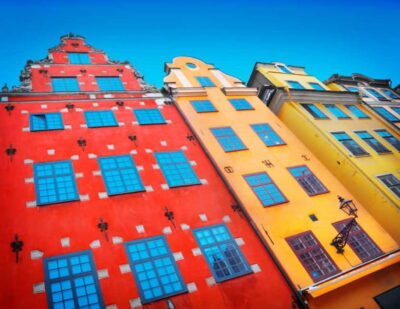
Guided Historic Old Town Walking Tour with Local
Read our review →
Walking Tour of Stockholm’s Old Town, Gamla Stan
Read our review →Browse the lists this tour appears in