Reviewed · STOCKHOLM TOURS
Scandinavian Art, Architecture and Design Tour in Stockholm
Stockholm’s style is best read on foot. This three-hour walk links Östermalm design shops, the grand Saluhall food hall, the Royal Dramatic Theater, Kungsträdgården, and the waterfront museums. I like the way it connects everyday Swedish design with public buildings and parks, rather than treating architecture as a series of isolated photo stops.
I also like the small group size, capped at 10 people, and the chance to browse design shops at your own pace. Guide Olesia has received especially warm praise for her storytelling and for allowing time to explore furniture, textiles, and home accessories. The main consideration is weather: this is an outdoor walking tour, and poor conditions can lead to a changed date or full refund.
In This Review
- Key Points At a Glance
- Why This Three-Hour Walk Works
- Östermalm: Stockholm’s Design District
- Ostermalms Saluhall and Swedish Food Traditions
- Upholstery, VIP Interiors, and Swedish Craft
- Royal Dramatic Theater and Stockholm’s Stage
- Kungsträdgården and the City’s Green Spaces
- The Royal Swedish Opera and Its Phantom Story
- Skeppsholmen, the Waterfront, and the Nationalmuseum
- Group Size, Pace, and Practical Details
- Who Will Get the Most From It
- Should You Book This Stockholm Design Tour?
- FAQ
- How long is the Scandinavian Art, Architecture and Design Tour?
- Where does the tour begin?
- Where does the tour end?
- Is the tour offered in English?
- How large is the group?
- Is admission to the museums included?
- What happens if the weather is poor?
Key Points At a Glance
- Östermalm design district: Walk Stureplan, Linnégatan, Nybrogatan, and Strandvägen while learning about Swedish design, upholstery, and antique businesses.
- Ostermalms Saluhall: Spend time inside a 19th-century food hall and see typical Swedish delicacies in one of central Stockholm’s most striking market buildings.
- Small-group format: The tour accepts no more than 10 people, which gives you a better chance to ask questions and keep the walk personal.
- Architecture across the centuries: Kungsträdgården provides a setting for discussing Gothic, Baroque, modern design, and the story of Sweden’s famous falu red paint.
- Strong guide-led experience: Olesia has been praised for turning buildings and streets into memorable stories while still giving you free time in design shops.
- Nationalmuseum finish: The walk ends outside the Nationalmuseum, near the waterfront and central public transport.
Why This Three-Hour Walk Works
Stockholm can feel like several cities stitched together: an elegant commercial center, a royal capital, a cultural hub, and a city of parks and islands. This tour gives you a useful first look at those different sides without requiring a full day.
The route stays in central Stockholm and moves through Östermalm toward the Nationalmuseum. You are not simply looking at façades. You are hearing how Swedish design developed, why certain streets became associated with high-end interiors, and how green spaces fit into the city.
At $61.62 per person, the price is reasonable if you want a guide to interpret what you are seeing. You are paying for three hours of commentary, access to design shops, and a small group rather than admission to a long list of museums. The value is strongest for a first visit, especially if you enjoy interiors, architecture, shopping, and urban history.
The trade-off is that most of the experience happens outside. The Saluhall is the main indoor stop, while the theaters, park, streets, and waterfront are viewed as part of a walking route. Wear comfortable shoes and check the forecast before you go.
A few more Stockholm options to compare
- Stockholm: ABBA The Museum Entrance Ticket
★ 4.7 · 11,280 reviews - Stockholm: City Archipelago Sightseeing Cruise with Guide
★ 4.3 · 10,798 reviews - Stockholm: Skansen Open-Air Museum Admission Ticket
★ 4.5 · 3,427 reviews
Östermalm: Stockholm’s Design District
The walk begins at Svampen, the familiar meeting point at Stureplan in Östermalm. This is a practical starting place because you are immediately in one of Stockholm’s most polished central districts, surrounded by streets linked with fashion, interiors, antiques, and Swedish design.
The first hour follows Stureplan, Linnégatan, Nybrogatan, and Strandvägen. These streets give the guide room to explain how Swedish design became associated with clean forms, careful materials, and useful objects that still look good in a home.
I like this opening because it puts design into a real setting. You are not just hearing names in a classroom or looking at objects behind glass. You can see the shops and businesses that keep the city’s design culture active.
The tour also includes access to design shops. That matters because the best part of a design walk is often the chance to stop and look closely. A particularly good feature is the balance between guided explanation and personal browsing. Olesia was praised for giving one participant time to explore furniture, home accessories, and textiles independently.
That freedom helps keep the walk from feeling like a sales pitch. You can ask about a piece, look at materials, or simply enjoy the display without having to move along at every moment.
The area is posh, and the shops may appeal more to design fans than to budget shoppers. You should think of this portion as cultural sightseeing with a retail window, not as a bargain-hunting trip. Still, even if you do not plan to buy anything, the streets offer a clear introduction to Stockholm’s taste in interiors.
Ostermalms Saluhall and Swedish Food Traditions
After the streets of Östermalm, the route enters Ostermalms Saluhall. This food hall dates to the 19th century and is both a market and an architectural landmark in central Stockholm.
The 30-minute stop gives you time to see the market’s stalls and get a sense of typically Swedish food. The experience is not presented as a full meal or cooking class, so you should arrive with the right expectation. You are there to look, listen, and understand how food fits into Stockholm’s daily culture.
This is one of the route’s most useful changes of pace. After talking about furniture and antiques, you move into a place where design serves a practical purpose. The building itself shows how a public market can be both functional and carefully made.
If you enjoy food markets, this stop may become a highlight. If you prefer a tour focused only on buildings, the market still earns its place because the architecture and local delicacies add a strong sense of place.
The schedule allows 30 minutes, which is enough for an introduction but not a leisurely meal. You may want to return later if you find something you would like to taste or buy. Since admission is included, you do not need to pay an extra entrance fee just to enter the hall.
Upholstery, VIP Interiors, and Swedish Craft
One part of the route focuses on a famous Swedish upholstery household name. The theme is how Swedish design meets the demands of Stockholm’s most exclusive residents.
This is a valuable detail because upholstery often gets overlooked in broad design tours. A chair, sofa, or textile may appear simple, yet the workmanship and materials tell you a great deal about how Swedish interiors are made.
You should expect this section to be more about explanation and context than a formal workshop. The available details do not promise demonstrations or hands-on craft work. Its appeal is learning why a particular upholstery name matters and how its work fits into Stockholm’s high-end design culture.
For anyone interested in home furnishings, this could be one of the more specific parts of the walk. It also gives the tour a human scale. Instead of discussing design only through famous architects, you hear about the skilled trades and businesses that make interiors comfortable and lasting.
A different sort of day, still within reach:
- Stockholm: Hop-On Hop-Off Bus or Boat Option
★ 4.0 · 3,260 reviews - Stockholm: Archipelago Boat Tour
★ 4.4 · 3,110 reviews - Stockholm: Paradox Museum Entry Ticket
★ 4.2 · 3,031 reviews - Stockholm: Highlights Boat Tour
★ 4.2 · 2,845 reviews
Royal Dramatic Theater and Stockholm’s Stage
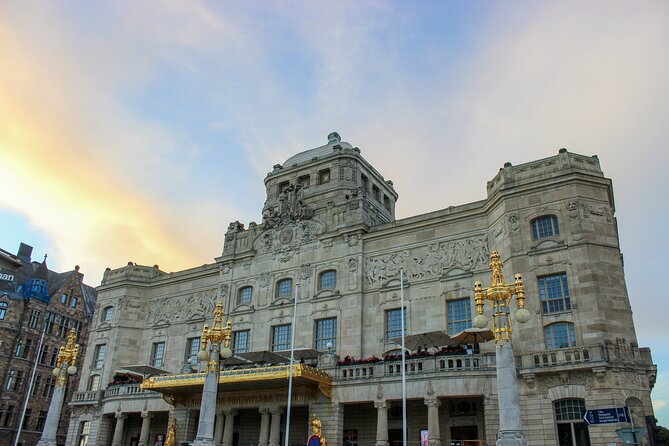
The Royal Dramatic Theater, or Kungliga Dramatiska Teatern, is a short 15-minute stop. Its Art Nouveau character makes it one of the route’s most eye-catching buildings, and the theater has links to some of Sweden’s best-known performers, including Greta Garbo and Ingrid Bergman.
The short visit is not a theater performance or an interior tour. You will hear about the building and its place in Swedish cultural life, then continue along the route.
That brief timing is sensible. A theater façade can be appreciated quickly, while the guide provides the story that turns a grand exterior into more than a picture stop. The connection to film and stage also gives the tour a welcome human angle.
The supplied details describe the theater as dating back to the 18th century. Whatever your level of interest in stage history, this is a useful reminder that Stockholm’s cultural institutions have long shaped the city’s public identity.
If you want to go inside the theater, attend a performance, or study its interiors at length, you will need to make separate plans. This tour gives you an informed introduction from the street.
Kungsträdgården and the City’s Green Spaces
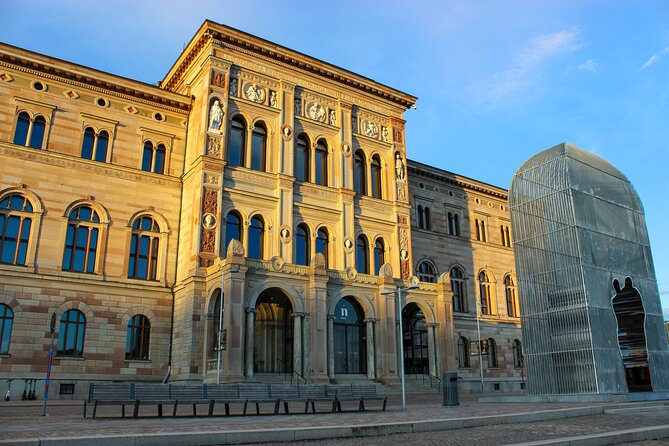
Kungsträdgården, or King’s Garden, receives about 45 minutes. This is more than a pleasant park break. The stop explains why green spaces matter in Stockholm’s urban design and how the garden has been reinvented over time.
The garden’s origins reach back to the 15th century. From there, the discussion moves through different architectural phases, including Gothic, Baroque, and modern influences. That wide time span helps you read Stockholm as a city that has changed in layers rather than following one fixed style.
I especially like the inclusion of falu red paint. The color is one of Sweden’s most recognizable visual details, and the tour explains where it came from. A small fact like this can make later views of wooden buildings and country homes more meaningful.
The park also offers a needed pause in the walking schedule. Three hours on city streets can feel full, so a green setting gives you room to listen without the constant movement of traffic and shop windows.
The stop is weather dependent, like the rest of the outdoor route. In rain or cold, you may appreciate the park less, and poor weather can lead to a rescheduled tour or full refund. This is one reason I would avoid booking it as your only fixed plan on a short Stockholm visit.
The Royal Swedish Opera and Its Phantom Story
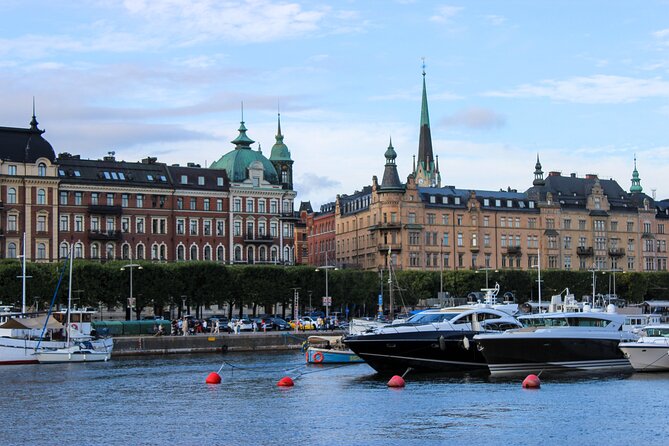
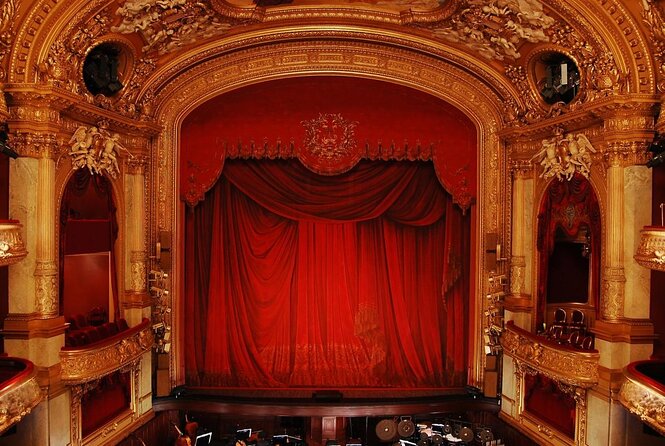
The route also includes the Royal Swedish Opera, a late 19th-century masterpiece. Here, the guide tells the story of Stockholm’s own Phantom of the Opera.
This is another short cultural stop, designed to give you a story and an exterior view rather than a full opera visit. The subject adds a bit of theatrical humor to the architecture portion of the walk.
The opera house works well in the sequence because you have just considered the Royal Dramatic Theater. Together, the two buildings show how stage institutions helped define Stockholm’s public life and its taste for grand cultural buildings.
You should not expect entry to a performance or a backstage visit. The experience is best for seeing the building in context, then deciding if you want to return for a separate show or visit.
Skeppsholmen, the Waterfront, and the Nationalmuseum
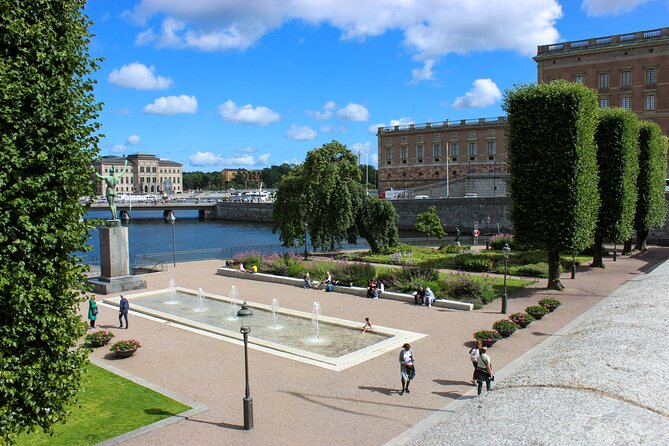
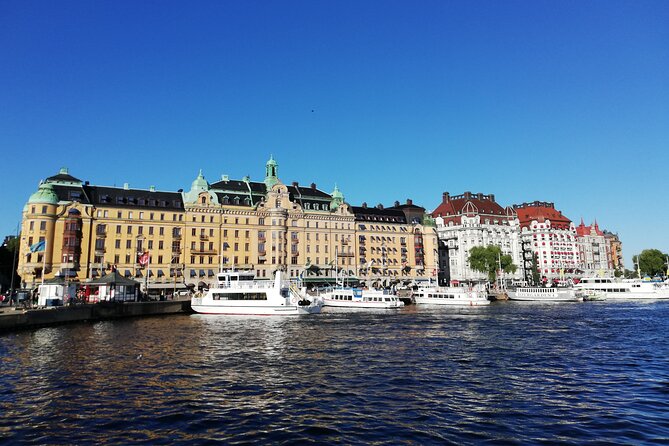
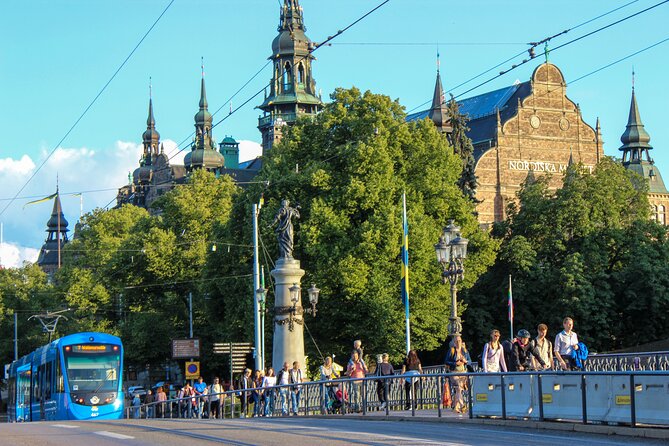
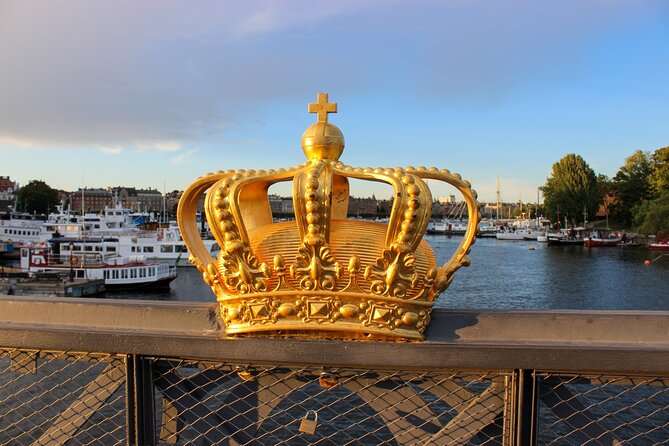
The final portion turns toward the central waterfront and the island setting of Skeppsholmen. From here, you get a view toward Stockholm’s Old Town and hear about the art, culture, and architecture associated with the area.
Skeppsholmen is linked with major Swedish museums, including the Nationalmuseum, Moderna, and ArkDes. That makes the ending useful for planning the rest of your stay. If modern art, architecture, or Swedish design catches your interest, you can mark these institutions for a later visit.
The tour ends in front of the Nationalmuseum at Södra Blasieholmshamnen. This is a convenient finish because you are near one of Stockholm’s leading art museums and can continue sightseeing without returning to the starting point.
There is a small route detail to keep in mind. The experience includes discussion of Skeppsholmen and its museums, while the stated end point is outside the Nationalmuseum. Treat this as a central waterfront finish, not as a museum admission or a full island walking tour.
The views are part of the appeal. You are not only learning about art and design inside buildings. You are seeing how water, Old Town views, public institutions, and open space shape Stockholm’s center.
Group Size, Pace, and Practical Details
The group maximum is 10 people. That is a strong number for a walking tour because it is small enough for questions without the cost of a fully private guide.
One published experience was private because only one person joined, creating an especially personal pace. You cannot count on having a private tour, but the small maximum gives you a better chance of hearing the guide and stopping at shops without a large crowd.
The tour is offered in English and uses a mobile ticket. It lasts about three hours, including travel time along the route. Since the walk moves between neighborhoods and public buildings, you should be ready to spend the full period on foot.
The start is at Svampen, Stureplan, in Östermalm. The finish is outside the Nationalmuseum. Both locations are near public transportation, which makes the tour easy to fit into a day of central Stockholm sightseeing.
Service animals are allowed, and most people can participate. The experience requires good weather, so keep your schedule flexible if rain is likely. You can cancel for a full refund up to 24 hours before the start time, but cancellations or changes inside that window are not refunded or accepted.
Who Will Get the Most From It
I would choose this tour if you want an introduction to Stockholm that joins design with the wider city. It suits you especially well if you enjoy interiors, furniture, architecture, food halls, public parks, theaters, or museums.
It is also a smart first-day activity. The guide points out streets, buildings, and cultural institutions that can help you plan the rest of your visit. The walk is broad rather than narrowly specialized, so you get a useful overview before deciding where to spend more time.
You may want something else if you need extensive museum access, a food tasting tour, or detailed architectural measurements and technical analysis. The route gives you context from the streets, but most stops are brief and admission to the museums and theaters is not included.
The price makes the most sense when you value interpretation. If you would happily walk the same route with a guidebook, the cost may feel less attractive. If you want Olesia’s stories, access to design shops, and a compact route through several parts of central Stockholm, the fee is fair.
Should You Book This Stockholm Design Tour?
Book it if you want a friendly, well-paced introduction to Swedish design and central Stockholm’s public architecture. The strongest features are the small group, the mix of street scenes and cultural landmarks, and the built-in time to browse design shops rather than being rushed past them.
I would book it early in your stay, especially since it is commonly reserved several weeks ahead. Pick a day with decent weather, wear comfortable shoes, and leave room afterward for the Nationalmuseum or the other museums connected with Skeppsholmen.
Skip it if your priority is a long indoor museum visit or a formal food experience. For design-minded visitors, first-time Stockholm explorers, and anyone who likes a city explained through its streets, this three-hour walk offers a well-chosen introduction at a reasonable price.
FAQ
How long is the Scandinavian Art, Architecture and Design Tour?
The tour lasts approximately three hours, and travel time along the route is included in that duration.
Where does the tour begin?
The meeting point is Svampen at Stureplan, in Östermalm, Stockholm.
Where does the tour end?
The tour ends in front of the Nationalmuseum at Södra Blasieholmshamnen 2.
Is the tour offered in English?
Yes. English is the listed language for the experience.
How large is the group?
The tour has a maximum of 10 participants.
Is admission to the museums included?
No museum admission is listed. The experience includes access to design shops, and entry to Ostermalms Saluhall is included.
What happens if the weather is poor?
The experience requires good weather. If it is canceled because of poor conditions, you will be offered another date or a full refund.
New around Stockholm
- World War II Stockholm Old Town Walking Tour and Army Museum★ 4.6 · 4 reviews
- 3 Hours Guided Shopping Tour in Stockholm Thrifting Stores★ 5.0 · 4 reviews
- Private Tour: Swedish History Day Trip to World Heritage Candidate Markim-Orkesta from Stockholm★ 5.0 · 8 reviews
- Wolf and Wildlife Tracking in Sweden★ 5.0 · 9 reviews
- Drottningholm Palace Private Guided Tour★ 4.5 · 15 reviews
- Voyage of the Vikings: Guided Exploration Through Sweden’s Past★ 5.0 · 2 reviews
- Vaxholm Day Trip From Stockholm: Cruise, Fortress, Swedish Fika★ 5.0 · 2 reviews
- ROYAL Uppsala and VIKING Sigtuna PRIVATE Tour★ 5.0 · 5 reviews
Stockholm Tours, compared.


City Archipelago Sightseeing Cruise with Guide
Read our review →