
Reviewed · GAMLA STAN OLD TOWN WALKS
Stockholm: Modern City and Old Town, a Small Group Walking Tour
Stockholm changes character block by block. This two-hour walk links the rebuilt modern center with medieval Gamla Stan, giving you a useful first look at how Sweden grew from a Baltic power into a modern welfare state. I like the small maximum of 10 people, which leaves room for questions, and I like the unusual focus on both postwar city planning and royal history. The main drawback is simple: if you dislike walking, this is not your tour.
You will cover a lot of ground for $78.60, but this is not a museum-heavy outing. Most stops are short outdoor explanations, and the tour ends in Stortorget, the heart of Stockholm’s Old Town. I would choose it early in a stay, especially if you want practical orientation and history in one outing, but visitors looking for palace interiors or long café breaks should plan separate time.
In This Review
- Key points at a glance
- Starting by Konserthuset at 10:00 a.m.
- Kungstornen and the first modern skyline
- Sergels Torg and Stockholm’s most disputed rebuild
- Kulturhuset and modern Swedish culture
- Brunkebergstorg and the experience-driven workplace
- Gustav II Adolf and Sweden’s age of power
- The Riksdag and the long road to voting rights
- The Royal Palace, Karl XII, and a different Swedish future
- Entering Gamla Stan through medieval lanes
- Stortorget and the Nobel Prize Museum
- What $78.60 buys you
- Who should choose this Stockholm walk?
- Should you book this tour?
- FAQ
- Where does the tour start?
- What time does the tour begin?
- Where does the tour end?
- How long does the experience last?
- How large is the tour group?
- What language is the tour offered in?
- Are attraction admission fees included?
Key points at a glance
- Modern and medieval Stockholm in one route: See the rebuilt city center before entering the narrow lanes of Gamla Stan.
- A small English-language group: The tour accepts no more than 10 people, making discussion easier than on a large coach walk.
- A useful urban-planning story: Sergels Torg and Brunkebergstorg show how much of central Stockholm changed during the 1950s, 1960s, and 1970s.
- Royal and political context: The route connects Gustav II Adolf, Karl XII, the Bernadotte dynasty, the Riksdag, and the Royal Palace.
- A central start and historic finish: Begin by Hötorget at 10:00 a.m. and finish at Stortorget, close to the Nobel Prize Museum.
- Good orientation, limited admissions: The tour explains landmarks from outside. Admission to Konserthuset is not included, and the listed stops otherwise carry no admission charge.
Starting by Konserthuset at 10:00 a.m.
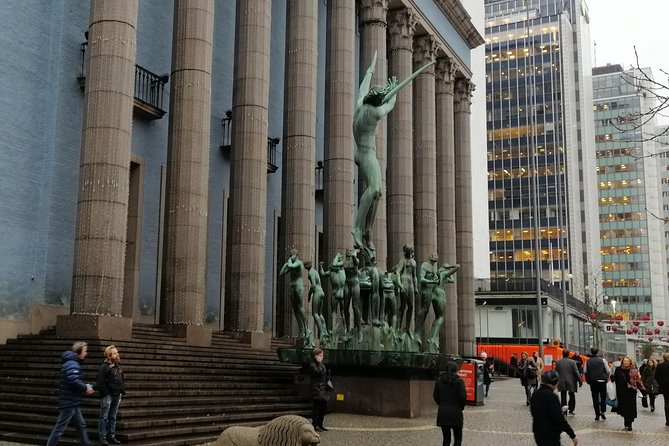
The meeting point is Hötorget 14, outside Konserthuset Stockholm, the city’s concert hall. Arriving a few minutes early makes sense because the first introduction begins here, and the tour is conducted in English.
The opening ten minutes set up Sweden and Stockholm before the walk moves into the city center. That is a smart start. Stockholm can seem like a collection of islands, palaces, bridges, and polished public squares until someone explains how the parts fit together.
You do not enter the concert hall. Admission is not included, and the stop is mainly an exterior meeting point and introduction. If you want to attend a performance or see more of the building, that requires a separate plan.
The central location is convenient for public transportation, and the 10:00 a.m. start gives you a full afternoon afterward. The route finishes in Old Town, so you can continue sightseeing without returning to the starting point.
More City Tours in Stockholm
- Stockholm: City Archipelago Sightseeing Cruise with Guide
★ 4.3 · 10,798 reviews - Stockholm: City Sightseeing Hop-On Hop-Off Bus Tour
★ 3.9 · 682 reviews - Stockholm: Guided City Sightseeing Open Electric Boat Tour
★ 4.8 · 645 reviews
Kungstornen and the first modern skyline
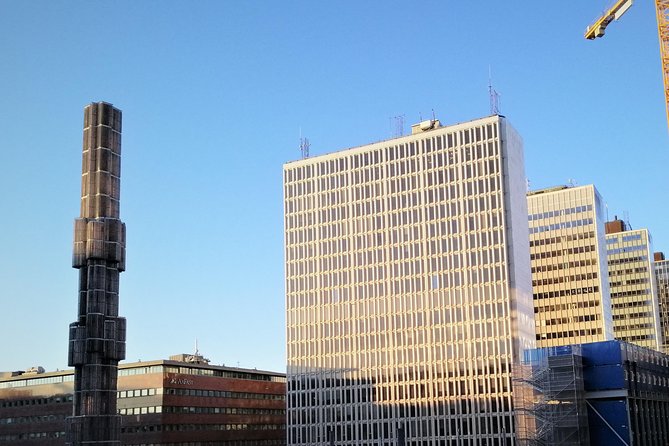
A short walk brings you to Kungstornen, the King’s Towers. Built between 1919 and 1925, these twin skyscrapers are considered the first modern skyscrapers in Europe.
The stop lasts only about five minutes, but it makes a useful point. Stockholm’s center is not only about old stone buildings and royal ceremonies. It also has an early modern identity, and these towers mark that change in the city’s profile.
Do not expect a long architectural lecture here. The value comes from seeing the towers in place and understanding their age. They help prepare you for the larger story ahead, where Stockholm’s old center gives way to modern planning.
Sergels Torg and Stockholm’s most disputed rebuild
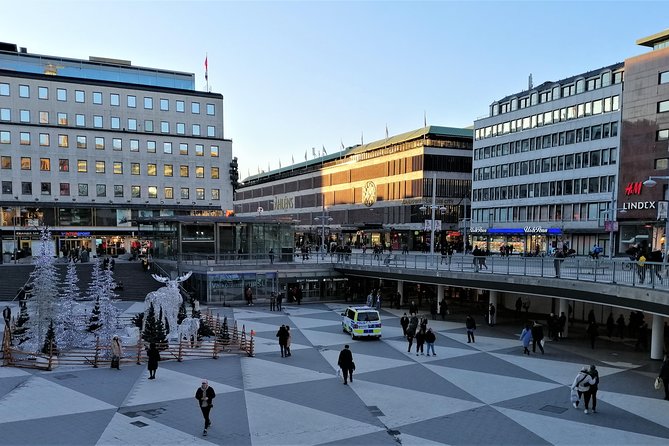
Sergels Torg is one of the most important stops for anyone curious about modern Stockholm. The square belongs to a huge redevelopment project approved by the city council in 1945 and carried out mainly during the 1950s, 1960s, and 1970s.
More than 750 buildings were demolished to make room for new roads, public spaces, and infrastructure. That scale is hard to grasp until you are standing in the rebuilt center. The project became one of Sweden’s largest urban development efforts and one of Europe’s major postwar city renewals.
The work has been both praised and criticised. It created a more modern central district, but it also erased much of the older urban fabric. I consider this one of the tour’s best subjects because it gives you a way to judge Stockholm for yourself. You are not just looking at a square. You are looking at a major choice about what a city should preserve and what it should replace.
The stop lasts around ten minutes. Expect an explanation from the public space rather than a visit to an indoor attraction. If you care about architecture, planning, or the difficult balance between old and new, this portion adds real value to the walk.
Kulturhuset and modern Swedish culture
Kulturhuset Stadsteatern sits just south of Sergels Torg. The House of Culture is a cultural center and a symbol of Stockholm’s modernist period.
Its place in the tour helps broaden the story beyond demolition and highways. Modern Stockholm was not only a construction project. It also aimed to create new civic and cultural spaces.
The guide allows about ten minutes here. You should treat it as an exterior orientation stop, with time to understand why the building matters in the city. The tour does not promise an extended indoor visit, so anyone hoping to explore the cultural center should return independently.
More Walking Tours in Stockholm
- Stockholm: Ghost Walk and Historical Tour
★ 4.7 · 2,685 reviews - Stockholm Gamla Stan: Old Town Walking Tour with Local Guide
★ 4.7 · 1,714 reviews - Walking Tour of Stockholm Old Town
★ 5.0 · 1,175 reviews - Stockholm: Swedish Food Guided Walking Tour
★ 4.5 · 1,167 reviews
Brunkebergstorg and the experience-driven workplace
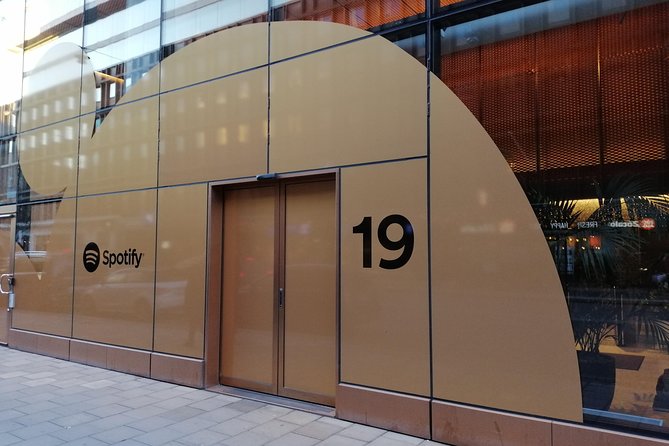
Brunkebergstorg offers another look at the redevelopment of central Stockholm. During the 1960s renewal, nearly all the older buildings around the square disappeared. Today, financial institutions dominate the area, while hotels and restaurants have also arrived.
The most unusual part of this stop is the story of Urban Escape. Real estate company AMF interviewed 500 young people, including students and people already working, about the kind of workplace they would choose. Their answer focused less on buildings and more on feelings and experiences.
That idea shaped the Urban Escape project. Spotify is among the companies with offices there. The example gives you a glimpse of how Stockholm’s business districts continue to change, this time through workplace culture rather than postwar infrastructure alone.
This ten-minute stop is especially useful if you are interested in contemporary city life. It also provides a welcome contrast with the kings, wars, and parliament buildings that follow. The square itself may appeal less to visitors seeking old streets, but its story is one of the more distinctive parts of the walk.
Gustav II Adolf and Sweden’s age of power
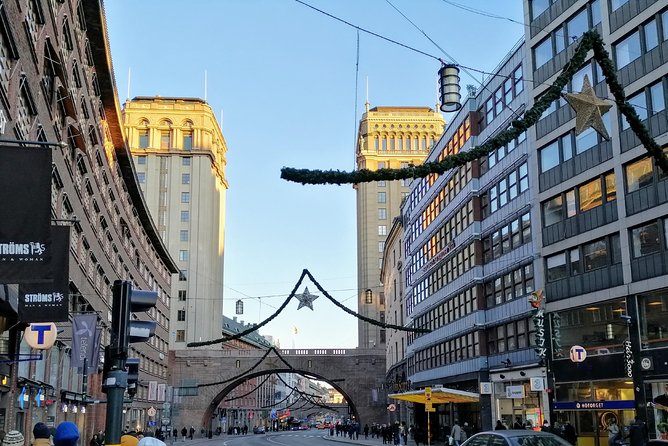
At the statue of Gustav II Adolf, the tour turns firmly toward Swedish political and military history. Gustav II Adolf was the grandson of Gustav Vasa and one of Sweden’s most important warrior kings.
During his reign, Swedish possessions surrounded much of the Baltic Sea, making it seem almost like an inland Swedish waterway. The Vasa ship was also built during his time as king. That connection gives the statue more meaning than a simple stop for a photograph.
The explanation lasts about ten minutes. You will hear how Sweden once pursued great-power ambitions around the Baltic, a theme that helps make sense of later references to Russia and Karl XII.
This part will suit you if you enjoy a clear historical timeline. If military history is not your main interest, the short format keeps it from taking over the entire tour.
The Riksdag and the long road to voting rights
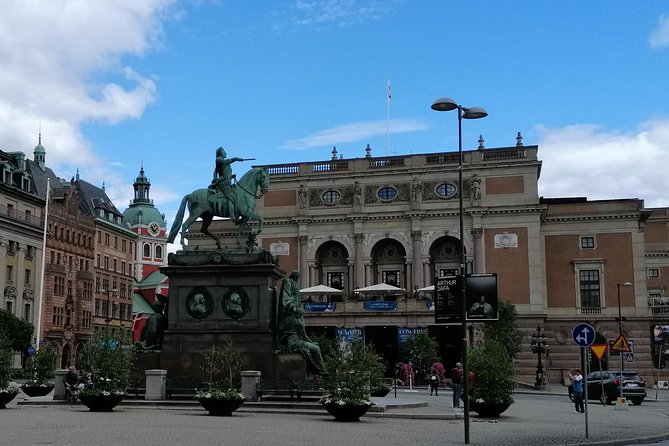
The Parliament Building, or Riksdagshuset, brings the story from kings to citizens. Sweden’s earlier parliament was the Riksdag of the Estates, where nobility, clergy, burghers, and peasants met separately before meeting the king.
That institution remained the highest authority in Sweden after the monarch until its dissolution in 1866. A two-chamber parliament followed, but voting rights were still unequal. General suffrage did not arrive until the elections of 1921, after a long political fight led by liberals and socialists.
The ten-minute stop is valuable because it prevents the royal story from becoming too simple. Sweden’s political development was not an overnight leap into modern democracy. It involved institutions, class divisions, and sustained pressure for broader representation.
Again, this is an outdoor explanation. The tour does not include an interior parliamentary visit. If you want to see inside the building, you would need to arrange that separately.
The Royal Palace, Karl XII, and a different Swedish future
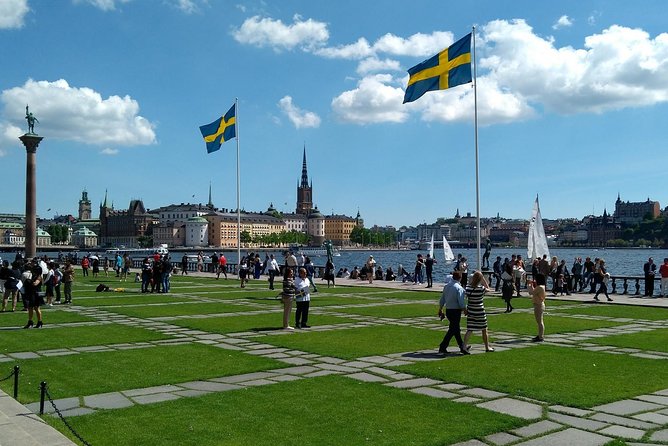
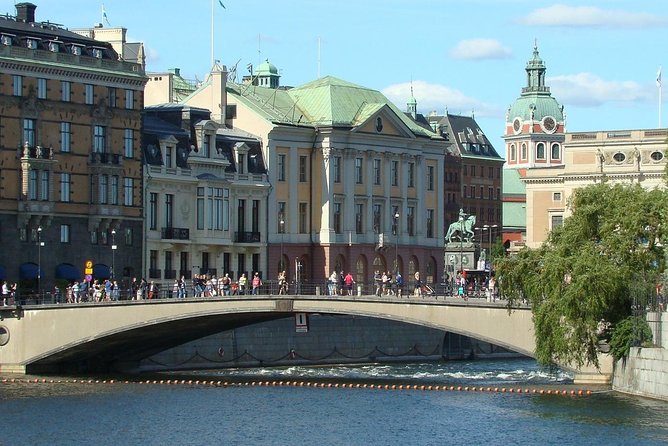
The route reaches the Royal Palace at Lejonbacken on the north side. This is the point where Swedish ambitions, military defeat, diplomacy, and nation-building come together.
Karl XII, often described as the last of Sweden’s warrior kings, is represented by a statue pointing east. The direction recalls the wars against Russia. Sweden won major victories early in his reign, but Peter the Great defeated the Swedish army at Poltava in 1709, ending the country’s dream of remaining a great power in Northern Europe.
The palace stop also brings in Sweden’s Age of Enlightenment. Gustav III had a strong interest in theatre, arts, and science, and his reign helped develop those fields. The history here moves beyond battles and toward culture and public life.
You will also see a statue of Carl XIV Johan, king from 1818 to 1844 and the first Bernadotte monarch. He came from France at the beginning of the 19th century, initially connected with the hope of recovering territory lost to Russia. Instead, he focused on diplomacy, infrastructure, and education.
That change in direction is one of the strongest ideas in the whole tour. Sweden shifted from conquest toward negotiation and domestic development. By 2014, the country was celebrating 200 years of peace. Industrial growth, natural resources, Swedish inventions, and later entrepreneurs helped create the foundation for the modern welfare state.
The palace stop lasts around ten minutes, so do not expect a full lesson on every monarch. You receive a compact explanation of how Sweden’s priorities changed over time. The palace itself is an important exterior sight, but interior admission is not part of this experience.
Entering Gamla Stan through medieval lanes
After the palace, you enter Stockholm Old Town, or Gamla Stan. This is one of Europe’s best-preserved medieval city centers, and the change in atmosphere is immediate.
The route follows narrow cobblestoned lanes and turns toward the story of Sweden’s birth. This is where the tour’s two halves finally make sense together. The modern center shows a city remade by planners, while Old Town shows the older pattern that survived.
The Gamla Stan portion lasts about 20 minutes, the longest single stop. That gives you time to get oriented, but it is still a short introduction rather than a detailed architectural study.
Wear sensible shoes. The tour requires a moderate level of physical fitness, and cobblestones can be tiring even on a short route. The walk is not designed as exercise, but walking is the way the guide connects the landmarks and lets you pause for photographs.
One practical point matters here: Stockholm may feel compact, but the tour still covers a meaningful route. A concern raised about the experience was that the city seemed too small to justify a walking tour. The provider’s answer was that the goal is not physical exertion. The walk is meant to show both the modern center and the medieval town while leaving time for questions and discussion.
That distinction is useful. If you want a ride between sights, choose another format. If you want to understand how the districts relate to one another, walking is the point.
Stortorget and the Nobel Prize Museum
The tour ends at Stortorget, the central square of Old Town. Restaurants and cafés surround the square, making it a practical place to continue your day.
The Nobel Prize Museum is located here. The Swedish Royal Academies select winners of the Nobel Prizes in major areas of science and art, so the square gives the tour one final link between Sweden’s older institutions and its international modern reputation.
Ending here is convenient. You can stay in Gamla Stan, visit the museum separately, find lunch, or continue through the surrounding lanes. Because the starting point and ending point are different, the tour works well as a one-way introduction rather than a loop.
The stop itself lasts about ten minutes. Admission to the museum is not included in the walking tour, so check its separate opening details before planning your afternoon around it.
What $78.60 buys you
At $78.60 per person, this is not the cheapest way to see Stockholm’s streets. The value depends on how much you want from a guide.
You are paying for a small English-language group, a planned route across two very different districts, and historical interpretation that connects the sights. The maximum of 10 people is important. A compact group is more likely to hear the explanation clearly and ask about a detail that catches your interest.
The tour also covers topics that are easy to miss on your own. You might photograph Sergels Torg without learning about the 750-plus demolitions behind it. You might pass the Riksdag without knowing how representation changed in 1866 and 1921. You might see the Royal Palace without linking Karl XII’s defeat to Sweden’s later turn toward peace and education.
The weaker value comes if you expect lengthy visits, included admissions, or a slow pace. Most stops last 5 to 10 minutes, and the tour remains outside. You will need to pay separately for any attraction you enter.
One useful benefit is the practical advice available at the end. The experience includes tips about things to do in the area, which can help you choose your next stop after Stortorget.
Who should choose this Stockholm walk?
I would recommend it for a first visit, especially if you want a broad framework before exploring museums and palaces on your own. It suits people who enjoy public spaces, architecture, royal stories, politics, and the way cities change.
It is also a good fit for solo visitors or couples who prefer conversation over a large group. The small-group format can make a difference, particularly when you want to ask about a statue, building, or historical turning point.
You should think twice if you dislike walking on cobblestones, want extensive indoor sightseeing, or prefer to spend 20 minutes at each major landmark. The moderate fitness requirement is worth taking seriously, even though the experience is only about two hours.
The tour is booked an average of 78 days ahead, so advance planning is sensible if your Stockholm dates are fixed. Free cancellation is available until 24 hours before the 10:00 a.m. start time. Changes or cancellations inside that window are not accepted for a refund.
Should you book this tour?
Book it if you want Stockholm explained as a city of contrasts: early skyscrapers beside royal monuments, a postwar rebuild beside medieval lanes, and warrior kings followed by diplomacy, education, and peace.
Skip it if you mainly want palace interiors, museum access, or a vehicle ride. At $78.60, the strongest value is the guide’s ability to connect places that might otherwise feel unrelated. For a first morning in Stockholm, that orientation can make the rest of your visit easier and more meaningful.
FAQ
Where does the tour start?
The tour starts outside Konserthuset Stockholm at Hötorget 14, 111 57 Stockholm, Sweden.
What time does the tour begin?
The start time is 10:00 a.m.
Where does the tour end?
The tour ends at Stortorget in Stockholm Old Town, at 111 29 Stockholm, Sweden.
How long does the experience last?
The walking tour lasts approximately two hours.
How large is the tour group?
The maximum group size is 10 people.
What language is the tour offered in?
The tour is offered in English.
Are attraction admission fees included?
The listed stops are viewed from outside, and admission is free for the public areas described. Admission to Konserthuset is not included. The Nobel Prize Museum is located at Stortorget, but museum admission is not included in the tour.
More Old Town Walks in Stockholm
- The Original Stockholm Ghost Walk and Historical Tour – Gamla Stan
★ 4.5 · 1,165 reviews - Stockholm: Royal Djurgården Boat Tour
★ 4.1 · 682 reviews - Stockholm: Old Town Private Walking Tour
★ 4.7 · 675 reviews - Stockholm: Guided Historic Old Town Walking Tour with Local
★ 4.8 · 618 reviews
New around Stockholm
- World War II Stockholm Old Town Walking Tour and Army Museum★ 4.6 · 4 reviews
- 3 Hours Guided Shopping Tour in Stockholm Thrifting Stores★ 5.0 · 4 reviews
- Scandinavian Art, Architecture and Design Tour in Stockholm★ 4.5 · 11 reviews
- Wolf and Wildlife Tracking in Sweden★ 5.0 · 9 reviews
- Private Tour: Swedish History Day Trip to World Heritage Candidate Markim-Orkesta from Stockholm★ 5.0 · 8 reviews
- Drottningholm Palace Private Guided Tour★ 4.5 · 15 reviews
- Voyage of the Vikings: Guided Exploration Through Sweden’s Past★ 5.0 · 2 reviews
- Vaxholm Day Trip From Stockholm: Cruise, Fortress, Swedish Fika★ 5.0 · 2 reviews
Gamla Stan Old Town Walks, compared.
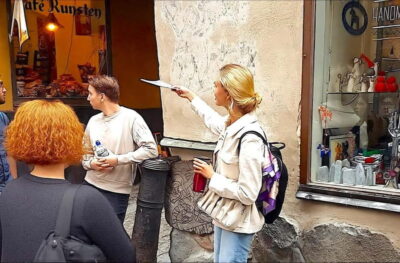
Stockholm Gamla Stan: Old Town Walking Tour with Local Guide
Read our review →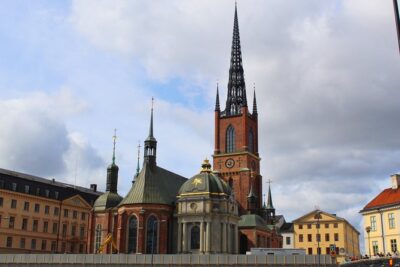
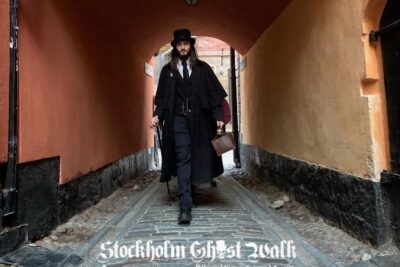
The Original Stockholm Ghost Walk and Historical Tour – Gamla Stan
Read our review →
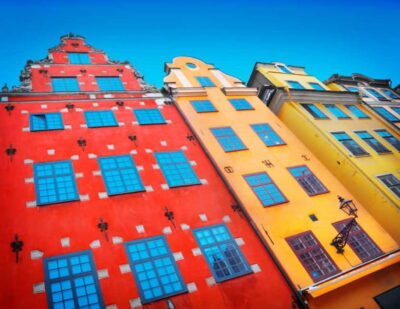
Guided Historic Old Town Walking Tour with Local
Read our review →
Walking Tour of Stockholm’s Old Town, Gamla Stan
Read our review →Browse the lists this tour appears in