
Reviewed · GAMLA STAN OLD TOWN WALKS
Stockholm: Old Town Gamla Stan Guided Walking Tour
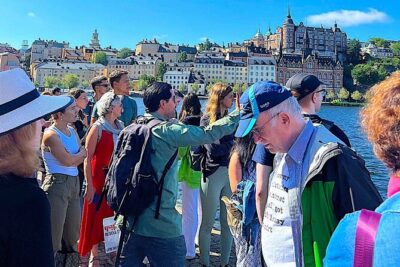
History feels close in Stockholm. This two-hour walk makes Gamla Stan easier to read, from medieval alleys and royal buildings to the political drama of Stortorget. I like the small maximum of six people, which keeps the guide close and makes questions easy. I also like the way the tour links visible details, such as plaques, sculptures, old streets, and an ancient runestone, to larger stories about Swedish power and daily life.
The main consideration is that this is an exterior walking tour, not a palace or church interior visit. You will see the Royal Palace and Stockholm Cathedral from outside, and the pace is built around storytelling rather than long stops inside museums. If you want current Swedish culture or lots of modern local-life facts, you may find the tour more focused on history, as one guest specifically wished for more present-day context.
- Small group of six: You get a close, conversational tour rather than a guide speaking to a crowd.
- Rosenbadsparken beginning: The calm meeting point gives you a short orientation before the Old Town streets begin.
- Birger Jarl and Riddarholmen: Stockholm’s founding story comes early, with Riddarholmen Church as a handsome historical marker.
- Stortorget and the Stockholm Bloodbath: The tour gives this dramatic 1520 event a clear place in Swedish history.
- Mårten Trotzigs Gränd: One of Gamla Stan’s tightest lanes shows how different the medieval street plan feels from modern city design.
- Brända Tomten and the old tree: You learn how Gamla Stan nearly suffered demolition and how preservation efforts helped save it.
In This Review
- Why a Small Gamla Stan Tour Can Be Worth $31
- Starting Between Government Buildings and Bridges
- Riddarholmen and the Story of Birger Jarl
- Walking the Medieval Streets of Gamla Stan
- Stockholm Cathedral and the Royal Palace
- Stortorget and the Stockholm Bloodbath
- Mårten Trotzigs Gränd and Stockholm’s Tightest Corners
- Brända Tomten and the Fight to Save the Old Town
- A Guide Who Makes Dates Useful
- Timing, Meeting Details, and Comfort
- Who Will Get the Most From This Walk
- Should You Book the Gamla Stan Walk?
- FAQ
- How long does the Stockholm Gamla Stan walking tour last?
- How much does the tour cost?
- Where does the tour meet?
- Where does the tour finish?
- Is the Royal Palace included?
- What language is the tour offered in?
- How large is the group?
Why a Small Gamla Stan Tour Can Be Worth $31
At $31 per person, this is priced as an accessible introduction rather than a luxury private tour. The value comes from having a guide interpret the streets for you. Gamla Stan is pleasant to wander alone, but its narrow lanes can look like a charming collection of facades unless someone explains how trade, royal authority, religion, and urban decline shaped them.
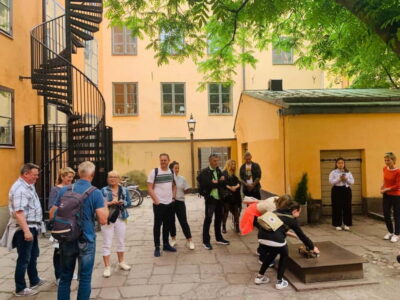
The group limit matters. With no more than six participants, you should be able to hear without standing shoulder to shoulder with dozens of other people. Giancarlo, also referred to as Gian Carlo, is repeatedly praised for clear explanations, warm interaction, humor, and his ability to answer questions. One solo participant also appreciated help with photographs and suggestions for exploring the rest of Stockholm.
That small format does not turn the walk into a private tour, but it gives it a personal feel. You can ask why a building looks a certain way, what a sculpture represents, or how a street was used in earlier centuries. For a first visit, that extra explanation can save you from simply passing through the Old Town without understanding it.
The tradeoff is simple: two hours passes quickly. You will cover several important places, but you will not have time for long interior visits, extended shopping, or a slow stop at every sight. Think of it as a historical orientation that helps you make better choices for the rest of your stay.
Starting Between Government Buildings and Bridges
The meeting point is in the middle of Rosenbadsparken. Look for the guide with a black umbrella and jacket. The park offers a calmer beginning than meeting directly in one of Gamla Stan’s crowded lanes, and the opening gives you a focused introduction to the city between the bridges.
This framing is useful because Gamla Stan is not just an isolated old quarter. Its position among waterways and bridges helps explain why the area mattered. The tour begins by setting up the relationship between the historic center, government, royal power, and the surrounding islands.
From there, you cross toward Gamla Stan and pause at Strömsborg. This tiny island has an unexpected nightlife past, which adds a lighter note before the tour moves into medieval foundations and royal burial places. It is a good example of the guide’s approach: use what you can see today, then add a surprising detail that changes how you look at it.
More Walking Tours in Stockholm
- Stockholm: Ghost Walk and Historical Tour
★ 4.7 · 2,685 reviews - Stockholm Gamla Stan: Old Town Walking Tour with Local Guide
★ 4.7 · 1,714 reviews - Walking Tour of Stockholm Old Town
★ 5.0 · 1,175 reviews
Riddarholmen and the Story of Birger Jarl
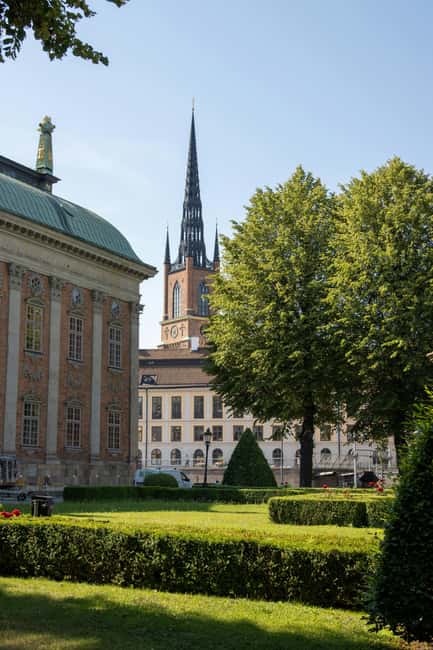
Riddarholmen brings the tour into the 13th century. Here you see Riddarholmen Church and hear the story of Birger Jarl, the figure linked to Stockholm’s founding in 1252.
The value of this stop is not just the date. A founding story gives you a starting point for understanding why Stockholm developed where it did and why its central islands became so important. Giancarlo uses historical anchors and modern comparisons, making the early story easier to follow than a string of names and dates.
Riddarholmen Church also gives the discussion a strong visual focus. You are not listening to an abstract lecture in a park. You are looking at one of the city’s major historic buildings while hearing about medieval authority, noble families, and the growth of Stockholm.
If you prefer a tour packed with interiors, this stop may feel brief. The experience is designed around outside views and interpretation, so you should not expect entry to Riddarholmen Church as part of the standard walk.
Walking the Medieval Streets of Gamla Stan
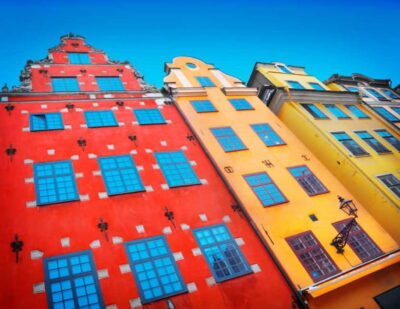
Once inside Gamla Stan, the tour slows down. That matters. The streets are narrow, and the best details are often above eye level or tucked into corners. A careful pace gives you time to notice stonework, signs, architectural changes, and the shape of the lanes.
The guide asks you to imagine medieval Stockholm as a muddy, busy city rather than the polished historic quarter you see now. That shift is useful. It connects the pretty buildings with the less glamorous work of trade, transport, sanitation, and everyday survival.
The walk includes Köpmangatan, often identified as Stockholm’s oldest street. Its name and position help explain the role of commerce in the city’s growth. You also get an overview of Swedish government, nobility, and royalty, with each subject tied to places you can actually see.
This is one of the tour’s strongest features. Instead of presenting Swedish history as a long list, the guide attaches it to streets and buildings. Giancarlo is especially praised for explaining the context of architecture and sculpture, and for making dates and facts easier to remember through storytelling.
Stockholm Cathedral and the Royal Palace
The route passes Stockholm Cathedral and the Royal Palace. These are important stops for understanding the city’s religious and royal power, even though the tour includes exterior views rather than interior visits.
At the cathedral, you can consider how religion shaped public life and the city’s institutions. At the Royal Palace, the focus shifts toward monarchy, court life, and the continued presence of royal authority in the heart of Stockholm.
The palace stop is best understood as a visual and historical orientation. You see the exterior, hear about its place in Swedish history, and gain context that can help if you later choose to visit inside on your own. If you have already toured the palace, the guide’s explanation can still add useful background, but the walk does not replace an interior visit.
Families may appreciate the guide’s style here. One parent specifically praised Giancarlo for keeping children involved and answering their questions. That suggests the tour is not delivered as a stiff lecture, which is important when younger walkers are deciding whether history is interesting or merely required.
More old town walks in Stockholm:
- The Original Stockholm Ghost Walk and Historical Tour – Gamla Stan
★ 4.5 · 1,165 reviews - Stockholm: Royal Djurgården Boat Tour
★ 4.1 · 682 reviews - Stockholm: Old Town Private Walking Tour
★ 4.7 · 675 reviews - Stockholm: Guided Historic Old Town Walking Tour with Local
★ 4.8 · 618 reviews
Stortorget and the Stockholm Bloodbath
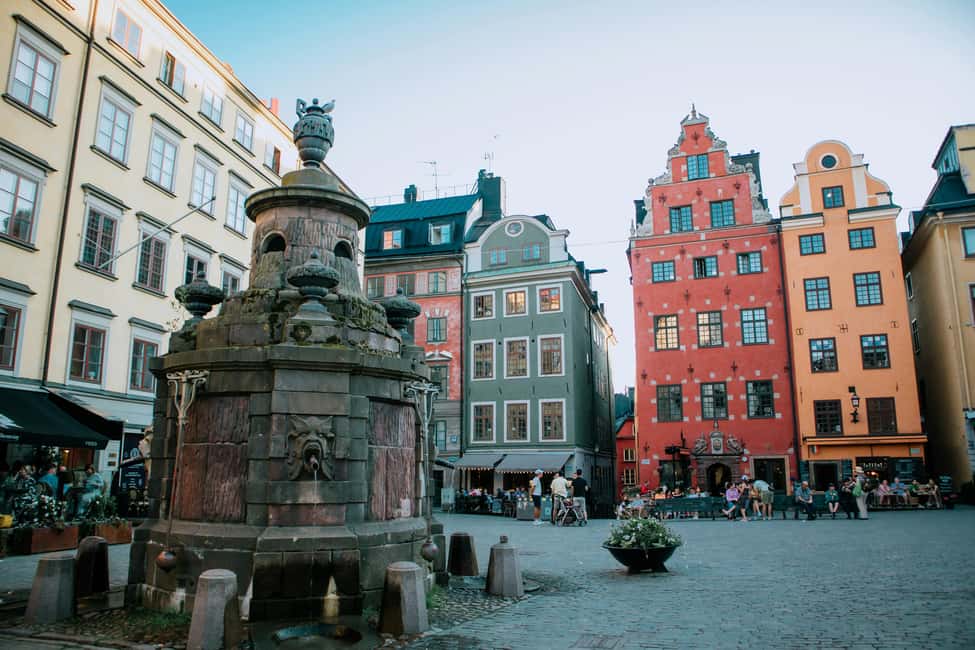
Stortorget is the dramatic center of the walk. This square is where the tour explains the Stockholm Bloodbath of 1520, the Nordic Union, and the way the event altered Swedish history.
The story works well in this setting because the square gives the subject a physical frame. You are standing in the place while hearing about political conflict, power, and executions. The stop is scheduled for roughly 20 minutes, long enough for a clear account and questions without turning into a full seminar.
The guide also connects Stortorget with the Nobel Prize. That combination moves the story from medieval and early modern politics toward Stockholm’s modern international role. It shows how one square can carry several layers of public life over time.
This is likely to be one of the most memorable sections for history-minded visitors. Giancarlo’s strength is storytelling, so the Bloodbath is presented as a turning point rather than a dry footnote. Still, the account is concise. If you want a detailed study of the Kalmar Union, the Bloodbath, or Swedish political history, you will need a book or museum visit afterward.
Stortorget is also a natural photo stop. You will have time to look around, but remember that this is a working public square, not a private set built for a tour. The atmosphere can change with the number of people nearby, and the group may need to keep moving.
Mårten Trotzigs Gränd and Stockholm’s Tightest Corners
Gamla Stan becomes most characterful in its narrow lanes. Mårten Trotzigs Gränd is a highlight because its confined passage makes the medieval street plan immediately clear.
A lane like this can be easy to photograph and easy to misunderstand. The guide explains how such streets fit into the older city, giving the passage a social and historical purpose beyond its visual appeal. You move through the space while considering how residents, merchants, and workers once used streets that were far less convenient than modern roads.
The walk also touches the 1600s and links Sweden’s imperial ambitions to specific places in Gamla Stan. This is a useful way to discuss power. Instead of treating empire as a distant political idea, the tour connects it with the architecture and urban spaces around you.
Wear comfortable shoes. The route includes medieval alleyways, and the ground may require more care than a flat modern sidewalk. The pace is deliberately measured, with short shaded rest stops and opportunities for questions, but it remains a walking tour rather than a seated history talk.
Brända Tomten and the Fight to Save the Old Town
Brända Tomten offers one of the tour’s more unusual historical turns. Here you hear about Gamla Stan’s decline in the 19th century and the preservation work associated with the St Erik Society.
This part is valuable because old districts do not survive by accident. Gamla Stan could have faced major demolition, and the preservation movement helped protect the lanes and buildings that now attract visitors. The story gives you a better appreciation for the fact that historic Stockholm is also the result of later choices.
The stop includes Stockholm’s oldest tree, described as a living symbol of the city’s resilience. That small detail gives the preservation discussion a human scale. You move from civic decisions and urban planning to one old living feature that has watched the city change around it.
Brända Tomten is scheduled for about 15 minutes, making it a compact stop. You will hear the main outline and see the key setting, but anyone fascinated by conservation or architecture may want to ask follow-up questions while the group is there.
A Guide Who Makes Dates Useful
The strongest praise for this experience centers on Giancarlo’s delivery. You can expect a guide who is friendly, patient, interactive, and comfortable answering questions. His English is described as fluent, and the tour information also lists availability in Spanish, Swedish, and Danish, although the live tour details identify English as the main language.
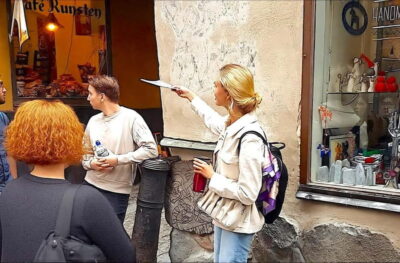
The style suits people who want facts with a human voice. Giancarlo is praised for humor, clear structure, passion for Stockholm, and explanations that place sculptures and buildings in context. One person called attention to an ancient runestone built into a wall, a detail you might miss without someone pointing it out.
You should not expect every question to lead into modern Swedish culture. The tour concentrates on Stockholm’s past, with particular attention to medieval society, royalty, government, nobility, and major historical events. If current customs, food, politics, or everyday Swedish life are a top priority, ask about those subjects during the walk, but do not assume they are the central focus.
Timing, Meeting Details, and Comfort
The advertised duration is two hours, while the walk is typically described as about 1.5 to 2 hours. That slight variation is normal for a small walking tour because questions and group pace can affect the finish time.
You begin at Rosenbadsparken and finish at Slussen, where old and new Stockholm meet. Ending there is practical because you can continue exploring, ask final questions, or use the location as a starting point for another part of the city.
Transportation to Rosenbadsparken is not included, and food and drinks are not included. Plan to arrive ready to walk, since the experience covers several islands, historic streets, squares, and lanes rather than keeping you in one compact courtyard.
Cancellation is flexible if your plans are uncertain: you can cancel up to 24 hours in advance for a full refund, and the reserve-now, pay-later option means you do not need to pay at booking. Availability and start times should be checked before you reserve.
Who Will Get the Most From This Walk
I would choose this tour early in a Stockholm visit if you want a clear map of Gamla Stan’s stories before exploring alone. The guide’s recommendations at the end can also help you decide what to see next.
It suits:
- First-time visitors who want the Old Town explained, not just photographed
- Solo visitors who value a small group and help with pictures
- Families with children who respond better to stories and questions than formal lectures
- History fans interested in monarchy, medieval society, Swedish power, and the Stockholm Bloodbath
- Visitors who prefer a slow, focused walk over a large group moving from stop to stop
It may be less suitable if you want museum admission, extensive free time, a food-based tour, or a strong focus on present-day Swedish culture. The walk gives you a framework for Stockholm. It does not try to cover every subject.
Should You Book the Gamla Stan Walk?
At $31, this is a good-value introduction to Stockholm’s Old Town, especially with a maximum of six participants and a guide who has earned strong praise for storytelling, patience, and historical detail. I like that the route includes both famous sights and easy-to-miss details, from Mårten Trotzigs Gränd to the runestone and Stockholm’s oldest tree.
Book it if you want to understand why Gamla Stan looks the way it does and you enjoy asking questions as you walk. Skip it if you mainly want interior access or modern cultural trivia. For most first-time visitors, taking this tour near the start of a Stockholm stay should make every later stroll through the Old Town more rewarding.
FAQ
How long does the Stockholm Gamla Stan walking tour last?
The advertised duration is two hours. The walk is typically around 1.5 to 2 hours, depending on the pace and time spent on questions.
How much does the tour cost?
The listed price is $31 per person.
Where does the tour meet?
The meeting point is in the middle of Rosenbadsparken. The guide will have a black umbrella and jacket.
Where does the tour finish?
The walk ends at Slussen, where historic and modern Stockholm meet.
Is the Royal Palace included?
The tour includes an exterior view of the Royal Palace. Interior admission is not included in the stated experience.
What language is the tour offered in?
The tour information lists English, Spanish, Swedish, and Danish availability. The live tour details identify English as the tour language.
How large is the group?
The tour is limited to six participants, making it a small-group experience.
New around Stockholm
- World War II Stockholm Old Town Walking Tour and Army Museum★ 4.6 · 4 reviews
- 3 Hours Guided Shopping Tour in Stockholm Thrifting Stores★ 5.0 · 4 reviews
- Scandinavian Art, Architecture and Design Tour in Stockholm★ 4.5 · 11 reviews
- Private Tour: Swedish History Day Trip to World Heritage Candidate Markim-Orkesta from Stockholm★ 5.0 · 8 reviews
- Wolf and Wildlife Tracking in Sweden★ 5.0 · 9 reviews
- Drottningholm Palace Private Guided Tour★ 4.5 · 15 reviews
- Voyage of the Vikings: Guided Exploration Through Sweden’s Past★ 5.0 · 2 reviews
- Vaxholm Day Trip From Stockholm: Cruise, Fortress, Swedish Fika★ 5.0 · 2 reviews
Gamla Stan Old Town Walks, compared.
Stockholm Gamla Stan: Old Town Walking Tour with Local Guide
Read our review →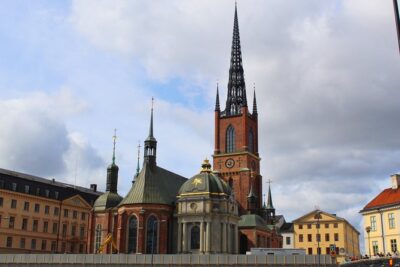

The Original Stockholm Ghost Walk and Historical Tour – Gamla Stan
Read our review →
Guided Historic Old Town Walking Tour with Local
Read our review →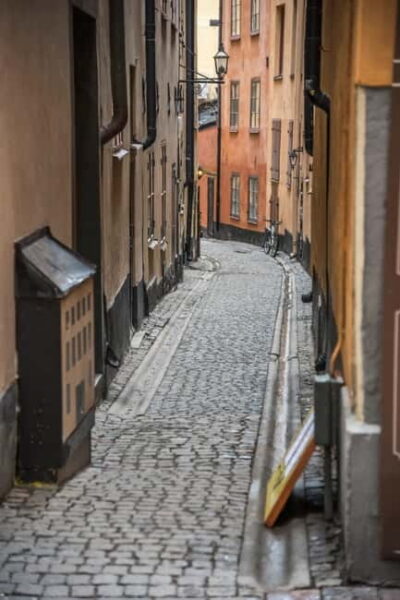
Walking Tour of Stockholm’s Old Town, Gamla Stan
Read our review →Browse the lists this tour appears in