
Reviewed · MUSEUMS
Stockholm: Paradox Museum Entry Ticket
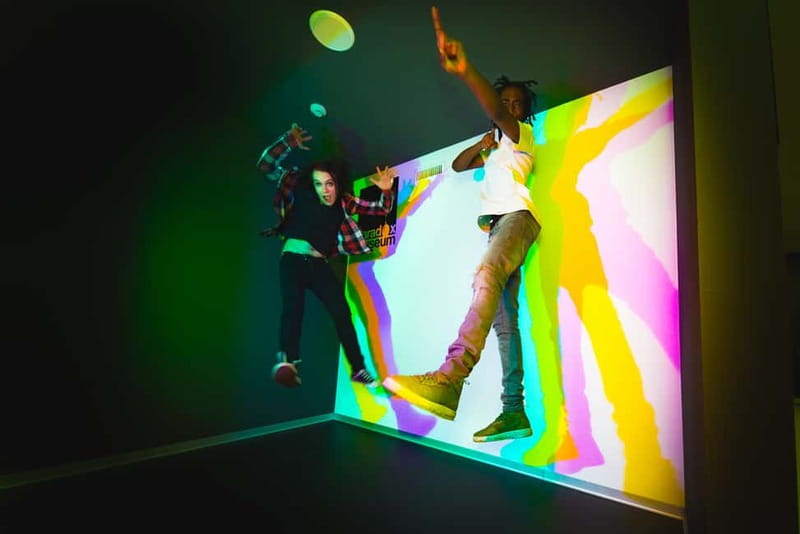
Prepare to question your eyes. The Paradox Museum Stockholm turns optical illusions, mirrors, perspective tricks, and tactile puzzles into a hands-on photo adventure with more than 70 exhibits. I like the friendly staff, who often help with tricky camera angles, and the easy downtown location beside Hötorget subway station. The main caution is that the experience can feel short or crowded, especially when several groups reach the popular photo stations together.
At $28 per person, this is not a traditional museum visit with quiet galleries and long explanations. You are paying for roughly 80 minutes of playful experiments, staged photographs, and shared laughs. I would choose it for families, couples, teenagers, and rainy-day plans, but solo visitors should know that several displays work best with two or three people.
In This Review
- Key points at a glance
- What kind of museum is Paradox?
- Arriving at Sergelgatan 20
- The one-way route through 70-plus exhibits
- Why the staff matter
- The photo strategy that saves time
- Timing, crowds, and the real length of the visit
- Is $28 a fair price?
- The best match for families, couples, and curious adults
- Leaving through the Paradox Boutique
- Practical verdict: should you book?
- FAQ
- Where is the Paradox Museum Stockholm?
- How long does the Paradox Museum visit take?
- How much does entry cost?
- Is the Zero Gravity experience included?
- Is the museum suitable for children?
- Can solo visitors enjoy the museum?
- Is the museum wheelchair accessible?
- Can I bring food, drinks, or pets?
Key points at a glance
- More than 70 interactive exhibits: You do not simply look at the displays. You step into them, touch them, pose in them, and test what your senses tell you.
- Photo points make a real difference: Marked spots show where to stand for the strongest optical effect, while staff can help take group pictures.
- Hötorget is the easy starting point: The museum is at street level on Sergelgatan 20, right beside Hötorget subway station in central Stockholm.
- The route runs one way: Follow the signs from exhibit to exhibit, so you do not need to plan your own order or double back.
- Allow up to 80 minutes, but stay flexible: Some people finish in about 30 to 60 minutes, while families and photo-focused groups may use more of the allotted time.
- Zero Gravity costs extra: The add-on is 20 SEK and is not part of the standard entry ticket.
What kind of museum is Paradox?
The Paradox Museum is best understood as a play space built around visual and sensory confusion. It is sometimes called a museum, but do not expect display cases, formal art labels, or a collection designed mainly for quiet observation.
Here, the point is to do something. You may enter a room that makes one person appear much taller than another, pose in an upside-down setting, or test an illusion that makes a rotating structure feel oddly unstable. The displays are designed to produce a reaction first, then explain why your brain and senses were fooled.
That order matters. You get the laugh or surprise, then read the short explanation beside the exhibit. Signs tell you what to do and give a basic explanation of what is happening. QR codes offer more information if you want to spend longer with a particular idea.
I like this format for families because it gives children a reason to keep moving. Teenagers also have a clear mission: create the strangest photograph possible. Adults may find the science behind the trick more interesting than the pose itself, especially when the eye confidently reports something the mind later has to correct.
The collection includes more than 70 exhibits, though the experience does not feel like 70 separate lessons. Many displays focus on perspective, mirrors, light, scale, and visual illusion. If you are hoping for a broad study of every human sense, you may find less variety than expected. Some visitors would like more exhibits built around sound and hearing.
More museums worth an afternoon in Stockholm:
- Stockholm: ABBA The Museum Entrance Ticket
★ 4.7 · 11,280 reviews - Stockholm: Skansen Open-Air Museum Admission Ticket
★ 4.5 · 3,427 reviews - Stockholm Pass: Save up to 50% – Includes Vasa Museum Ticket
★ 4.1 · 2,392 reviews
Arriving at Sergelgatan 20
Finding the museum is simple once you know the landmark. Go to Hötorget in central Stockholm and look for the entrance at street level on Sergelgatan 20. Hötorget subway station is right nearby, making this a practical stop during a day in the city center.
The entrance can be easy to miss if you are looking for a grand museum facade. One person found the building confusing at first, so allow a few extra minutes to get your bearings. Asking locally should put you on track quickly.
Your ticket is tied to a chosen time slot. This is not an attraction where you should arrive whenever you happen to be nearby. Plan to be there on time, since the museum uses timed entry and a one-way flow through the exhibits.
The site is wheelchair accessible. Pets are not allowed, although assistance dogs are permitted. Food and drinks are also not allowed inside, so finish snacks before entering.
The one-way route through 70-plus exhibits
Once inside, signs guide you through the museum in a set direction. This is helpful because you do not have to decide where to begin, and the route keeps the experience moving. It also means that a crowded exhibit can slow the whole group behind it.
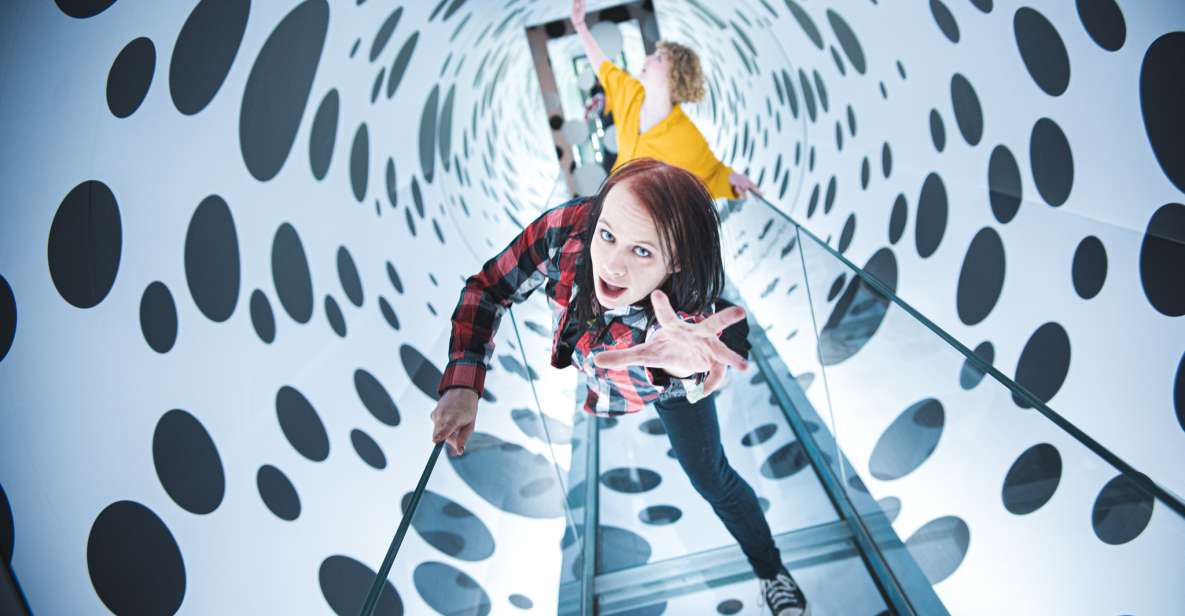
Take your time at the first few displays. The opening rotating cylinder is one of the attractions that has made a strong impression, and it sets the tone for what follows. You are not standing at a distance waiting for a demonstration. You are part of the demonstration.
The museum marks recommended photo points on the floor or beside the displays. Use them. These positions are not just suggestions for composition. They are often the exact angle needed to make the illusion work in a photograph.
At each station, first try the activity, then read the explanation. If you study the instructions too long before stepping in, you can lose some of the surprise. After the first attempt, the explanation helps you understand why the image looks wrong or why your sense of balance feels uncertain.
The route includes rooms built around scale and perspective. The tall-versus-small room is a good example of how a simple change in angles can transform a group photo. The upside-down room creates another classic picture, but the fun comes from seeing how quickly your brain accepts the room as normal once the camera frame removes the surrounding clues.
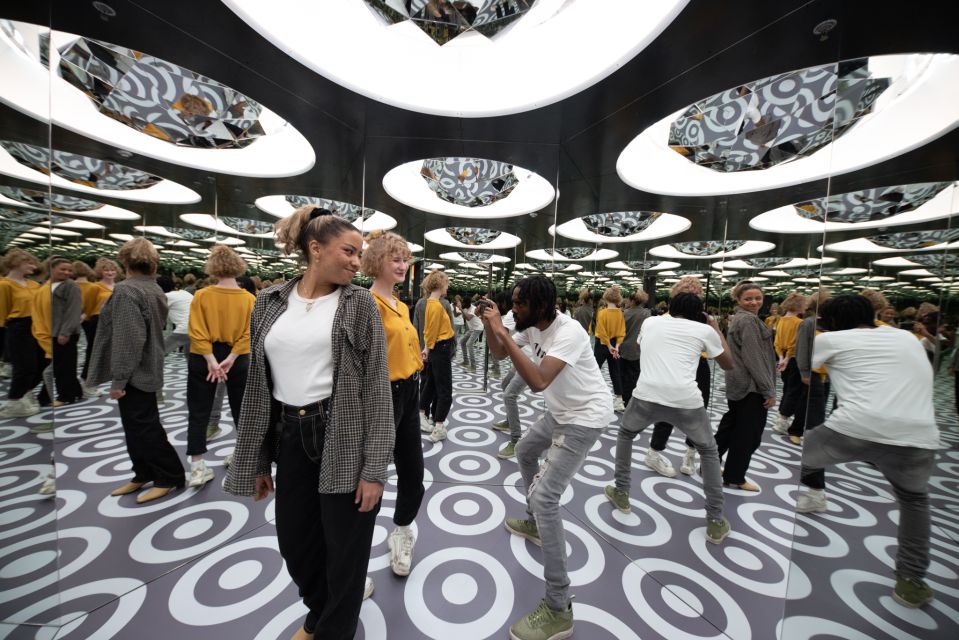
Mirrors appear often. They can produce the strongest effects, but they also account for some of the repetition. If you have already visited another Paradox Museum, you may recognize certain ideas. If this is your first visit, the combination of physical staging and photo instructions should still feel fresh.
The exhibits are generally short activities rather than long installations. That keeps the energy high, but it also explains why some people finish in under an hour. You will get more value if you pause to read the science, repeat a few photographs, and let children test the displays more than once.
Why the staff matter
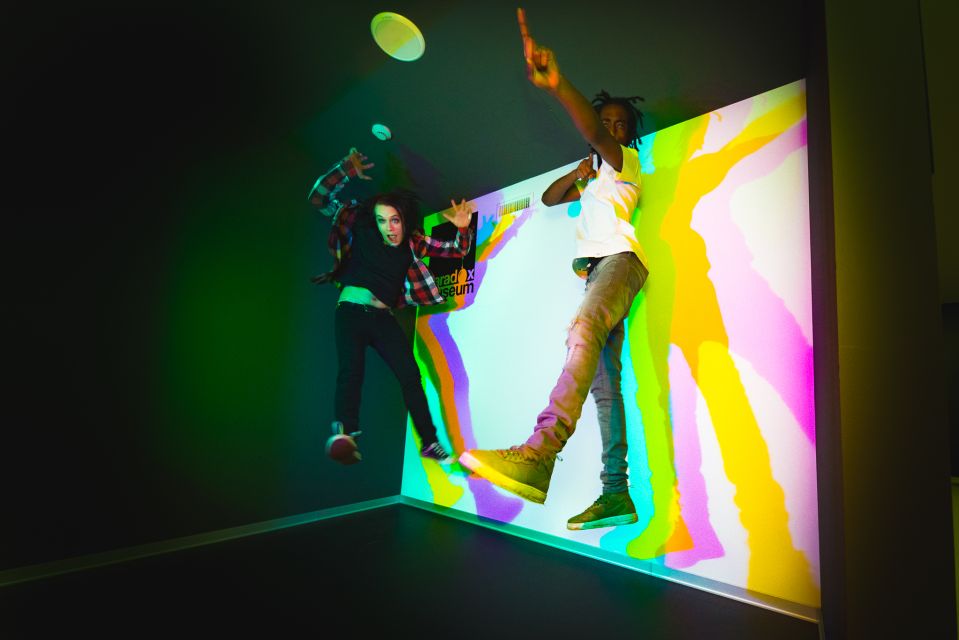
The employees are one of the museum’s biggest strengths. They are described as friendly, funny, and quick to help, and that matters here because a good photograph often depends on a precise position or a third person pressing the shutter.
Staff may explain how an exhibit works, suggest the right camera angle, or take a picture of your group. At some popular stations, however, they cannot be everywhere at once. You may need to ask another person in the room to take a photograph, particularly when a display needs two or three people in the frame.
This is worth knowing before you arrive. The museum is partly an activity and partly a photo session. If you want a record of every illusion, you need patience and cooperation from the people around you.
Solo visitors can still take part, but the experience is less natural. Some exhibits are designed around pairs or groups, and one display reportedly works best with three people. Staff can sometimes set up a phone stand so you can use a timer, which helps, but a couple or family will have an easier time staging the full range of images.
A few more Stockholm options to compare
- Stockholm: City Archipelago Sightseeing Cruise with Guide
★ 4.3 · 10,798 reviews - Stockholm: Hop-On Hop-Off Bus or Boat Option
★ 4.0 · 3,260 reviews - Stockholm: Archipelago Boat Tour
★ 4.4 · 3,110 reviews - Stockholm: Highlights Boat Tour
★ 4.2 · 2,845 reviews
The photo strategy that saves time
Your phone is the main tool for this visit. Keep it ready, and think of each room as both an experiment and a camera setup.
Use the marked photo spots rather than standing wherever there is space. Ask staff for help when available, and do not be shy about offering to take pictures for another group. This small bit of cooperation can solve the biggest problem in the museum: everyone wants a photo at the same popular displays.
Take one quick picture first to check the framing. Then adjust your pose. Some illusions only work when the camera is held at the intended height and angle, so a rushed snapshot can miss the effect.
Opening time is a smart choice if photographs are your main goal. One group found the first slot quiet enough to spend more time at each station. At busier times, queues can form at many exhibits, and people may push forward instead of waiting. The museum is more enjoyable when you can complete the activity without someone hovering behind you.
Lighting is not perfect in every room. A few displays can be dim, so check the image before leaving the station. You may need to repeat a shot rather than discover later that the best pose is too dark.
Timing, crowds, and the real length of the visit
The advertised duration is 80 minutes, but treat that as the available visit window rather than a promise that every group will need exactly 80 minutes.
A relaxed family that reads the descriptions, repeats photographs, and waits for busy stations may use close to the full time. A small group moving quickly can finish in about an hour. When the museum is quiet, some people complete the route in roughly 30 minutes.
That difference affects value. At $28 per person, the ticket feels fairer when you enjoy the displays at an unhurried pace and leave with plenty of good photographs. It feels less attractive if you move straight through and finish in half an hour.
Crowds are the other variable. The route is not huge, and a one-way system means a slow group can affect everyone behind it. Some visitors have had to queue at many exhibits, while others found the museum quiet. Book an early slot if you can, especially during a school holiday, weekend, or rainy afternoon.
The staff help keep the experience moving, but they cannot remove the basic limits of the space. If you dislike waiting for photographs or sharing interactive displays, choose a less popular time.
Is $28 a fair price?
The answer depends on what you want from a museum. If you are seeking a long cultural visit, $28 may feel high for an experience that can take less than an hour. The museum is compact, and several installations rely on familiar mirror or perspective ideas.
If you want an easy, weather-proof activity with plenty of participation, the price is easier to justify. A family can spend time laughing together, children stay involved, and the photographs create a souvenir beyond the ticket itself. The attraction also works well for couples and older children who have outgrown more passive sightseeing.
The price includes standard entry only. The Zero Gravity experience costs an additional 20 SEK, so check what your ticket covers before you arrive. One visitor was surprised to find an extra experience outside the standard admission, which is a useful warning for anyone expecting every activity to be included.
Free cancellation up to 24 hours before the booked time and a reserve-now, pay-later option add some planning flexibility. These terms are useful when Stockholm weather or a packed sightseeing schedule might change your plans.
The best match for families, couples, and curious adults

Families with children are a natural fit. The exhibits are short, physical, and easy to understand, while the explanations give older children a reason to ask why the illusion works. Parents should expect to take pictures, wait their turn, and sometimes repeat an exhibit so everyone gets a chance.
Teenagers may enjoy the museum more than a standard gallery because the displays give them something to do. The photographs are part of the appeal, but the visual challenges also keep the visit from becoming only a backdrop for selfies.
Couples can have a good time staging the two-person illusions. The museum also works for a birthday treat or a quick break between central Stockholm sights. It is especially useful on a wet day when you want something light and social rather than another formal indoor attraction.
Solo visitors should plan carefully. You can use a timer, ask other people for help, and request assistance from staff, but some activities lose their effect without a partner. If you are visiting alone and want a full set of photos, expect to be more proactive.
People who have already visited a Paradox Museum in another city may find the Stockholm branch familiar. Some displays can feel predictable, and the collection leans heavily toward mirrors and visual effects. First-time visitors are likely to get more surprise from the route.
Leaving through the Paradox Boutique
The visit ends at the Paradox Boutique. It sells games, clothing, souvenirs, memorabilia, and gadgets, giving you a chance to take the theme home without buying anything during the main route.
The shop is useful if you want a small activity for children or a reminder that is more practical than a postcard. You can also simply browse and leave with the photographs on your phone as your main souvenir.
Practical verdict: should you book?
Book the Paradox Museum if you want a playful central Stockholm activity, especially with children, teenagers, a partner, or a small group of friends. The helpful staff, marked photo points, and hands-on format make it easy to enjoy without prior knowledge of optical illusions.
I would book an early time slot, arrive promptly, and allow about an hour to 80 minutes. Keep your phone ready, expect to help with photographs, and remember that Zero Gravity costs extra.
Skip it if you want a large traditional museum, a long educational visit, or a quiet experience without queues. Solo visitors can manage, but groups will get more from the displays. For the right audience, this is a cheerful, clever break from sightseeing, with the best memories likely to come from the pictures you take together.
FAQ
Where is the Paradox Museum Stockholm?
It is at street level on Sergelgatan 20 in central Stockholm, right beside Hötorget subway station.
How long does the Paradox Museum visit take?
The stated duration is 80 minutes. Depending on crowd levels and how long you spend taking photographs, you might finish in about 30 minutes to one hour, or use most of the 80-minute slot.
How much does entry cost?
The listed price is $28 per person for entry to the Paradox Museum Stockholm.
Is the Zero Gravity experience included?
No. Zero Gravity is an optional add-on that costs 20 SEK.
Is the museum suitable for children?
Yes. It is family-friendly, interactive, and designed to engage children and adults through visual and tactile challenges.
Can solo visitors enjoy the museum?
Yes, but several exhibits work best with two or three people. Staff may help set up a phone stand for timer photographs, and you can also ask other visitors to take pictures.
Is the museum wheelchair accessible?
Yes, the museum is wheelchair accessible.
Can I bring food, drinks, or pets?
Food and drinks are not allowed. Pets are not allowed either, although assistance dogs are permitted.
New around Stockholm
- World War II Stockholm Old Town Walking Tour and Army Museum★ 4.6 · 4 reviews
- 3 Hours Guided Shopping Tour in Stockholm Thrifting Stores★ 5.0 · 4 reviews
- Scandinavian Art, Architecture and Design Tour in Stockholm★ 4.5 · 11 reviews
- Private Tour: Swedish History Day Trip to World Heritage Candidate Markim-Orkesta from Stockholm★ 5.0 · 8 reviews
- Wolf and Wildlife Tracking in Sweden★ 5.0 · 9 reviews
- Drottningholm Palace Private Guided Tour★ 4.5 · 15 reviews
- Voyage of the Vikings: Guided Exploration Through Sweden’s Past★ 5.0 · 2 reviews
- Vaxholm Day Trip From Stockholm: Cruise, Fortress, Swedish Fika★ 5.0 · 2 reviews
Museums, compared.


Stockholm Pass: Save up to 50% – Includes Vasa Museum Ticket
Read our review →
Vasa Museum and Vrak Museum of Wrecks Combo Entry
Read our review →
Browse the lists this tour appears in