

Reviewed · WALKING TOURS
Stockholm: Highlights Guided Walking Tour
Stockholm reveals itself one bridge at a time. This two-hour walk gives you a quick look at the city’s islands, old streets, parks, museums, and modern landmarks, with an English-speaking guide to connect the pieces. I like the broad city overview and the chance to see several districts without working out the route yourself. I also like the mix of famous sights and odd little details, such as Svampen and the Little Iron Boy.
The main caution is pace. At $77 per person, this is not a gentle stroll with long stops. One participant found the walk exhausting, with stairs, busy roads, and a very fast rhythm. The exact route may also vary, so you should not book it solely because you expect a full visit to the ABBA or Vasa museums.
In This Review
- Key points to know before you book
- Starting at Östermalm Saluhall
- Why a city built on 14 islands needs a guide
- Gamla stan, Skeppsbron, and Stockholm’s old streets
- Slussen and the golden bridge
- Kungsträdgården and central Stockholm
- The concert hall, City Hall, and Parliament from outside
- Djurgården, the city’s national park
- Svampen and the Little Iron Boy
- How much walking happens in two hours
- Price, guide quality, and overall value
- Who should book this Stockholm walk?
- Should you book the Stockholm Highlights Guided Walking Tour?
- FAQ
- How long does the Stockholm Highlights Guided Walking Tour last?
- How much does the tour cost?
- Where does the tour meet?
- What language is the tour offered in?
- Is a guide included?
- Are museum admissions included?
- Does the tour visit the ABBA Museum?
- Does the tour include gratuity?
- Is the tour wheelchair accessible?
- Can you cancel for a full refund?
Key points to know before you book
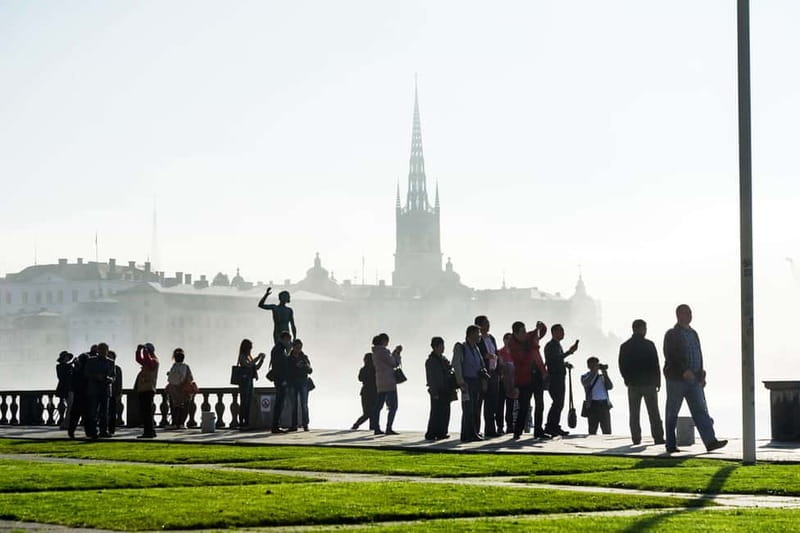
- Two hours across central Stockholm: You move quickly through several parts of the city rather than settling into one neighborhood.
- Meeting point at Östermalm Saluhall: The tour begins outside the main entrance of this historic food hall.
- A changing route: The advertised sights include ABBA Museum, Djurgården, Slussen, Kungsträdgården, and Gamla stan, but one recent outing followed a different central-city route.
- Strong guide-led storytelling: The guide explains Swedish life, culture, architecture, and city sights in English.
- A serious amount of walking: The route can include stairs, busy streets, bridges, and long stretches between stops.
- Good for first-time orientation: You get a useful mental map of Stockholm’s islands and major districts before exploring on your own.
Starting at Östermalm Saluhall
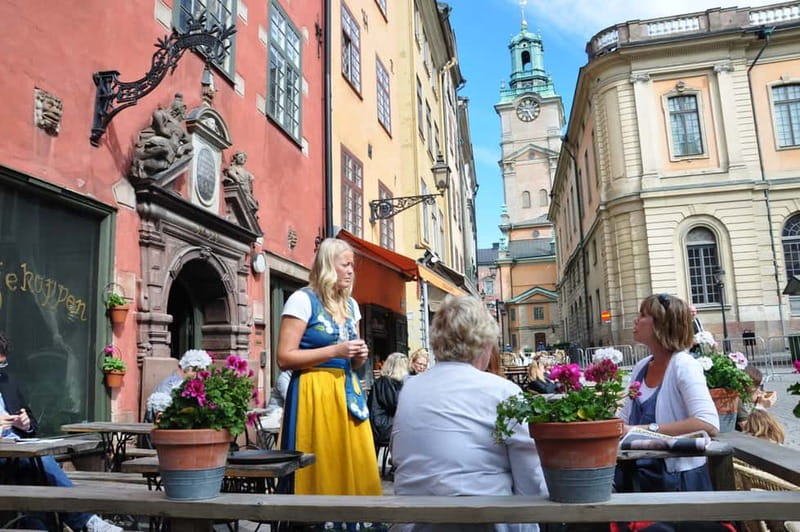
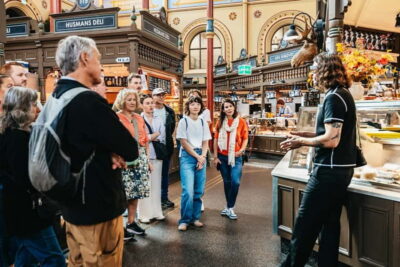
Your meeting point is outside the main entrance of Östermalm Saluhall, a practical place to begin because it puts you in one of central Stockholm’s well-known food and shopping areas. Look for the guide outside the entrance rather than going inside and waiting among the stalls.
The food hall is also a useful early hint about Stockholm. This city takes food seriously, from open sandwiches and seafood to the essential cinnamon bun. The tour description points to the scent of freshly baked buns from Skeppsbro bakery later in the walk, but you should not expect a dedicated food tasting. The value here is the setting and the local flavor, not included snacks.
Starting near Östermalm also means the walk is not limited to Gamla stan. You begin with a wider view of Stockholm and its different districts, which helps explain how the city fits together. Stockholm occupies 14 islands linked by 42 bridges, so a guide can save you time by choosing a route that connects the main areas on foot.
More Walking Tours in Stockholm
- Stockholm: Ghost Walk and Historical Tour
★ 4.7 · 2,685 reviews - Stockholm Gamla Stan: Old Town Walking Tour with Local Guide
★ 4.7 · 1,714 reviews - Walking Tour of Stockholm Old Town
★ 5.0 · 1,175 reviews
Why a city built on 14 islands needs a guide
Stockholm can look simple on a map. The water makes it beautiful, but it also makes the city harder to read during a short visit. You may see Gamla stan across the channel, Djurgården beyond the trees, and Södermalm rising on the other side, yet still wonder how to get from one to the next.
This walk is built around that problem. Instead of visiting one museum in detail, you get a moving overview of the capital. I like this approach for a first day, especially if you want to learn which neighborhoods deserve a longer return visit.
The tradeoff is depth. Two hours is enough to point out landmarks and explain their place in the city, but not enough to tour the ABBA Museum, Vasa Museum, Nordic Museum, Royal Palace, or any other major attraction inside. Think of the experience as an orientation walk with sightseeing, not as a series of museum visits.
Gamla stan, Skeppsbron, and Stockholm’s old streets

Gamla stan is the part of Stockholm most visitors picture first: narrow lanes, old buildings, small squares, and a tightly packed medieval street plan. The tour description promises a look at the old town, including Sweden’s narrowest picturesque street. That kind of detail is exactly what makes a walking tour useful. You could pass the lane without noticing it, while a guide can point out why it matters.
The route also includes Skeppsbron, the waterfront road connecting Gamla stan toward Södermalm. Here, the city’s shape becomes clear. Water, stone facades, boats, bridges, and changing views all arrive in one stretch.
This is also where the cinnamon bun reference fits naturally. The smell from Skeppsbro bakery adds a small sensory moment to the walk. It is not a major attraction, but it gives the route a more everyday feel than a parade of grand buildings.
The drawback is that waterfront walking is not always quiet. You may be alongside traffic or moving through crowded public areas rather than strolling down a calm pedestrian lane. If you prefer slow photography and time to inspect every doorway, the guide’s schedule may feel tight.
Slussen and the golden bridge
Slussen is one of Stockholm’s most noticeable modern projects. The golden bridge has become a new city icon, linking the central area with Södermalm and creating a sharp contrast with the old architecture nearby.
This stop gives the tour useful balance. Stockholm is not only royal buildings and medieval streets. It is also a working capital that keeps rebuilding itself. From Slussen, you can see how the city uses bridges and elevated routes to manage movement between islands.
The bridge is best understood as part of the city’s structure rather than as a stand-alone photo stop. You may get a quick explanation and a view, but the two-hour schedule does not promise a long pause. If you want detailed architectural commentary or time for extensive photos, plan to return later.
One important point: the route experienced by at least one participant included the City Hall, concert hall, and Parliament building from outside instead of the full set of attractions named in the description. That means you should treat the route as flexible. The guide may adjust the walk based on timing, access, or the needs of the group.
A different sort of day, still within reach:
- Stockholm: ABBA The Museum Entrance Ticket
★ 4.7 · 11,280 reviews - Stockholm: City Archipelago Sightseeing Cruise with Guide
★ 4.3 · 10,798 reviews - Stockholm: Skansen Open-Air Museum Admission Ticket
★ 4.5 · 3,427 reviews - Stockholm: Hop-On Hop-Off Bus or Boat Option
★ 4.0 · 3,260 reviews
Kungsträdgården and central Stockholm

Kungsträdgården is one of Stockholm’s key public gathering places. The tour includes the Royal Palace in this area and presents the park as a lively downtown stop where festivals and cultural events may take place.
The park matters because it shows Stockholm as a city people use, not just a collection of monuments. Depending on the date, you might find food events or cultural celebrations such as an Indian culture day. These events are not guaranteed, but the setting gives the guide an opening to discuss Swedish public life and the city’s international character.
The nearby central district also includes Sergels torg, a modern public square that has been revamped into one of the city’s recognizable urban spaces. It is a useful counterpoint to Gamla stan. In a short walk, you can move from narrow historic lanes to open modern plazas.
Some sightseeing here is likely to be from the outside. That is fine if your goal is orientation, but less satisfying if you expect palace interiors or detailed architectural visits. Bring realistic expectations: you are seeing the city’s public face, not touring each building.
The concert hall, City Hall, and Parliament from outside
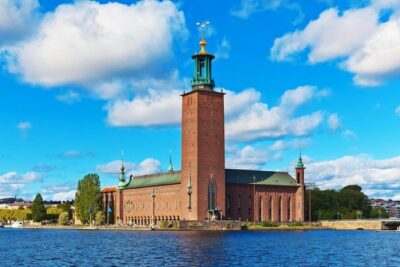
The actual route can include Stockholm Concert Hall, City Hall, and the Parliament building, viewed from outside. The concert hall has a special connection to the Nobel Prize ceremonies, making it a worthwhile stop even without entering.
City Hall is another major Stockholm landmark. An exterior explanation can help you understand its place in the city, but it is not the same as visiting the interior or seeing the famous ceremonial rooms. The same applies to Parliament. You get context and a photograph, not an inside tour.
This part of the experience highlights the importance of asking what kind of sightseeing you want. If you enjoy architecture, civic buildings, and historical explanation, the stops can be rewarding. If you mainly want Djurgården, the ABBA Museum, and the Vasa Museum, the route may not match your priorities on the day.
The guide’s storytelling is a major part of the value here. One participant praised the detailed explanations but found them long and tiring. That is a useful warning. The tour works best if you enjoy listening while walking, rather than stopping briefly for a simple fact and moving on.
Djurgården, the city’s national park

Djurgården is one of the most appealing places named in the tour. It is a national park in the middle of Stockholm, a rare combination of open parkland and major cultural attractions.
The route is described as passing the ABBA Museum, Vasa Museum, and Nordic Museum. These are important cultural stops, but this two-hour experience does not include museum admission or a full visit inside. You should see the walk as a way to learn where the museums are and decide which one deserves your own time later.
The blue gate leading into Djurgården is another memorable feature. From there, the tour may continue toward Junibacken, the attraction connected with Astrid Lindgren, Sweden’s famous children’s author. This gives the walk a family-friendly side without turning it into a children’s tour.
Djurgården can also provide a welcome change after central streets, stairs, and traffic. Still, the route may cover a great deal of ground. If you have limited mobility or prefer a slow park walk, ask about the planned path before setting out. The activity is described as wheelchair accessible, but one participant specifically noted stairs and demanding stretches, so the practical route may matter.
Svampen and the Little Iron Boy
The tour does not focus only on grand landmarks. It also includes smaller, more unusual sights such as Svampen, a mushroom-shaped structure, and the Little Iron Boy, a tiny statue tucked into Stockholm’s old town.
These details are often what stay with you. A palace can be impressive, but a tiny sculpture or an odd urban object gives you a story to retell and a reason to look more closely as you walk. I like that the experience includes classic monuments alongside these small pieces of local character.
They also show why a guide can add value even in a city that is easy to photograph. Without help, you might walk past Svampen or the Little Iron Boy without knowing what you were seeing. The guide turns ordinary corners into landmarks.
Do not expect every small sight to receive a long stop. The guide has a lot to cover, and the route’s fast pace means you may hear the explanation while continuing to move.
How much walking happens in two hours
The biggest practical issue is the pace. One participant described the walk as roughly 10,000 steps in two hours, with stairs, busy highways, and a very fast rhythm. That is an intense amount of movement for a sightseeing tour.
You should wear comfortable shoes and arrive ready to walk continuously. The tour is not a good match if you want frequent café breaks, extended photo stops, or a relaxed conversation at each landmark.
The fast pace may be a benefit if you have only a short time in Stockholm. You can cover several districts and collect ideas for later. It may also suit active visitors who want to combine sightseeing with a strong walk.
The guide’s style matters greatly. The feedback ranges from fantastic and fun to too fast and too tiring. That does not necessarily mean the experience is poor. It means the same route can feel very different depending on your walking speed, weather, group pace, and interest in long explanations.
Price, guide quality, and overall value
At $77 per person, this is a fairly serious price for a two-hour walking tour. You are paying for a live guide, route planning, local interpretation, and the convenience of seeing several important areas without arranging the connections yourself.
The value is strongest for a first visit. If Stockholm’s 14 islands feel confusing, a guide can help you understand how Gamla stan, Södermalm, Djurgården, Östermalm, and the central district relate to one another. That orientation can make the rest of your stay more efficient.
The value is weaker if you want entry to attractions. The guide is included, but museum admission, palace admission, food, and gratuity are not. You will need to budget separately for the places you return to after the walk.
The guide quality appears to be a strength. The tour has earned praise for detailed explanations, Swedish lifestyle insights, and a fun approach. At the same time, detailed explanations can become tiring when delivered during a fast walk. If you prefer short commentary and plenty of pauses, this may not be the best use of $77.
Free cancellation up to 24 hours before the start and the option to reserve now and pay later reduce the booking risk. The tour is offered in English and is listed as wheelchair accessible, but the reported stairs and long walking stretches make it sensible to confirm the day’s route if accessibility is important to you.
Who should book this Stockholm walk?
I would choose this experience if you are visiting Stockholm for the first time and want a quick city orientation. It is especially useful if you enjoy public spaces, architecture, cultural landmarks, and learning how a city works while walking through it.
It also suits active visitors who can maintain a fast pace. You will see more ground than on a slow neighborhood walk, and you will leave with a list of places to revisit, such as Djurgården’s museums, Gamla stan’s lanes, or the Slussen bridge.
I would be cautious if you have limited stamina, dislike stairs, or want a calm introduction. The route may include busy roads and long explanations while moving. I would also avoid booking it if your main goal is guaranteed time inside the ABBA Museum, Vasa Museum, or Nordic Museum.
Should you book the Stockholm Highlights Guided Walking Tour?
Book it for breadth, local explanation, and a fast first look at Stockholm. The best parts are the island-to-island perspective, the mix of famous and quirky sights, and the chance to hear about Swedish life from a guide.
Skip it if you need a slow pace, guaranteed museum visits, or a fixed route matching every advertised landmark. Before booking, decide what matters more: covering a lot of Stockholm in two hours or enjoying a smaller number of places at leisure. If you choose the tour, wear strong walking shoes and treat the route as an orientation rather than a full sightseeing visit.
FAQ
How long does the Stockholm Highlights Guided Walking Tour last?
The tour lasts two hours.
How much does the tour cost?
The listed price is $77 per person.
Where does the tour meet?
Meet the guide outside the main entrance of Östermalm Saluhall.
What language is the tour offered in?
The live guided tour is offered in English.
Is a guide included?
Yes. A live English-speaking guide is included.
Are museum admissions included?
No museum admissions are listed as included. The tour may pass attractions such as the ABBA Museum, Vasa Museum, and Nordic Museum.
Does the tour visit the ABBA Museum?
The tour description says you will walk past the ABBA Museum. It does not state that museum entry is included.
Does the tour include gratuity?
No. Gratuity is not included.
Is the tour wheelchair accessible?
The activity is listed as wheelchair accessible. One account also noted stairs and demanding walking sections, so you should confirm the specific route if accessibility is important.
Can you cancel for a full refund?
Yes. You can cancel up to 24 hours in advance for a full refund. You can also reserve now and pay later.
New around Stockholm
- World War II Stockholm Old Town Walking Tour and Army Museum★ 4.6 · 4 reviews
- 3 Hours Guided Shopping Tour in Stockholm Thrifting Stores★ 5.0 · 4 reviews
- Scandinavian Art, Architecture and Design Tour in Stockholm★ 4.5 · 11 reviews
- Private Tour: Swedish History Day Trip to World Heritage Candidate Markim-Orkesta from Stockholm★ 5.0 · 8 reviews
- Wolf and Wildlife Tracking in Sweden★ 5.0 · 9 reviews
- Drottningholm Palace Private Guided Tour★ 4.5 · 15 reviews
- Voyage of the Vikings: Guided Exploration Through Sweden’s Past★ 5.0 · 2 reviews
- Vaxholm Day Trip From Stockholm: Cruise, Fortress, Swedish Fika★ 5.0 · 2 reviews
Walking Tours, compared.

Stockholm Gamla Stan: Old Town Walking Tour with Local Guide
Read our review →

The Original Stockholm Ghost Walk and Historical Tour – Gamla Stan
Read our review →
Best of Stockholm Walking Tour-3 Hours, Small Group max 10 people
Read our review →
Browse the lists this tour appears in