
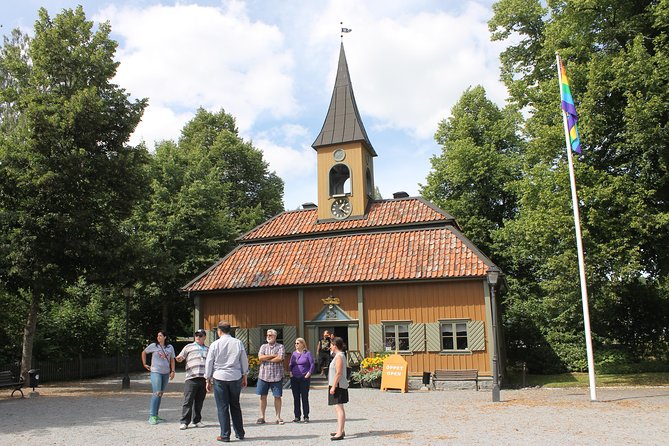
Reviewed · VIKING HISTORY TOURS
Viking History and Swedish Countryside Tour to Sigtuna & Uppsala
Viking stones tell personal stories. This 9-hour trip from Stockholm links runestones, burial mounds, old churches, Sigtuna, and Uppsala in one well-packed day. I especially like the mix of open countryside and major historic towns, plus the chance to see places that are awkward to reach without a car. Guides such as Urban, Angus, and Carl are praised for making the past lively and understandable.
I also like the small-group format, air-conditioned minibus, hotel pickup, and listening devices used on some departures. The main drawback is the pace: you spend much of the day outside, standing, and listening to detailed talks. If you prefer a slow afternoon in Sigtuna or Uppsala, this tour may feel rushed.
In This Review
- Key points to know before booking
- What this Stockholm day trip is really about
- Täby and Jarlabanke’s Bridge: power carved in stone
- Arkils Assembly Site beside Lake Vallentuna
- Granby Stone and Viking house foundations
- Hökeriet, fika, and a taste of rural Sweden
- Sigtuna: Sweden’s oldest town
- Uppsala Cathedral and the modern city
- Old Uppsala and the royal mounds
- How the full nine hours feel
- Is $274.19 a fair price?
- Who should book this tour?
- FAQ
- How long does the tour last?
- Is hotel pickup included?
- How many people are in the group?
- Are lunch and drinks included?
- Is the tour suitable for children?
- What happens if I need to cancel?
Key points to know before booking
- Jarlabanke’s Bridge and Arkils Assembly Site connect Viking power, law, and local politics in a way a museum display cannot.
- Granby’s runestone and house foundations offer a rare look at both Viking writing and everyday domestic life.
- Sigtuna gets about an hour, enough for a walk and a first look, but not enough for a leisurely town visit.
- Old Uppsala and its royal mounds are the day’s most striking prehistoric sight.
- The tour costs $274.19 per person, with transport, pickup, and a guide included, but food is extra.
- A long day outdoors requires planning: wear good shoes, carry water, and bring rain gear.
What this Stockholm day trip is really about
This is not a theme-park Viking experience. You will not find costumed warriors, staged battles, or a reconstructed village filled with actors. Instead, the day uses actual stones, earthworks, churches, roads, and town streets to explain how Sweden developed from Viking society into a Christian medieval kingdom.
That approach suits you if you enjoy seeing physical evidence and hearing the stories attached to it. A runestone can look like a gray slab until someone explains who raised it, whom it honors, and what it says about family, land, travel, or power.
The tour begins with pickup from a centrally located Stockholm hotel or another approved central location. The operator confirms the final pickup time and place by phone one or two days before departure, so enter a working mobile number when you book. Pickup is not guaranteed outside the general central area, and during the busy season you may be asked to meet at another central point.
Transport is by air-conditioned minibus. The group can reach 17 people, though one person found the last row cramped when the vehicle was full. If comfort matters to you, try to board promptly rather than assuming the seating will be equally pleasant throughout the minibus.
More History Tours in Stockholm
- Stockholm: Ghost Walk and Historical Tour
★ 4.7 · 2,685 reviews - The Original Stockholm Ghost Walk and Historical Tour – Gamla Stan
★ 4.5 · 1,165 reviews - Stockholm: Guided Historic Old Town Walking Tour with Local
★ 4.8 · 618 reviews
Täby and Jarlabanke’s Bridge: power carved in stone
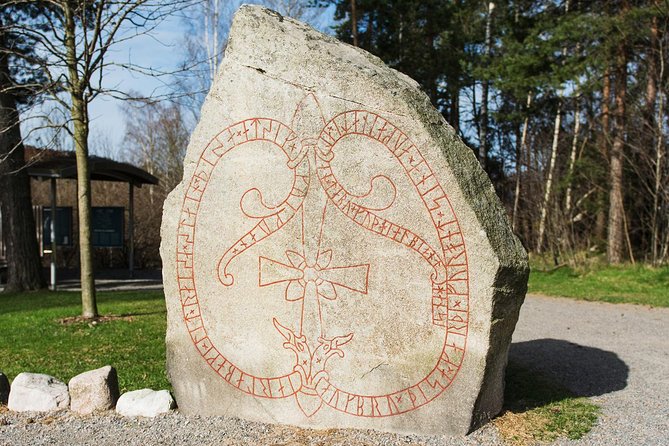
The first part of the route takes you north of Stockholm into Täby. Täby Church is usually a drive-by sight rather than a full stop, but its medieval presence helps set the scene. The church dates from the 13th century and combines Romanesque and Gothic elements.
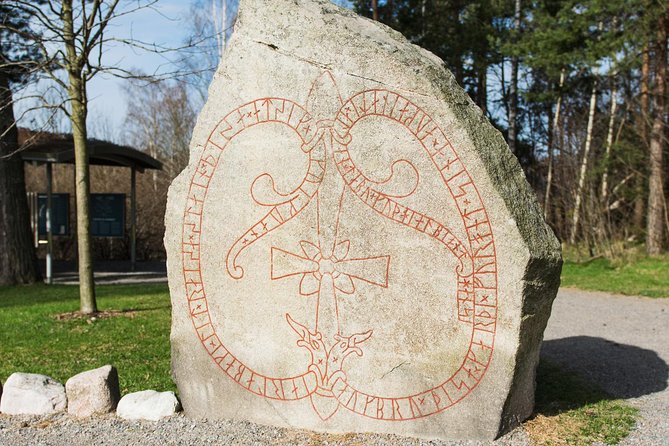
The more important visit is Jarlabanke’s Bridge, an 11th-century Viking causeway. The bridge is linked to Jarlabanke, a local chieftain who used runestones to announce his power and family connections. The inscriptions suggest that he ordered the bridge partly to honor himself, which is a wonderfully human detail. Viking memorials were not always modest acts of remembrance.
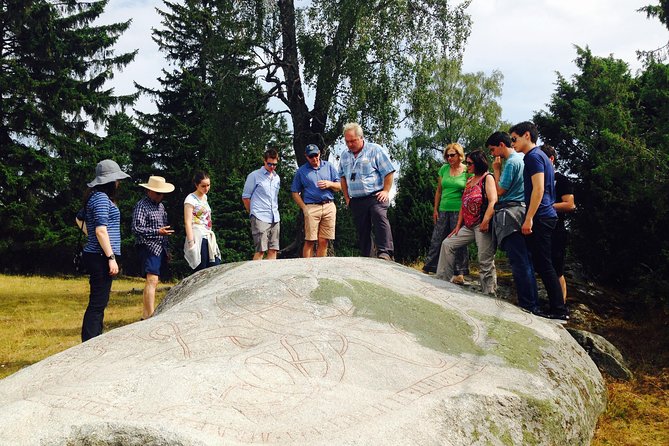
Your guide explains how the stones work as historical records. They are not simply mysterious symbols. Names, family ties, religious references, and claims to public works help show how people organized status and property.
This is a good early stop because it gives you a practical way to read later runestones. The limitation is that the site itself is compact. Much of the value comes from the guide’s explanation, so clear audio matters. Some departures use in-ear listening devices, and one highly praised guide, Urban, was specifically credited with using them well.
Arkils Assembly Site beside Lake Vallentuna
At Arkils tingstad, you visit what is understood as a Viking Age assembly site. Local communities gathered here to settle disputes, make decisions, and establish laws. Stones arranged in a square may have served as seats or marked the meeting area.
This stop adds an important correction to the popular image of Vikings as people concerned only with raiding. Law and negotiation were central parts of Scandinavian society. A place like Arkils helps you picture decisions being made in public, among local leaders and community members.
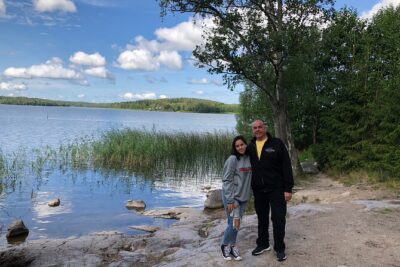
The site is near Lake Vallentuna, and the tour takes you down to the lakeshore. You get only about 10 minutes for the lake itself, with roughly 30 minutes at the assembly site. The water, woods, and open views provide a welcome change after the first historic stop.
Still, this is an outdoor visit, not a museum. In cold, wet, or windy weather, the experience can feel less comfortable. One person noted that the minibus was chilly during a cloudy day, so do not rely on the vehicle to warm you after every stop.
Granby Stone and Viking house foundations
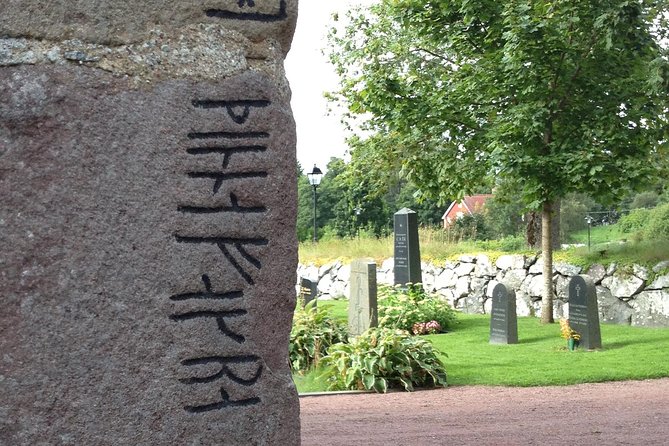
Granby is one of the most useful stops for understanding the difference between Viking legend and Viking life. The Granbyhällen contains one of the longest and most informative Swedish runic texts from the Viking Age. It may have functioned partly as a record of inheritance, making it a rare window into family property and succession.
The stone’s size helps, but the inscription matters more. With the guide’s help, you begin to see that runestones could serve as public documents. They recorded family members, obligations, and social standing in a form meant to be read by the community.
Nearby are well-preserved foundations of Viking houses. You can step into the outlines of the longhouse and consider how the family lived within that space. This is where the tour becomes more grounded. Instead of hearing only about kings and warriors, you get a sense of the home and the people who maintained it.
You spend around 25 minutes here. That is enough for an explanation and a walk around the foundations, though those who want to examine every inscription closely may wish for more time. The day includes several runic sites, so the details can begin to blur if you are not especially interested in the subject.
More Viking-era sites near Stockholm:
- Stockholm: The Viking Museum Exhibition and Viking Ride
★ 4.5 · 667 reviews - Entrance ticket to The Viking Museum
★ 4.0 · 301 reviews - Viking History, Runes & Countryside 9h Tour to Sigtuna & Uppsala
★ 4.5 · 283 reviews - From Stockholm: Uppsala and Sigtuna Viking Sites Tour
★ 4.7 · 157 reviews
Hökeriet, fika, and a taste of rural Sweden
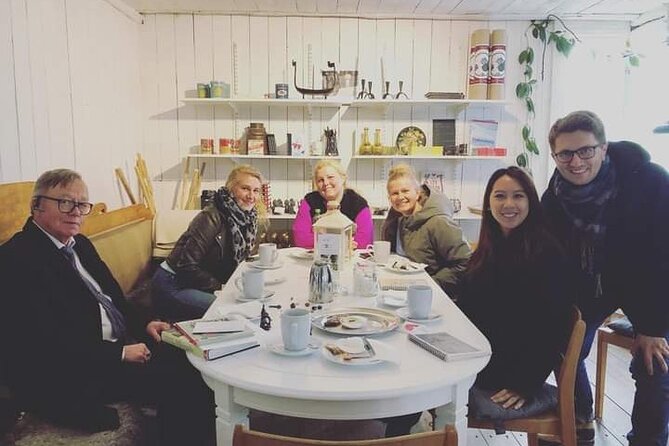
The stop at Hökeriet adds a welcome human touch. The small provision shop is located by the Granby farm, where you may have Swedish fika in a cozy farmhouse. Fika is more than a coffee break in Sweden. It is a pause for conversation, something sweet, and a chance to slow down.
The farmhouse coffee stop is available on most, but not all, tours. When offered, it may include a rhubarb tart and service from the farm’s co-owner or one of her relatives or friends. Regional handicrafts and Viking-related souvenirs may also be available.
This pause matters because the rest of the day has a strong information load. A warm drink and informal stop can help you reset before the longer drive toward Sigtuna. Lunch is also taken during the day, usually at a local eatery, but it is not included in the tour price. Bring a card or cash suitable for your own meal, and ask about dietary needs when the group discusses lunch. One guide was praised for helping with special food requirements.
Sigtuna: Sweden’s oldest town
Founded around AD 980, Sigtuna is one of the day’s most appealing stops. Its older streets, wooden buildings, small shops, gardens, and lakeside setting offer a pleasant contrast to the open archaeological sites.
You have about an hour to walk independently. That gives you time to enjoy the town’s atmosphere, browse boutiques, and see historic buildings, including St. Mary’s Church. You may also have time for a short look at the Sigtuna Museum, though the exact amount of free time depends on the day’s pace and traffic.
Sigtuna is easy to like because it is not only a history lesson. You can walk, look around, and enjoy a town that still feels lived in. If you want souvenirs, this is one of the better stops for something beyond a standard Viking trinket.
The tradeoff is time. Several people felt Sigtuna deserved a longer visit, especially because it can also serve as the lunch stop. You will get an introduction rather than a full exploration. If Sigtuna interests you most, plan to return independently on another day.
Uppsala Cathedral and the modern city
The route then continues to Uppsala, Sweden’s historic university city and one of the country’s major religious centers. At Uppsala Cathedral, you see a large Gothic church with soaring interior spaces, stained glass, and vaulted ceilings.
The cathedral is connected to Sweden’s Lutheran past and contains the tomb of Gustav Vasa, the king associated with the Swedish Reformation. The Cathedral Museum and Treasury are nearby, though the tour’s listed cathedral visit is about 20 minutes, so you should not expect time for every interior collection.
This part of the day gives you a useful contrast. The earlier stops focus on pre-Christian beliefs, family monuments, and local assemblies. Uppsala Cathedral shows the later power of Christianity and the Swedish monarchy.
You also get independent time in newer Uppsala. The amount of time is limited by the full route, but it gives you a chance to see the city beyond the cathedral. This is the section most likely to disappoint you if your main goal is urban sightseeing. The tour is built around Viking and medieval history, not a long city walk.
Old Uppsala and the royal mounds
Gamla Uppsala, or Old Uppsala, is the dramatic finish. Three large burial mounds dominate the site. They date from the 6th and 7th centuries and are traditionally associated with legendary Swedish kings known as Aun, Egil, and Adils.
The mounds are more than impressive piles of earth. Excavations have revealed weapons, jewelry, and other grave goods that help show the wealth and social order of the period. You can picture this as a major center of power long before the cathedral and modern city took shape farther south.
The tour allows about 30 minutes at Old Uppsala. You will hear about the royal burials, pre-Christian religious practices, and the importance of the site in Swedish history. The open setting also gives you one of the clearest visual reminders that this day is about much more than individual stones.
As with Granby and Arkils, the visit depends on the guide to bring the place to life. Urban, Angus, and Carl have each been praised for their humor, storytelling, and command of Swedish and Viking history. At the same time, some people found the commentary too long or difficult to follow. If you prefer short bursts of information, politely say so early in the day.
How the full nine hours feel
Nine hours is a serious commitment. You are in and out of the minibus several times, walking on outdoor surfaces, standing while listening, and moving according to a group schedule. The route covers a lot, but it cannot give you a slow visit at every stop.
The driving is part of the appeal. You see the Swedish countryside between the sites, with farmland, wooded areas, lakes, and small settlements passing beyond the windows. It also creates the day’s main practical drawback: you spend many hours seated in the vehicle.
Wear comfortable shoes and dress for changing weather. Bring a rain jacket, water, and a charged phone. The tour does not include food or drinks, and a water tank is not guaranteed. On hot days, the minibus and outdoor stops can feel tiring. On cool days, you will appreciate having an extra layer.
Children under eight are not recommended for this experience. Most older children and adults can participate, but the amount of standing and detailed historical explanation may not suit young children. One family took the tour with a 2.5-year-old on a private departure, but that should not be treated as the normal fit for the group tour.
Is $274.19 a fair price?
At $274.19 per person, this is not a cheap day trip. You are paying for a long route, a driver-guide, hotel pickup in central Stockholm, an air-conditioned minibus, and the convenience of combining several distant sites in one day.
The price makes more sense if you have limited time in Sweden or do not want to rent a car. Reaching Täby, Granby, Sigtuna, Old Uppsala, and central Uppsala independently would take careful planning and several separate transport connections. The guide also supplies the historical framework, which is the main reason these scattered sites become meaningful.
The value drops if you want long free time, a relaxed lunch, or a tour centered mainly on Sigtuna and Uppsala. Food is extra, and the minibus may feel tight when full. There are also no guaranteed charging ports, so charge your phone before pickup.
Free cancellation is available up to 24 hours before the start time. If the minimum number of participants is not reached and the tour is canceled, you are offered another date or experience, or a full refund.
Who should book this tour?
I would choose this trip if you are interested in runestones, archaeology, medieval churches, Swedish kings, and the way Viking society worked. It is especially useful early in a Stockholm visit because it places the capital within a much older regional story.
You will get the most from it if you enjoy listening to a guide and asking questions. The best guides make the day feel like a moving history lesson, and the small group allows some adjustment for bathroom breaks, food needs, and individual interests.
I would skip it if you want a gentle countryside outing with only a little history. I would also think twice if Sigtuna is your main goal, since one hour is brief, or if you dislike repeated stops centered on stones and church sites.
FAQ
How long does the tour last?
The tour lasts approximately nine hours, including transportation from Stockholm and the visits to the historical sites.
Is hotel pickup included?
Pickup and drop-off are included for hotels and other locations within the operator’s general central Stockholm pickup area. A final pickup time and place are confirmed by phone one or two days before the tour.
How many people are in the group?
The tour can have a maximum of 17 participants. A full minibus may feel cramped in the last row, especially if you board near the end of the pickup route.
Are lunch and drinks included?
No. Food and drinks are not included. Lunch is taken at a local eatery, and Swedish fika is available on most, but not all, tours.
Is the tour suitable for children?
The experience is not recommended for children under eight. Most participants can take part, but the day includes outdoor walking, standing, and detailed historical talks.
What happens if I need to cancel?
You can cancel for a full refund up to 24 hours before the experience begins. Cancellations or changes made less than 24 hours before the start time are not accepted for a refund.
More Historical Tours in Stockholm
- Stockholm: Old Town Historical Walking Tour, small group
★ 4.9 · 411 reviews - Stockholm Archipelago Guided Tour on Historic Ship with Fika
★ 4.3 · 184 reviews - Viking History Small Group Tour from Stockholm: Half Day Including Sigtuna
★ 4.5 · 111 reviews - Stockholm Old Town Gamla Stan, Historic Walking Tour, Small group
★ 5.0 · 54 reviews
New around Stockholm
- World War II Stockholm Old Town Walking Tour and Army Museum★ 4.6 · 4 reviews
- 3 Hours Guided Shopping Tour in Stockholm Thrifting Stores★ 5.0 · 4 reviews
- Scandinavian Art, Architecture and Design Tour in Stockholm★ 4.5 · 11 reviews
- Wolf and Wildlife Tracking in Sweden★ 5.0 · 9 reviews
- Private Tour: Swedish History Day Trip to World Heritage Candidate Markim-Orkesta from Stockholm★ 5.0 · 8 reviews
- Drottningholm Palace Private Guided Tour★ 4.5 · 15 reviews
- Voyage of the Vikings: Guided Exploration Through Sweden’s Past★ 5.0 · 2 reviews
- Vaxholm Day Trip From Stockholm: Cruise, Fortress, Swedish Fika★ 5.0 · 2 reviews
Viking History Tours, compared.

Stockholm Viking History Full Day Tour to Sigtuna + Uppsala
Read our review →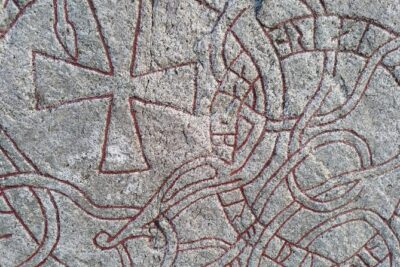
Viking History, Runes & Countryside 9h Tour to Sigtuna & Uppsala
Read our review →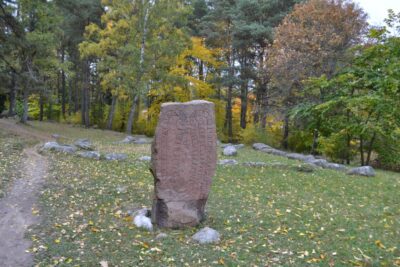
Viking History Small Group Tour from Stockholm: Half Day Including Sigtuna
Read our review →
Full Day Viking Tour with Fika Swedish Coffee Break
Read our review →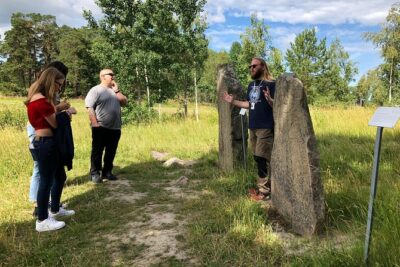
Private Full Day Viking History Tour from Stockholm Including Sigtuna and Uppsala
Read our review →Browse the lists this tour appears in