
Reviewed · VIKING HISTORY TOURS
Stockholm Viking History Full Day Tour to Sigtuna + Uppsala
Viking Sweden is closer than you think. This full-day outing packs six carefully chosen historical sites into a manageable route, with real runestones, burial grounds, an old assembly site, Sigtuna, Uppsala, and Old Uppsala. I especially like the mix of quiet rural sites and living towns, plus the guides’ talent for separating Norse legend from what archaeology can support. The main drawback is pace: you see a lot in one day, but some stops leave little time to wander on your own.
The tour also earns points for its comfortable transport and hotel pickup, which saves you from piecing together buses and trains. Guides such as Olof, Calle, Gabriel, Åsa, Urban, and Felix have been praised for their humor, clear English, and command of Swedish history. At $292 per person, it is a serious outlay, but the price makes more sense if you value expert commentary, private transport, and access to scattered sites that are awkward to connect independently.
In This Review
- Six details that make this Viking day worthwhile
- Why this route works from Stockholm
- Broby Bridge and the story of Estrid
- Walking across Jarlabanki’s Viking bridge
- Arkils Tingstad and Viking law in the open air
- Sigtuna, Sweden’s oldest town
- Uppsala brings Swedish history forward
- Uppsala Cathedral and the great church of the north
- Old Uppsala and the 11-meter burial mounds
- The café break and the practical rhythm
- Guides, vehicles, and group size
- Is $292 per person fair value?
- Who should book this day trip?
- Should you book the Sigtuna and Uppsala Viking tour?
- FAQ
- How long does the tour last?
- Where is pickup available?
- What language is the tour conducted in?
- Is lunch included?
- Does the tour visit Sigtuna and Uppsala?
- How much walking is involved?
- Does the tour operate in bad weather?
- Can I book a private group?
Six details that make this Viking day worthwhile
- Broby Bridge burial ground: See an important burial site tied to Estrid, a powerful Viking woman.
- Jarlabanki’s reconstructed bridge: Walk across a partly rebuilt Viking bridge and study its unusual runic inscription.
- Arkils Tingstad assembly site: Learn how Viking communities handled law, disputes, and kinship.
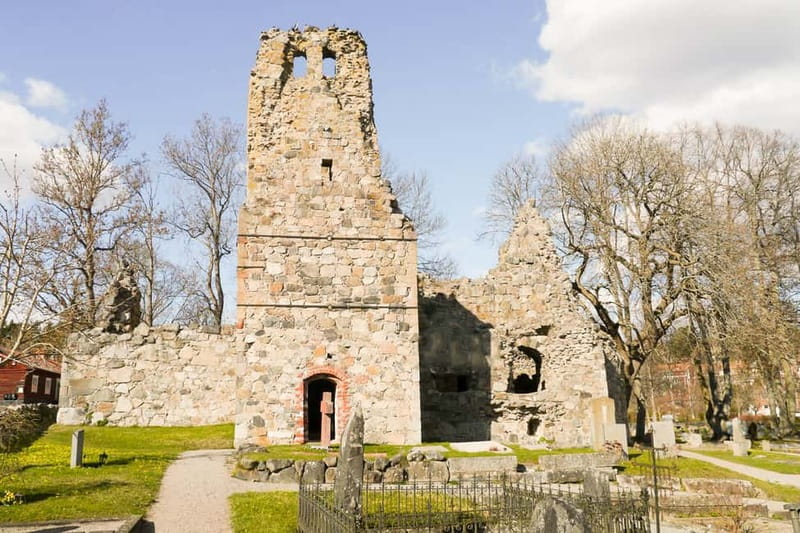
- Sigtuna’s medieval lanes: Walk through Sweden’s oldest town, with church ruins and timber buildings.
- Old Uppsala’s great mounds: See three enormous burial mounds rising about 11 meters high.
- Small-group feel: The outing is designed around comfortable transport and can also be booked as a private group.
Why this route works from Stockholm
Stockholm gives you royal palaces, museums, and a handsome old town. But the Viking Age sites you came to Sweden for are spread across the countryside north of the city. This tour solves that problem in one long day.
You are picked up at your hotel, or another location within 3 kilometers of Stockholm Central Station, then driven between the sites with a guide. That matters here. Broby Bridge, Jarlabanki’s bridge, and Arkils Tingstad are not a neat row of attractions beside a train station. Without a car, visiting all three would be slow and complicated.
The route lasts about eight to nine hours. You spend much of the day outdoors, but the vehicle gives you useful breaks between stops. It also means the guide can continue explaining Swedish history while you travel, rather than saving every fact for the short time at each monument.
This is not a museum-heavy outing. You will not spend hours looking at objects behind glass. Instead, you will stand beside stones, mounds, ruined churches, old roads, and open fields, trying to read the past from the places where people lived, worshipped, gathered, and were buried.
More Viking-era sites near Uppsala:
- Stockholm: The Viking Museum Exhibition and Viking Ride
★ 4.5 · 667 reviews - Entrance ticket to The Viking Museum
★ 4.0 · 301 reviews - Viking History, Runes & Countryside 9h Tour to Sigtuna & Uppsala
★ 4.5 · 283 reviews
Broby Bridge and the story of Estrid
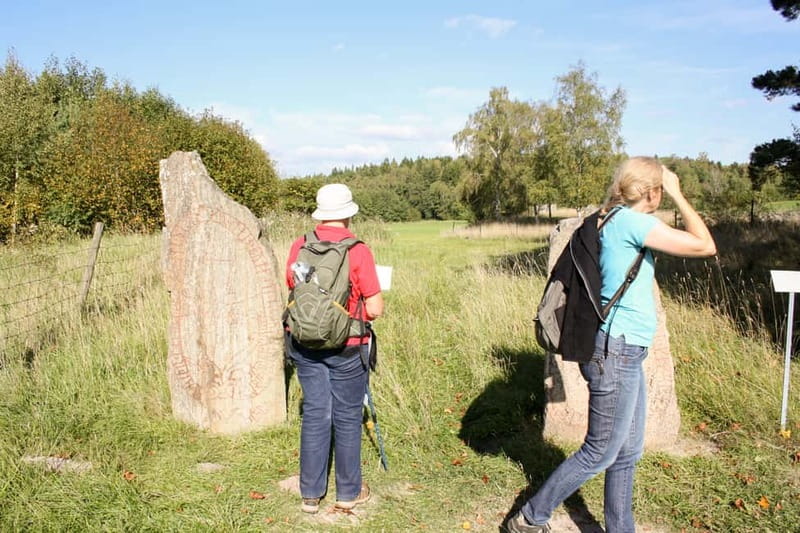
The first major stop is Broby Bridge, also written Broby bro. You have about 40 minutes here for a visit, guided talk, photographs, and views along the way.
The site is known for its burial ground, including graves connected with the transition from pagan Norse beliefs to Christianity. That makes it more interesting than a simple stop at old stones. You are looking at a period when customs were changing, and communities were negotiating a new faith without instantly abandoning older traditions.
The guide also introduces Estrid, a prominent Viking woman associated with the area. Her story helps correct the lazy image of Viking history as nothing but ships, raids, and famous male warriors. Landholding, family ties, religious change, and social power mattered too.
The setting is open and atmospheric, though you should keep expectations realistic. This is an archaeological place rather than a reconstructed Viking village. You will see the site itself, not actors, costumes, or a row of recreated houses. The value comes from the explanation and from being present at an actual burial ground.
Walking across Jarlabanki’s Viking bridge
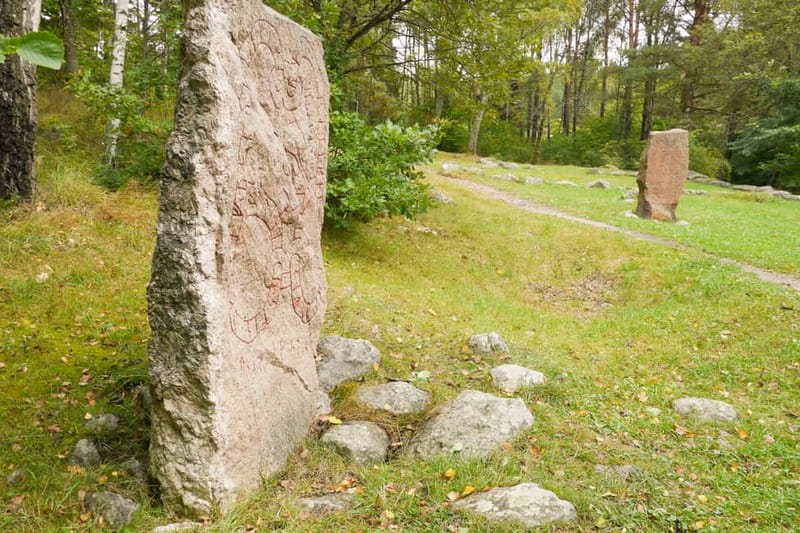
Next comes Jarlabanki’s bridge, another roughly 40-minute stop. The bridge is partly reconstructed, giving you a rare chance to walk across a structure linked to the Viking Age rather than simply viewing a stone in a display case.
The bridge is tied to Jarlabanki, a powerful local figure who used runic inscriptions to record his role and influence. The inscription here is unusual, and the guide explains what it tells us about status, construction, memory, and public claims in Viking society.
I like this stop because it makes runestones easier to understand. A rune stone was not just a mysterious alphabet carved into rock. It could mark family connections, honor the dead, announce a building project, or advertise the standing of the person who commissioned it.
You have time for photographs and a guided visit, but not an extended walk through a large archaeological park. If you enjoy taking your time with inscriptions, ask questions early and stay close to the guide. The stop is short enough that a long personal exploration could mean missing the explanation.
Arkils Tingstad and Viking law in the open air
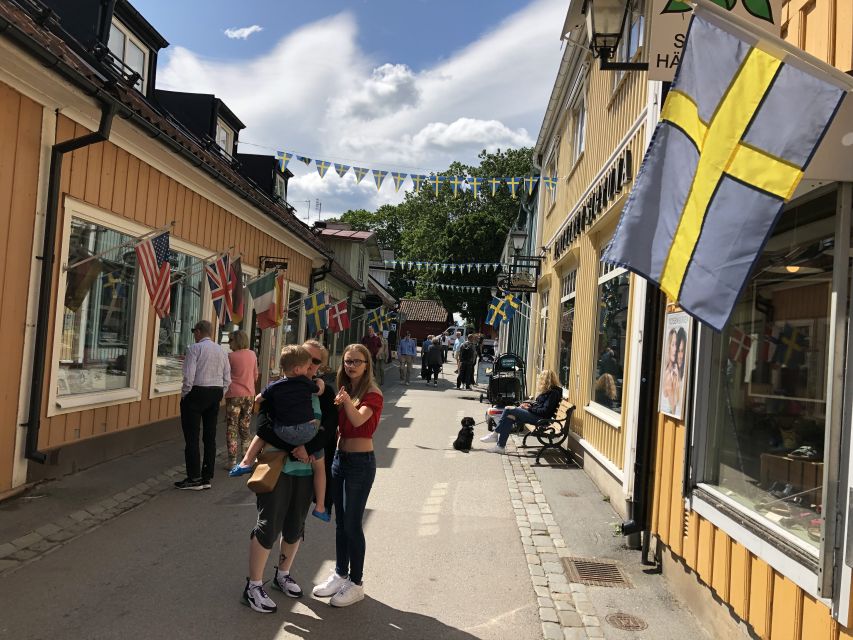
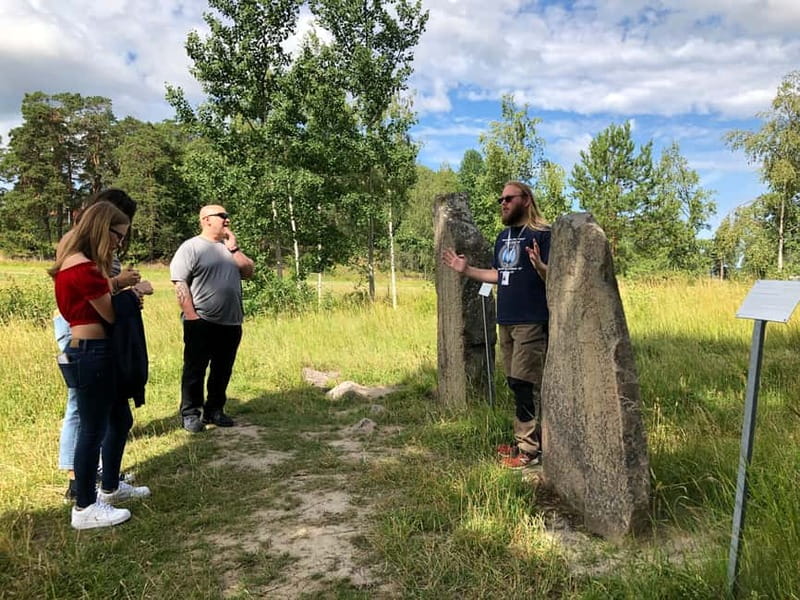
At Arkils Tingstad, the group spends another 40 minutes. This was an assembly site, sometimes described as a Viking parliament, where people gathered to discuss laws and settle disputes.
The word parliament can be a little misleading if you picture a modern legislature. The guide’s job is to explain how local assemblies worked within Viking society, how kin groups shaped responsibility, and how legal decisions could be handled without the institutions you take for granted today.
This is one of the tour’s most useful stops because it moves beyond popular Viking images. You learn about social structure, obligations, and conflict resolution, not just warfare and mythology. The site also helps explain how a community functioned when family alliances and reputation carried great weight.
Again, there is no large building to tour. Arkils Tingstad is valued for its historical setting and the story attached to it. The experience depends heavily on the guide. The repeated praise for Olof, Åsa, Calle, Gabriel, Urban, and others is relevant here: a dry explanation would make this a quick photo stop, while a lively guide can turn a field into a lesson in early Swedish government.
More history-led tours in Uppsala:
- Stockholm: Ghost Walk and Historical Tour
★ 4.7 · 2,685 reviews - The Original Stockholm Ghost Walk and Historical Tour – Gamla Stan
★ 4.5 · 1,165 reviews - Stockholm: Guided Historic Old Town Walking Tour with Local
★ 4.8 · 618 reviews - Stockholm: Old Town Historical Walking Tour, small group
★ 4.9 · 411 reviews
Sigtuna, Sweden’s oldest town
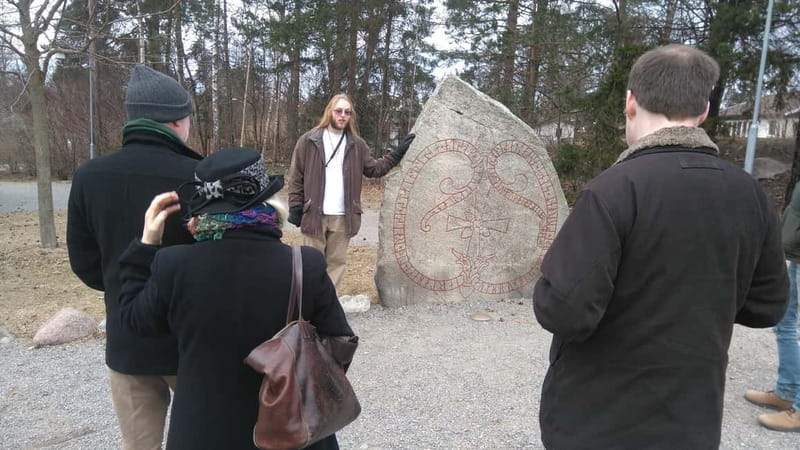
Sigtuna receives the longest stop, about 100 minutes, including lunch, a guided walk, photographs, and time for sightseeing. This is the point where the day shifts from isolated archaeological locations to a place with streets, buildings, cafés, and a settled town center.
Sigtuna is known as Sweden’s oldest town. Its wooden buildings, small lanes, and medieval church ruins give you a strong sense of how early urban Sweden developed. You walk among several ruined churches and along cozy streets rather than simply looking at one monument.
I like the change of rhythm. After the quiet burial grounds and runestones, Sigtuna lets you stretch your legs and see how Viking Age and medieval history connect to a town still used today. The place is also a popular weekend destination for Swedes, so it has a relaxed local character rather than feeling like an archaeological exhibit.
The 100-minute stop includes a lunch break, but food is not provided. Plan to buy your own meal, and remember that the tour price does not include food or drinks. The exact choice of restaurant or café is not specified, so you should not book this expecting a formal included lunch.
The main compromise is time. Sigtuna deserves more than a quick stroll, especially if you want to browse shops or linger at the ruins. The schedule gives you an introduction, not a full day in town. If Sigtuna is your top priority, a separate visit would allow you to explore it at a slower pace.
Uppsala brings Swedish history forward
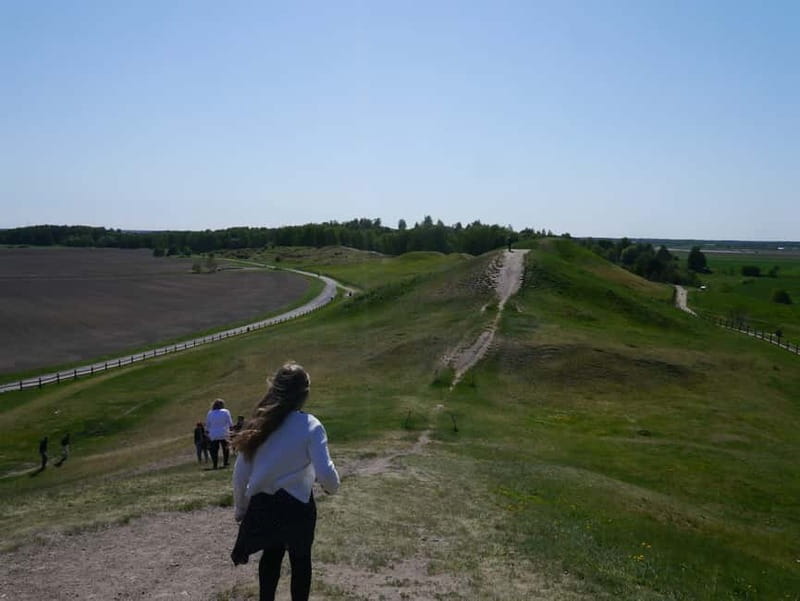
The drive through Uppsala County offers a scenic break before the city portion. You have about 40 minutes of guided driving and views along the way, followed by roughly 30 minutes walking through Uppsala.
Uppsala is not only a Viking destination. It became a major religious, political, and academic center over later centuries, and the tour uses the city to show what happened after the Viking Age. This is why the second half may feel different from the first.
If your main interest is pagan Norse culture and runestones, the opening sites will likely be your favorites. Uppsala adds medieval and later Swedish history, giving you a wider view of how the region changed rather than ending the day at the Viking period.
The city walk is fairly short. You will get an overview and see key sights, but you should not expect the time needed for museums, long shopping stops, or an unhurried café visit. One practical benefit is that the guide can point out places worth returning to if you have another day in town.
Uppsala Cathedral and the great church of the north
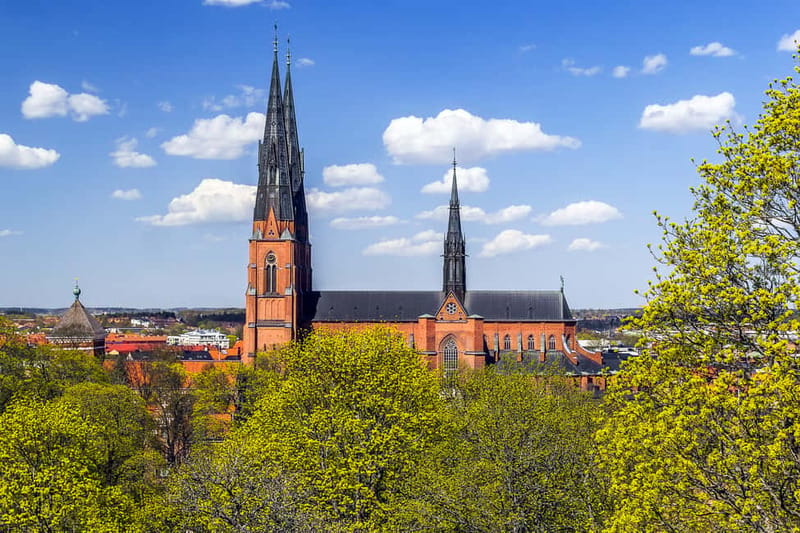
The cathedral visit lasts about 35 minutes and includes a guided tour. Uppsala Cathedral is described as the largest church in the Nordic countries, and its scale makes a striking contrast with the outdoor Viking sites earlier in the day.
This stop places Sweden’s religious story in a longer frame. Old Norse beliefs, early Christianity, medieval church power, and later Swedish identity are not separate chapters with clean borders. The cathedral helps you see how Christianity became a central force in the region after the conversion period discussed at Broby Bridge.
Thirty-five minutes is enough for an introduction, but it is not enough to inspect every detail. If you are passionate about church art or architecture, you may want to return independently. On this tour, the cathedral works best as part of the larger historical sequence.
Old Uppsala and the 11-meter burial mounds
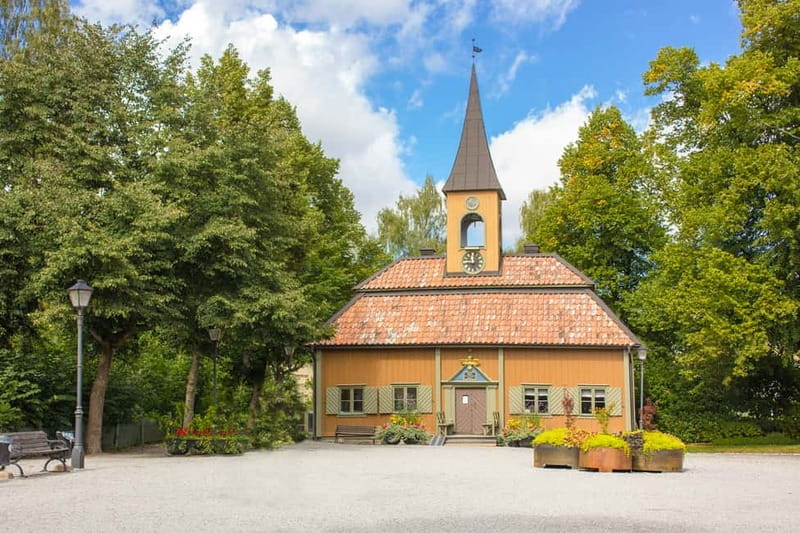
The final major historical site is Gamla Uppsala, or Old Uppsala. You have about 40 minutes for a guided visit, photographs, and views of the area.
The great burial mounds date back about 1,500 years, reaching roughly 11 meters high. They predate the classic Viking Age, which is an important point. Old Uppsala is not simply a Viking cemetery. It represents an earlier power center that shaped the region’s later importance.
The guide also discusses the former medieval cathedral at the site. That pairing is valuable: you see the older burial mounds and the later Christian center in the same place, making the changes in religion and authority easier to grasp.
The mounds are the visual high point of the day. You can walk around them and appreciate their size, but the stop remains guided and timed. Do not expect a long hike or a detailed museum visit. The tour is giving you a clear historical overview, not every possible layer of Old Uppsala.
The café break and the practical rhythm
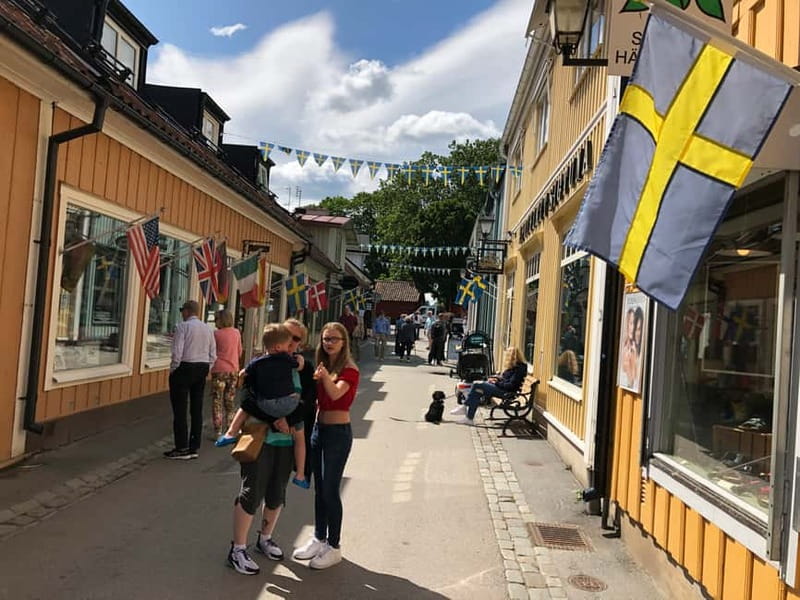
A final 40-minute café stop provides time for local snacks and regional food. Since food and drinks are not included, bring money or a payment method for your own purchase.
The breaks matter more than they may sound. This is a long day with several outdoor stops, and the café gives you a chance to warm up, use facilities, and reset before the drive back to Stockholm. Several guides have also been praised for building in toilet breaks and keeping the day relaxed rather than turning it into a forced march.
The tour operates in all weather. Sweden can be cold, wet, or windy even when the forecast looks harmless, so dress for time outside and bring suitable shoes. The walking is limited, but the ground at burial sites and old ruins may not be as smooth as a city pavement.
Guides, vehicles, and group size
The strongest part of the experience is the human element. Guides including Olof, Calle, Gabriel, Åsa, Urban, Felix, Emma, and Carl Gustav have been praised for their humor, warmth, storytelling, and command of Viking and Swedish history.
Åsa is described as an archaeologist and university teacher, while other guides have been praised for answering difficult questions, explaining Norse mythology, and making the difference between fact and fiction clear. That last point is especially useful because Viking popular culture often blurs sagas, later legends, and archaeological evidence.
Transport is described as comfortable, heated, and suitable for the long drive. The outing is not presented as a large coach experience, and several accounts describe a cozy or intimate group. A private group option is available if you want more control over the pace and conversation.
The exact vehicle and group size can vary, so I would not assume a particular bus or a guaranteed one-guide arrangement. Still, the format is clearly aimed at a smaller, more personal day than a standard sightseeing coach.
Is $292 per person fair value?
At $292, this is not a cheap day trip. You are paying for more than admission to a single attraction, though entry fees are not included. The cost covers a full day of transport, hotel pickup and drop-off, a driver and guide, and a route that links several sites difficult to visit together without a car.
I see the value most clearly if you have limited time in Stockholm and want an informed introduction to Viking Sweden. Hiring transport separately, planning the route, and arranging public connections to rural sites could take much of your day. You would also lose the historical thread that connects Estrid, runestones, assemblies, Sigtuna, Uppsala, and Old Uppsala.
The price is harder to justify if you mainly want free time, shopping, or a slow visit to Sigtuna and Uppsala. The schedule is full, and the tour’s strength is coverage. You are choosing breadth and guidance over independence.
Who should book this day trip?
I would recommend it to anyone with a strong interest in Viking history, archaeology, Swedish religious change, or early Scandinavian society. It also suits first-time visitors who want to see more than Stockholm’s central sights without managing rural transport themselves.
Families can benefit from the variety. Children who enjoy stories, old stones, burial mounds, and legends may find the day engaging, though the long duration and repeated guided explanations will not suit every child.
You should think twice if you need extensive walking-free access, since the tour involves outdoor historical sites and uneven ground even though the walking is limited. It may also disappoint you if you expect a reenactment, a Viking meal, or a museum packed with artifacts. This is a real-place history tour, with the guide doing much of the interpretive work.
Booking is flexible: cancellation is allowed up to 24 hours before departure for a full refund, and you can reserve now and pay later. Pickup is available within 3 kilometers of Stockholm Central Station and from cruise arrivals except Nynäshamn. Wait in your hotel lobby at the arranged time and look for a guide wearing a blue Sweden History Tours jacket.
Should you book the Sigtuna and Uppsala Viking tour?
Book it if you want a well-organized, guide-led day that connects authentic outdoor sites with Sigtuna, Uppsala, and Old Uppsala. The combination of runestones, burial grounds, a reconstructed bridge, an assembly site, church ruins, and towering mounds gives you a far better sense of Sweden’s past than a single city museum can provide.
Skip it if you prefer to set your own pace or want a narrow focus on Viking artifacts. The day moves quickly, and Sigtuna and Uppsala receive introductions rather than unlimited free time. For most history-minded visitors, though, the convenient transport and consistently praised guides make this a worthwhile use of one day outside Stockholm.
FAQ
How long does the tour last?
The tour lasts approximately 8 to 9 hours, including transportation, guided visits, walking stops, meal time, and the return to Stockholm.
Where is pickup available?
Pickup is available from locations within 3 kilometers of Stockholm Central Station. Hotel pickup and drop-off are included, and cruise pickup is available except for arrivals at Nynäshamn.
What language is the tour conducted in?
The live tour guide speaks English.
Is lunch included?
No. The tour includes a lunch break in Sigtuna, but food and drinks are not included in the price.
Does the tour visit Sigtuna and Uppsala?
Yes. The route includes a guided walking tour in Sigtuna, a guided visit to Uppsala, Uppsala Cathedral, and Gamla Uppsala.
How much walking is involved?
The tour involves limited walking. You will walk at outdoor historical sites, through Sigtuna, around Uppsala, and at Gamla Uppsala.
Does the tour operate in bad weather?
Yes. The tour operates in all weather, so you should dress appropriately for outdoor visits.
Can I book a private group?
Yes. A private group option is available.
New around Uppsala
- Uppsala Private Guided Walking Tour★ 5.0 · 3 reviews
- Uppsala: Mountain Bike Rental with Helmet★ 5.0 · 4 reviews
- Uppsala city and Sigtuna city 8h tour from Stockholm★ 4.7 · 3 reviews
- Uppsala Must See 2h city walk – 2h tour of all big attractions!★ 5.0 · 4 reviews
- Uppsala Self Guided Sherlock Holmes Murder Mystery Game★ 4.0 · 4 reviews
- Uppsala Scavenger Hunt and Sights Self Guided Tour★ 5.0 · 2 reviews
- Self Guided Secrets of Uppsala Exploration Game★ 3.5 · 2 reviews
- Stockholm: Uppsala Half-Day Swedish Oxford & Cathedral Tour★ 4.9 · 11 reviews
Viking History Tours, compared.

Viking History, Runes & Countryside 9h Tour to Sigtuna & Uppsala
Read our review →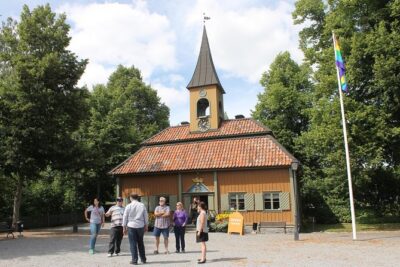
Viking History and Swedish Countryside Tour to Sigtuna & Uppsala
Read our review →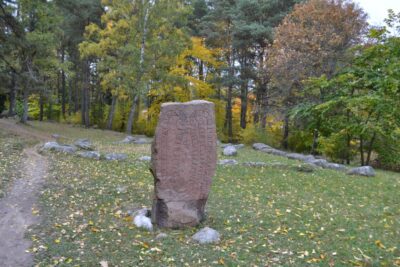
Viking History Small Group Tour from Stockholm: Half Day Including Sigtuna
Read our review →
Full Day Viking Tour with Fika Swedish Coffee Break
Read our review →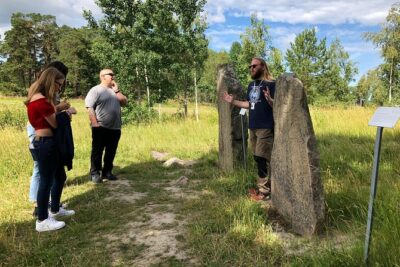
Private Full Day Viking History Tour from Stockholm Including Sigtuna and Uppsala
Read our review →Browse the lists this tour appears in