Reviewed · STOCKHOLM TOURS
7-Day Scenic Scandinavian Tour from Stockholm exploring Denmark, Sweden and fjords in Norway
Seven days, three countries, one sweeping Nordic route. This tour packs Briksdal Glacier, Sognefjord, and the Flåm Railway into a single journey, then adds city stops in Oslo, Gothenburg, Copenhagen, and Stockholm. I like the way transport, hotels, breakfasts, and a tour manager are handled together, and I like the mix of dramatic nature and major Nordic capitals. The tradeoff is a demanding schedule with roughly 3,500 kilometers on the road.
I also like the small group size, capped at 15 people, and the clean, modern coach praised by past participants. Guides such as Lux have earned warm marks for helping with questions, while driver Gregory was noted for safe, capable driving. Still, accommodation quality can vary, and some days give you only a short taste of places that deserve more time.
In This Review
- Key points to know before booking
- What this seven-day route really offers
- Day 1: Stockholm to Lillehammer and Lake Mjøsa
- Day 2: Briksdal Glacier and Jostedalsbreen National Park
- Day 3: Sognefjord and the Flåm Railway
- Day 4: Oslo, City Hall, and Vigeland’s human figures
- Day 5: Gothenburg’s Poseidon, fish market, and cathedral
- Day 6: Copenhagen icons before the return to Sweden
- Day 7: Stockholm City Hall, the Vasa, and Storkyrkan
- Hotels, meals, and the real cost
- Who will get the most from this tour?
- Should you book this Scandinavian route?
- FAQ
- Where does the tour start?
- What time does the tour begin?
- Where does the tour end?
- How long is the tour?
- Which countries does the tour visit?
- Is accommodation included?
- Are meals included?
- Are attraction tickets included?
- Is a gratuity required?
- How much luggage can I bring?
Key points to know before booking
- Briksdal Glacier and Sognefjord are the natural highlights: Expect waterfalls, glacier scenery, mountain roads, and a fjord cruise.
- The tour covers about 3,500 kilometers: You save planning time, but several days involve long coach rides.
- Six breakfasts and hotel stays are included: Rooms have private facilities, but the final night is not covered.
- The Flåm Railway is a major attraction: The route is known for fjords, waterfalls, valleys, and steep mountain scenery.
- The group is limited to 15 people: That is a useful advantage on a fast-moving itinerary.
- Budget for extras: A mandatory €10 daily gratuity, meals, attraction tickets, and personal costs are separate.
What this seven-day route really offers
This is a sightseeing sampler, not a slow Scandinavian holiday. You will cross from Stockholm into Norway, travel through fjord country, visit Oslo and Gothenburg, continue to Copenhagen, then return to Stockholm.
That scope is the main appeal. You can see several of the region’s most recognizable places without arranging separate hotels, rail tickets, coaches, and border travel yourself. The price is $1,169.51 per person, before the mandatory gratuity and other extras. For a seven-day trip with accommodation, daily coach transport, six breakfasts, and a tour manager, that can be good value if convenience matters more to you than flexibility.
The cost also comes with limits. Lunch and dinner are not included, nor are attraction tickets. The trip moves quickly, and you will spend a great deal of time sitting on the coach. I would choose this route for a first look at Scandinavia, especially if you want someone else to manage the complicated movement between countries.
The coach carries a maximum of 15 people, which should make loading, hotel check-ins, and group departures easier than on a large motorcoach. English is offered, though the operator can combine English and Chinese participants when numbers are low. In that case, one tour leader may serve both language groups.
A few more Stockholm options to compare
- Stockholm: ABBA The Museum Entrance Ticket
★ 4.7 · 11,280 reviews - Stockholm: City Archipelago Sightseeing Cruise with Guide
★ 4.3 · 10,798 reviews - Stockholm: Skansen Open-Air Museum Admission Ticket
★ 4.5 · 3,427 reviews
Day 1: Stockholm to Lillehammer and Lake Mjøsa
The meeting point is Stockholm Central Station, Centralplan 15, with an 8:30 a.m. start. From there, the coach heads toward Norway and Lake Mjøsa, Norway’s largest lake.
The first major stop is Lillehammer Olympic Park, associated with the 1994 Winter Olympics. The town has fewer than 23,000 residents, and the appeal here is the open setting and calm winter scenery rather than a long city visit. The schedule specifically does not include Lillehammer’s city center, so you should not expect time for its shops, streets, or museums.
You will arrive in the evening and sleep in Lillehammer or a nearby town. This is a practical first night, not a full destination visit. If you have just arrived from a long international flight, the early start and first-day road distance may feel tiring.
Accommodation is at least three-star, with a private bathroom in a twin, double, or single room. A standard twin room is normally arranged. A double bed may be requested, but it is not guaranteed.
Day 2: Briksdal Glacier and Jostedalsbreen National Park
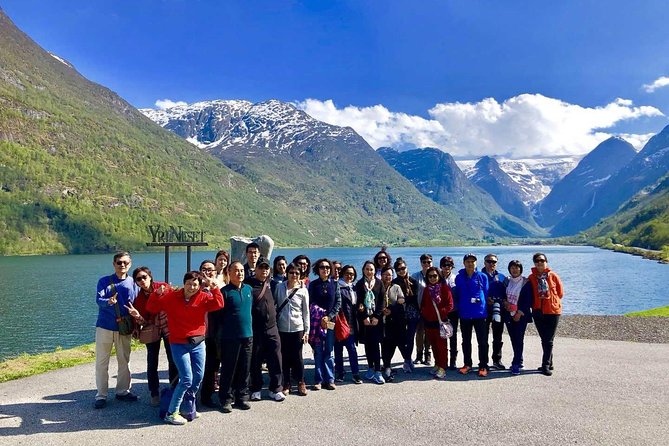
Day two brings the first major natural attraction: Briksdal Glacier. The glacier is reached after breakfast, with about an hour allocated at the stop. The scale of the surrounding mountains, ice, streams, and waterfalls is the reason this part of the route earns so much attention.
The program then continues through Jostedalsbreen National Park. A cable car ride is planned for about 30 minutes, followed by around 10 minutes of free time for photographs and a closer look at the glacier area.
That timing matters. You will get a strong scenic introduction, but this is not a hiking day. If you want a long trail walk, a quiet picnic, or time to study the area at your own pace, the group schedule will feel restrictive. You need practical shoes and weather-ready clothing, since conditions around glacier country can change quickly. The supplied details do not promise a specific hiking route or extended walk, so do not plan on one.
The afternoon continues south toward Gudvangen. This is one of the longer road sections, but it is also where the scenery becomes the main event. You will sleep in Gudvangen or nearby, with the exact hotel details supplied only 24 to 48 hours before check-in.
Day 3: Sognefjord and the Flåm Railway
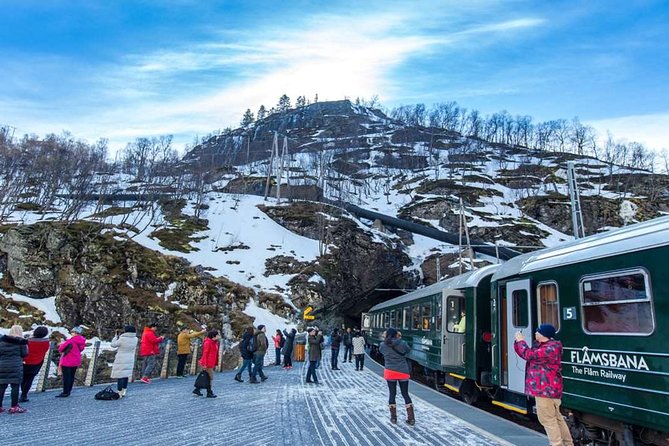
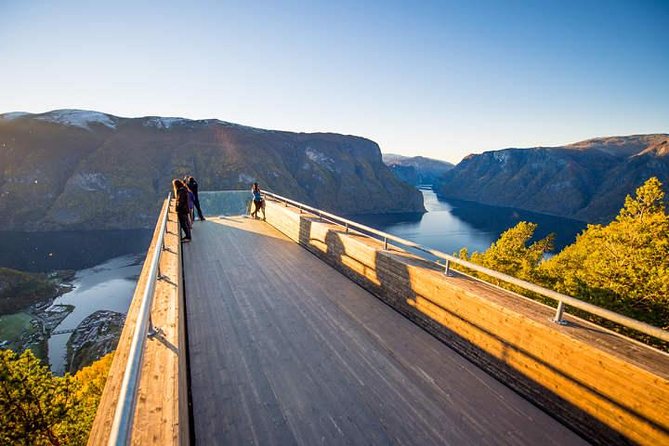
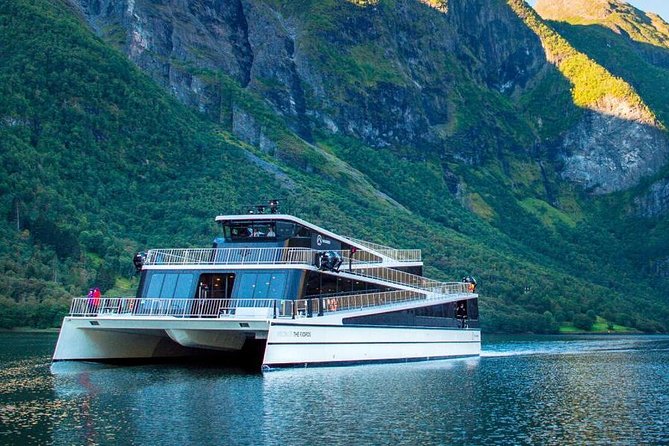
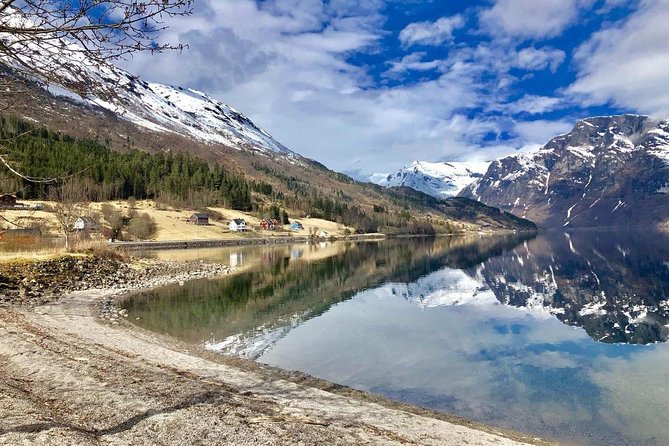
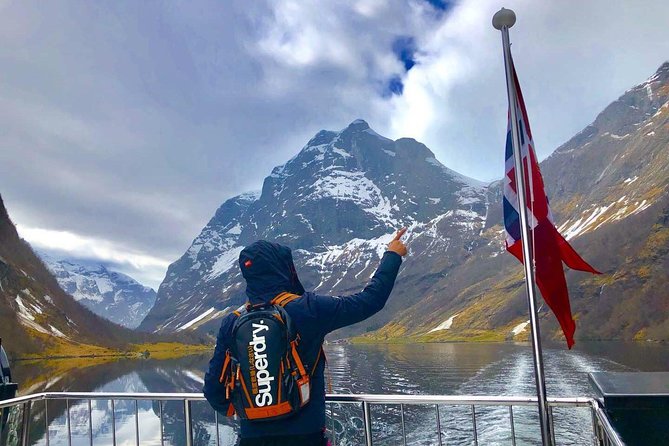
Day three is the tour’s strongest combination of boat and rail. After breakfast, you go to Gudvangen dock for a cruise on Sognefjord, described in the program as the world’s longest and deepest fjord.
The cruise lasts about two hours before arriving in Flåm. This is valuable because the fjord is best understood from the water. You can watch the steep sides, water, and settlements change as the boat moves through the fjord system. The cruise provides a calmer break from the coach.
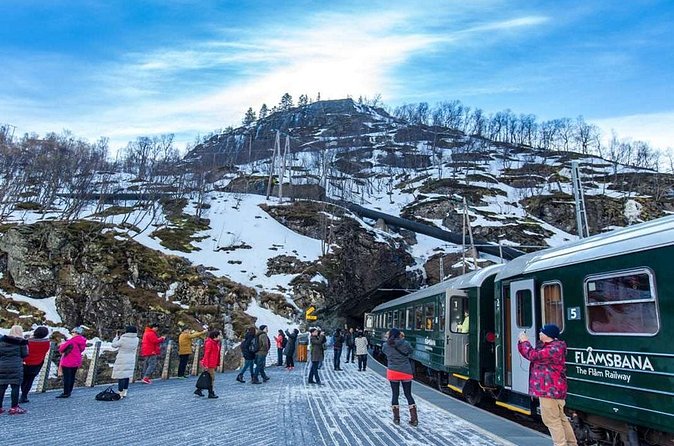
After lunch, you take the Flåm Railway, one of Norway’s best-known scenic rail routes. The ride features waterfalls, valleys, and fjord country, giving you a second view of the same region from a very different angle.
You should treat lunch as your own expense. The tour leader can help with restaurant or café directions, and some arranged lunches may cost about €30. One useful piece of advice is to avoid assuming that a paid group lunch is automatically good value. Bring flexibility into your meal budget and choose for yourself when possible.
Dinner follows the rail journey, then you return to the hotel. The day is tightly timed, but it contains the tour’s most memorable transport experiences. If Norway’s fjords are your main reason for booking, this is the day that makes the trip worthwhile.
A different sort of day, still within reach:
- Stockholm: Hop-On Hop-Off Bus or Boat Option
★ 4.0 · 3,260 reviews - Stockholm: Archipelago Boat Tour
★ 4.4 · 3,110 reviews - Stockholm: Paradox Museum Entry Ticket
★ 4.2 · 3,031 reviews - Stockholm: Highlights Boat Tour
★ 4.2 · 2,845 reviews
Day 4: Oslo, City Hall, and Vigeland’s human figures
After breakfast, the coach heads to Oslo. The capital is associated with the Nobel Peace Prize ceremony, held each year on December 10, while the other Nobel awards take place in Stockholm.
The route includes Oslo City Hall, a major civic building connected with the Nobel Peace Prize event. The visit is scheduled for about an hour, so you should expect an overview rather than a long museum visit or a relaxed neighborhood walk.
Next comes Frogner Park and the Vigeland Sculpture Park within it. More than 212 bronze and granite statues portray people at different stages of life and in different relationships. The theme is the human condition, with figures showing connections between adults, children, men, and women.
This is a good stop for visitors who enjoy public art, even if modern sculpture is not usually your first choice. The figures are easy to see in an open park setting, and the subject matter is direct. You do not need a specialist art background to understand the basic idea.
The schedule gives Oslo about a day, though the exact time spent at each place is limited. One practical concern is that you may have idle time in the city if the group schedule leaves a gap between stops. In cold weather, waiting outside can be unpleasant, so pack a warm layer even if the forecast looks mild.
Day 5: Gothenburg’s Poseidon, fish market, and cathedral
The coach leaves Norway and heads south toward Gothenburg, Sweden’s major western port. The city portion begins at Götaplatsen, where Carl Milles’ seven-meter statue of Poseidon overlooks the square.
The statue has a famously awkward public history. When it was unveiled in 1931, residents complained about its proportions and the size of its anatomy. That bit of local humor gives the stop more character than a standard monument photo.
Next comes Feskekôrka, whose name means fish church in Swedish. It is an indoor fish and shellfish market where you can look for seafood caught that day. This is the kind of stop that connects the tour to local food culture, although the exact market offerings and opening conditions can vary.
The city visit ends at Gothenburg Cathedral, the seat of the bishop of Gothenburg in the Church of Sweden. The scheduled stop times are short, so you will see the key points rather than explore Gothenburg in depth.
In the evening, the coach continues to Copenhagen. This is another long transit day, but it serves a practical purpose: you reach Denmark without having to arrange a separate train or hotel transfer.
Day 6: Copenhagen icons before the return to Sweden
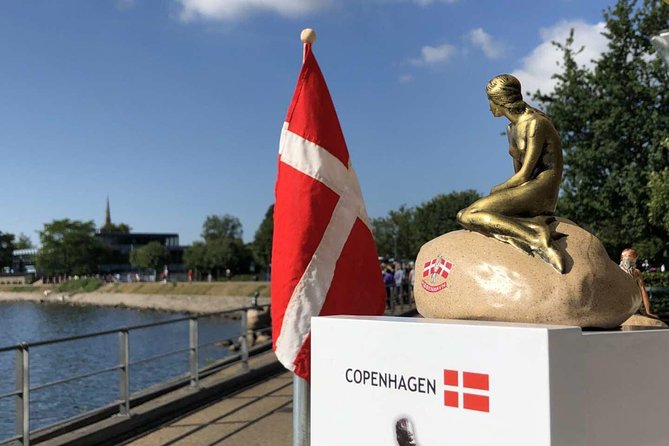
Copenhagen receives a compact city tour. The first stop is the Little Mermaid statue, inspired by Hans Christian Andersen’s fairy tale. It is one of Denmark’s best-known symbols, though the statue itself is smaller and more exposed than many first-time visitors expect.
The next stop is Amalienborg, a Rococo palace complex made up of four matching palaces around a square. If your timing is right, you may see the ceremonial changing of the guards, which takes place each afternoon.
The final listed stop is connected with Hans Christian Andersen. Along the boulevard named for him, you will see his statue on City Square and learn about the writer behind The Ugly Duckling and The Little Mermaid. After lunch, the coach begins the long drive back toward Stockholm.
I would pay close attention to the balance here. Copenhagen is given less time than its range of museums, canals, palaces, and neighborhoods deserves. If you want a deep city visit, this will feel rushed. If you mainly want a first look at the Little Mermaid, Amalienborg, and Andersen’s Copenhagen, the schedule covers the essentials.
A past participant suggested shortening Oslo and giving Copenhagen more time. I find that a sensible preference, but the fixed program does not offer that choice. You are buying a set route, not a custom itinerary.
Day 7: Stockholm City Hall, the Vasa, and Storkyrkan
The final day returns to Stockholm, built across 14 islands on the Baltic Sea. After lunch, the city tour includes Stockholm City Hall, the old Parliament building, the Vasa warship, and Storkyrkan Cathedral.
City Hall is the architectural centerpiece. Its Blue Hall hosts the Nobel Banquet, and the Golden Hall is decorated with more than 18 million glass and gold mosaic pieces. The rooms provide a striking finish to the tour, especially if you have followed the Nobel theme from Oslo.
The Vasa warship is another major draw. The program names the museum visit but does not include entrance tickets in the price, so confirm which attractions require payment before you arrive. Storkyrkan, Stockholm’s cathedral, adds a historic religious building to the final city tour.
The tour ends back at the original meeting point. Hotel accommodation is not included on the last day, and the package also excludes accommodation before the first day. Plan an extra night if your flight departs later or the next morning.
Hotels, meals, and the real cost
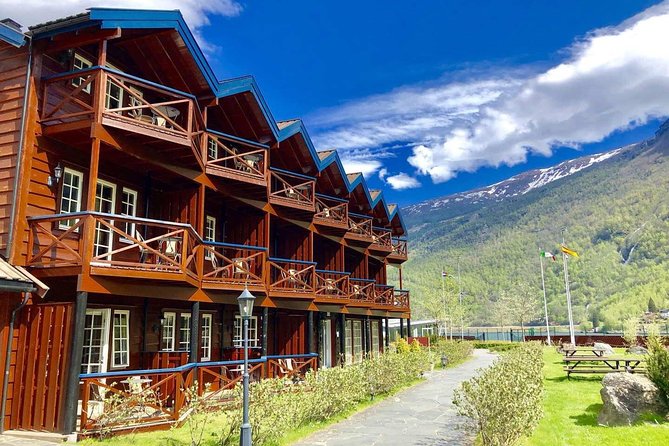
Six breakfasts are included, along with hotel accommodation for the touring nights. Rooms are private, and the minimum standard is three-star, but hotel names arrive only 24 to 48 hours before check-in. That makes it harder to judge location and style in advance.
The accommodation may be perfectly comfortable, but quality can vary. One candid assessment described some hotels as basic, while another praised the hotels and their breakfasts. I would set expectations at practical Scandinavian lodging rather than boutique comfort.
You pay for all lunches and dinners. The tour leader can help with reservations and directions to restaurants, cafés, and service-station restaurants. Personal costs such as laundry, internet, phone calls, and other purchases are also separate.
Add the mandatory gratuity of €10 per person per day. Over seven days, that is €70 per person. It is worth adding this to the advertised price before comparing the tour with independent travel.
Who will get the most from this tour?
I would recommend it to you if you want to see several countries quickly, prefer a structured schedule, and do not want to manage every hotel and transport connection yourself. It also suits solo participants or first-time visitors who value a tour manager and a small group.
It is less suitable if you want long café breaks, unplanned walks, independent restaurant choices, or several nights in each city. The route is too broad for a slow holiday.
Children under 18 must travel with an adult. Each person may bring one piece of luggage weighing up to 30 kilograms and one small carry-on. No triple rooms are arranged for groups of three, and in a twin room, one child aged 2 to 11 may share without a separate bed under the stated conditions.
Should you book this Scandinavian route?
Book it if the main goal is coverage: fjords, glacier country, Oslo, Gothenburg, Copenhagen, and Stockholm in one organized week. The clean coach, small group limit, scenic rail and boat journeys, and helpful tour management make the package attractive for a first Scandinavian overview.
Skip it if you want depth. The long drives, brief city visits, uncertain hotel locations, extra gratuities, and paid attractions reduce your freedom. I would also plan your own lunches when possible and leave room in the budget for entry fees.
The best reason to book is the Norway section, especially the combination of Briksdal Glacier, Sognefjord, and the Flåm Railway. The best reason to hesitate is the pace. If you can accept that tradeoff, this is a useful and reasonably organized way to get your first taste of Scandinavia.
FAQ
Where does the tour start?
It starts at Stockholm Central Station, Centralplan 15, 111 20 Stockholm, Sweden.
What time does the tour begin?
The scheduled start time is 8:30 a.m.
Where does the tour end?
The tour ends back at the original meeting point in Stockholm.
How long is the tour?
The tour lasts approximately seven days.
Which countries does the tour visit?
It visits Sweden, Norway, and Denmark.
Is accommodation included?
Accommodation in a minimum three-star hotel is included during the tour, in a twin, double, or single room with private facilities. Accommodation before the tour and on the final day is not included.
Are meals included?
Six breakfasts are included. Lunches and dinners are not included.
Are attraction tickets included?
The listed attraction tickets are not included unless specifically stated otherwise. Optional activities and entry fees must be paid separately.
Is a gratuity required?
Yes. A mandatory gratuity of €10 per person per day applies to the tour manager and driver.
How much luggage can I bring?
Each participant may bring one piece of luggage weighing up to 30 kilograms and one small carry-on, such as a purse, backpack, or camera bag.
New around Stockholm
- World War II Stockholm Old Town Walking Tour and Army Museum★ 4.6 · 4 reviews
- 3 Hours Guided Shopping Tour in Stockholm Thrifting Stores★ 5.0 · 4 reviews
- Scandinavian Art, Architecture and Design Tour in Stockholm★ 4.5 · 11 reviews
- Private Tour: Swedish History Day Trip to World Heritage Candidate Markim-Orkesta from Stockholm★ 5.0 · 8 reviews
- Wolf and Wildlife Tracking in Sweden★ 5.0 · 9 reviews
- Drottningholm Palace Private Guided Tour★ 4.5 · 15 reviews
- Voyage of the Vikings: Guided Exploration Through Sweden’s Past★ 5.0 · 2 reviews
- Vaxholm Day Trip From Stockholm: Cruise, Fortress, Swedish Fika★ 5.0 · 2 reviews
Stockholm Tours, compared.

City Archipelago Sightseeing Cruise with Guide
Read our review →