Reviewed · STOCKHOLM TOURS
Metro Art Tour Stockholm
Art belongs underground in Stockholm.
This two-hour tour turns a subway ride into a guided art walk, linking Kungsträdgården, Östermalmstorg, Stadion, Universitet, Solna Centrum, and T-Centralen. I like the included subway tickets and the small maximum of 10 people, which should make it easier to hear the guide and keep the route moving. I also like the focus on how the artwork connects to different periods of Stockholm’s subway system. The main drawback is the price, $116.61 per person, which is a serious charge for a two-hour public-transport outing.
You meet at Centralplan, either at the hotel lobby or Stockholm Central Station by the statue, and finish near the glass obelisk at Sergels torg. An English-speaking guide explains the stations and their artwork, with a past participant especially praising the guide’s extensive knowledge and clear explanation of the art’s time periods. Check the unusual listed start time of 12:30 am carefully before booking, since a midnight departure would be very different from a midday tour.
In This Review
- Key details before you book
- Why Stockholm’s subway deserves a guided tour
- Starting at Kungsträdgården
- Östermalmstorg and the value of a short stop
- Stockholm Stadium and the blue tunnel effect
- Universitet and the Humanistiska fakulteten stop
- T-Centralen, Stockholm’s main subway hub
- Solna Centrum and the outer part of the route
- What the guide adds to the artwork
- Price, group size, and what you receive
- Meeting points, timing, and practical planning
- Who should book this subway art experience?
- Should you book Metro Art Tour Stockholm?
- FAQ
- How long does the Metro Art Tour Stockholm last?
- What subway stations are included?
- Are subway tickets included?
- Where does the tour start and finish?
- Is the tour offered in English?
- What is the cancellation policy?
Key details before you book
- Six notable stations in about two hours: The route includes Kungsträdgården, Östermalmstorg, Stadion, Universitet, T-Centralen, and Solna Centrum.
- Subway travel is included: You do not need to arrange or pay separately for the tickets used during the tour.
- A small group size: The maximum is 10 people, a useful limit for listening in busy stations.
- Hotel or Central Station pickup: You can meet in a hotel lobby or at Stockholm Central Station by the statue, holding a sign with your name.
- A strong art and history focus: The guide explains the time periods connected with the station artwork, not just its appearance.
- A short, focused outing: The tour lasts about two hours and ends at Sergels torg, a central point in Stockholm.
Why Stockholm’s subway deserves a guided tour

Stockholm’s subway system is not only a way to get around. Its stations contain large-scale artworks, painted surfaces, sculptural details, and designs that make the journey itself part of the sightseeing.
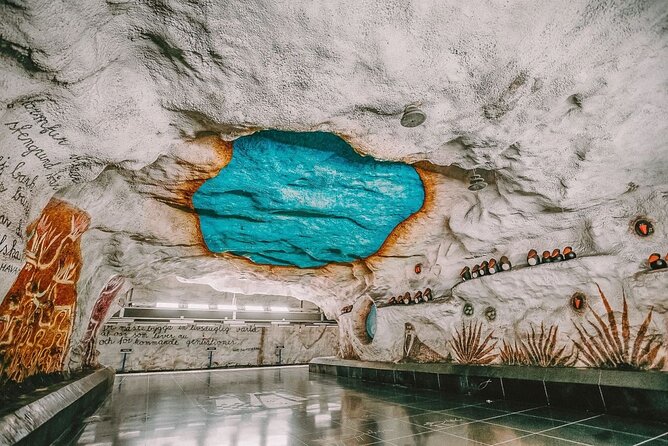
That matters because underground art can be easy to miss. You may notice a blue cave-like ceiling or a bright platform wall, but without context, it can look like decoration added after the fact. A guide helps you connect each station with its artistic period and explains why the artwork belongs there.
I like the idea of seeing several stations in one continuous trip. You do not spend the whole afternoon walking between scattered museums. Instead, the subway carries you from one art setting to the next, while the guide provides the thread connecting them.
The route also gives you a look at Stockholm beyond its palaces, waterfront streets, and old-town lanes. You remain in public stations, so this is not a polished gallery visit. Trains arrive, commuters pass through, and announcements continue around you. That everyday setting is part of the appeal, though it also means the experience can feel less calm than a traditional museum tour.
A few more Stockholm options to compare
- Stockholm: ABBA The Museum Entrance Ticket
★ 4.7 · 11,280 reviews - Stockholm: City Archipelago Sightseeing Cruise with Guide
★ 4.3 · 10,798 reviews - Stockholm: Skansen Open-Air Museum Admission Ticket
★ 4.5 · 3,427 reviews
Starting at Kungsträdgården
Kungsträdgården is the first named stop, and it sets the tone for the tour. The station is one of the best-known places on Stockholm’s subway art route, with a design that makes the underground space feel deliberate and theatrical.
The tour information allows about 10 minutes here. That is enough for an introduction and a focused explanation, but not enough for an unhurried study of every surface. I would listen closely to the guide’s comments about the artwork’s time period, then take a few quick photographs if photography is allowed in the moment.
The listed route also includes T-Centralen, Östermalmstorg, Stadion, Universitet, and Solna Centrum in connection with the first section of the experience. The exact order may be explained by the guide on the day, so you should expect the itinerary to function as a guided subway route rather than a series of long museum-style stops.
Östermalmstorg and the value of a short stop
At Östermalmstorg, the group spends about 10 minutes seeing the station artwork. This is a good example of why the tour format works. You arrive with a purpose, look at the artistic details, and hear the explanation before moving on.
A 10-minute stop keeps the tour efficient. You can see several stations in one outing instead of spending the whole time at one location. The tradeoff is that you should not expect a detailed lecture on every artist, material, or individual design element. The experience is an overview with selected stops, not an academic art course.
If you enjoy structure, this pace will suit you. If you prefer to linger, sketch, or photograph each station at length, you may want extra time after the tour to revisit your favorites on your own.
Stockholm Stadium and the blue tunnel effect
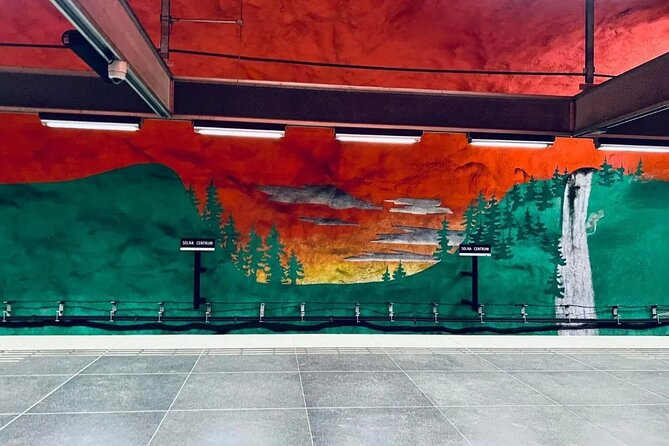
The Stockholm Stadium stop also receives about 10 minutes, and admission is included as part of the tour. Since the group is using the subway system, you can see the artwork without buying a separate attraction ticket.
This station is often associated with a strong blue-toned setting, making it one of the more visually memorable places on the route. The supplied information does not list a specific artist or explain the exact design, so I would avoid arriving with a fixed story in mind. The guide’s role is especially useful here because the art is meant to be understood in its station setting, not viewed as an isolated object.
The practical point is simple: keep your group together and pay attention to the guide’s meeting instructions. Stations are working transport spaces, not closed galleries. A short stop can pass quickly once trains and other passengers are moving through.
A different sort of day, still within reach:
- Stockholm: Hop-On Hop-Off Bus or Boat Option
★ 4.0 · 3,260 reviews - Stockholm: Archipelago Boat Tour
★ 4.4 · 3,110 reviews - Stockholm: Paradox Museum Entry Ticket
★ 4.2 · 3,031 reviews - Stockholm: Highlights Boat Tour
★ 4.2 · 2,845 reviews
Universitet and the Humanistiska fakulteten stop
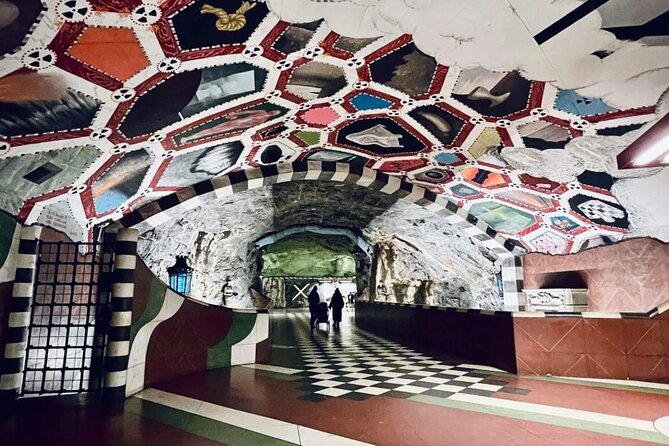
The itinerary identifies this stop as Stockholms universitet Humanistiska fakulteten, with about 10 minutes devoted to the subway artwork. The name may appear differently on maps or signs, so listen for the guide’s directions rather than relying only on your phone.
This stop adds another kind of setting to the route. Instead of seeing only stations close to central Stockholm, you travel farther out to a university area. That broadens the tour and shows how subway art was used across the system, not just in the city center.
The included subway tickets matter more here. You are not paying an extra fare for moving between the stations, and the guide handles the route as part of the experience. For a first-time visitor, that removes some of the small decisions involved in changing stations and finding the right platform.
T-Centralen, Stockholm’s main subway hub

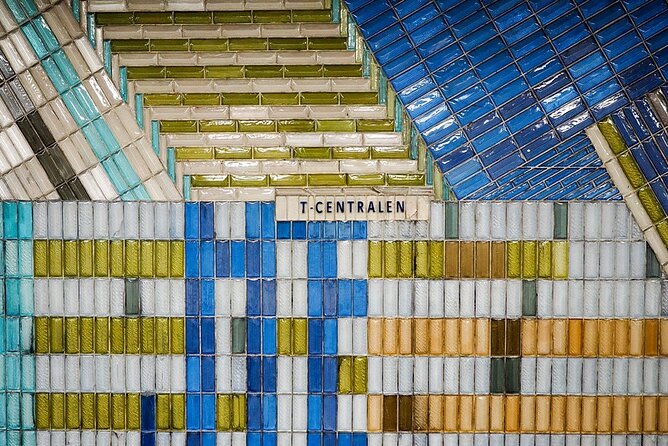
T-Centralen is the largest and most important stop on the tour. It is the main hub for Stockholm’s subway system and contains several artistic elements, so the planned 12-minute visit gives it slightly more attention than the other listed stops.
This is where I would expect the guide’s historical explanation to be most useful. A central transport hub can be confusing, and the art may appear in corridors, platforms, or connected areas rather than in one obvious room. The tour gives you a reason to slow down and notice what you might otherwise pass while changing trains.
T-Centralen is also a practical location for understanding the city’s subway network. You are not just looking at public art. You are seeing how the transport system works and how design has been integrated into a place used every day.
The downside is noise and movement. T-Centralen is a working interchange, so it may be harder to hear at certain moments. A group of no more than 10 helps, but you should still stay near the guide.
Solna Centrum and the outer part of the route
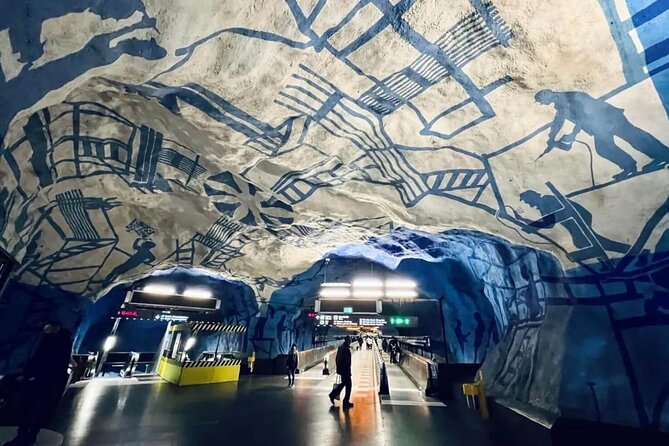
Solna Centrum is listed among the stations included in the tour, although the detailed stop list does not assign it a separate time. That suggests it may be part of the wider route or viewed as the group travels between the main stops.
Its inclusion is useful because the tour does not limit itself to the most central stations. You get a wider sense of Stockholm’s subway art program and see that the artistic treatment continues beyond the historic center.
At the same time, the route details leave some uncertainty about how long the group spends at Solna Centrum. If this station is especially important to you, ask the provider for the final order and timing before you book. The stated duration is approximately two hours, so the guide must keep the route moving.
What the guide adds to the artwork
The strongest praise for this experience focuses on the guide’s extensive knowledge of the subway system and the explanation of artwork by time period. That is the core reason to book a guided version instead of simply riding the route with a map.
You will likely gain more from the stations when you understand how their designs fit into Stockholm’s subway development. The guide can point out details, explain changes in artistic style, and help you compare one station with another.
No individual guide name is provided, so I would not book based on a specific personality. Instead, book for the subject itself and for the chance to ask questions as you go. The small group limit should help if you want to ask about a particular station or return later on your own.
The experience is offered in English. That makes it practical for visitors who want an explanation rather than a self-guided art route. You should still expect a walking and subway-based outing, with time spent standing in stations and moving between platforms.
Price, group size, and what you receive
At $116.61 per person, this is not a cheap subway ticket with a little commentary added. The fee includes all taxes and fees, subway tickets, and an English-language guided experience lasting about two hours.
The value depends on how much context you want. If you are comfortable researching the stations yourself, the price may feel high. The subway tickets themselves do not account for much of the cost. But if you want a planned route, an explanation of the art’s time periods, hotel or station pickup, and a group capped at 10, the package becomes easier to justify.
You are paying for interpretation and convenience. That is worthwhile for an art-focused visitor with limited time, especially if Stockholm is part of a larger Scandinavian trip. It is less appealing if you mainly want a quick look at one or two famous stations.
Coffee and tea are not included. That is a minor issue, since the tour is short, but you should plan your own drink before or after the outing.
Meeting points, timing, and practical planning
The listed start point is Centralplan, 111 20 Stockholm, with pickup offered from a hotel lobby or Stockholm Central Station by the statue. The guide is expected to hold a sign with your name or names, which should make the meeting easier.
The end point is Sergels torg, by the glass obelisk and fountains. This is useful because you finish in a central area rather than returning to a hotel. You can continue sightseeing or arrange your next activity from there.
The stated start time appears as 12:30 am. Because that means midnight, I would confirm the exact local start time directly before making plans. A simple time-entry error can change the entire day, and the supplied details do not clarify it.
Most people can participate, and service animals are allowed. The experience is near public transportation by its very nature, but the tour includes walking and standing in subway stations. The maximum group size is 10, which is a helpful middle ground between private touring and a large crowd.
Free cancellation is available if you cancel at least 24 hours before the start time. Changes or cancellations made later are not refunded, so keep that cutoff in mind when arranging a busy Stockholm schedule.
Who should book this subway art experience?
I would recommend it most strongly to:
- Art lovers who want context instead of a quick photo stop.
- First-time Stockholm visitors who want an organized introduction to the subway system.
- Short-stay visitors who need to see several stations within about two hours.
- Museum fans looking for a public setting rather than another indoor attraction.
- People who prefer small groups and want a chance to hear the guide clearly.
- Visitors staying centrally who can use the pickup and finish near Sergels torg.
I would be more cautious if you dislike public transportation, need a slow pace, or want long periods for photography. The tour is built around movement, station visits, and spoken explanation.
Should you book Metro Art Tour Stockholm?
Book it if you want a guided introduction to Stockholm’s subway art and value the explanation more than the transport itself. The included tickets, English-language format, small group limit, and central pickup and finish make the outing easy to fit into a city visit.
Skip it if $116.61 feels too steep for two hours or if you prefer to explore stations independently. The best reason to choose this tour is the guide’s explanation of the artwork and its time periods. Confirm the start time and ask how Solna Centrum fits into the final route before paying.
FAQ
How long does the Metro Art Tour Stockholm last?
The experience lasts approximately two hours.
What subway stations are included?
The route includes Kungsträdgården, Östermalmstorg, Stockholm Stadium, Stockholms universitet Humanistiska fakulteten, T-Centralen, and Solna Centrum.
Are subway tickets included?
Yes. Subway tickets, all fees, and taxes are included in the price.
Where does the tour start and finish?
The tour starts at Centralplan in Stockholm. Pickup is offered from a hotel lobby or Stockholm Central Station by the statue. It finishes at Sergels torg, by the glass obelisk and fountains.
Is the tour offered in English?
Yes. The experience is offered in English.
What is the cancellation policy?
You can cancel up to 24 hours before the start time for a full refund. Cancellations or changes made less than 24 hours before the start time are not accepted for a refund.
New around Stockholm
- World War II Stockholm Old Town Walking Tour and Army Museum★ 4.6 · 4 reviews
- 3 Hours Guided Shopping Tour in Stockholm Thrifting Stores★ 5.0 · 4 reviews
- Scandinavian Art, Architecture and Design Tour in Stockholm★ 4.5 · 11 reviews
- Private Tour: Swedish History Day Trip to World Heritage Candidate Markim-Orkesta from Stockholm★ 5.0 · 8 reviews
- Wolf and Wildlife Tracking in Sweden★ 5.0 · 9 reviews
- Drottningholm Palace Private Guided Tour★ 4.5 · 15 reviews
- Voyage of the Vikings: Guided Exploration Through Sweden’s Past★ 5.0 · 2 reviews
- Vaxholm Day Trip From Stockholm: Cruise, Fortress, Swedish Fika★ 5.0 · 2 reviews
Stockholm Tours, compared.


City Archipelago Sightseeing Cruise with Guide
Read our review →