
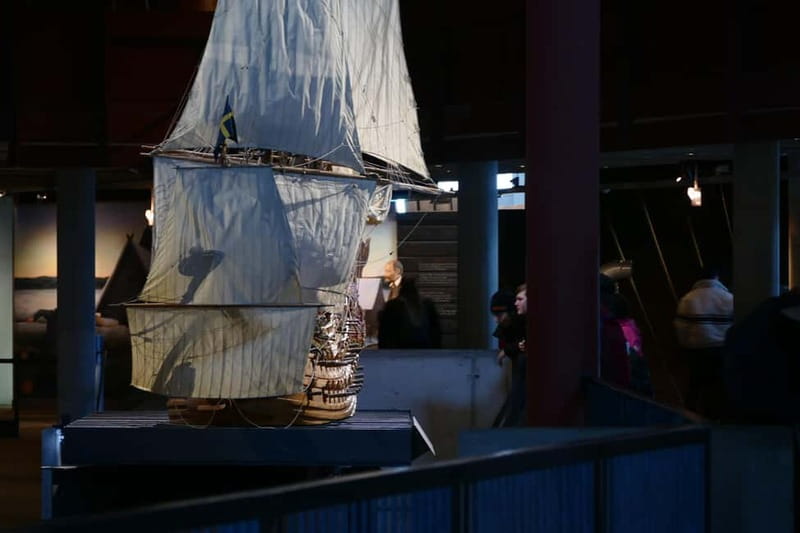
Reviewed · VASA MUSEUM TOURS
Stockholm: Vasa Museum Tour with Entry Ticket & Guide
The ship sank before leaving the harbor. That startling failure makes this Vasa Museum tour far more gripping than a routine museum visit. I like the direct entry with the guide and the way the tour connects the ship to Sweden’s 17th-century wars, shipbuilding, and royal ambition. I also like that the guides leave time for questions and photographs. The main consideration is the fixed two-hour format, which may feel a little long if you prefer to browse museums alone.
You meet outside the museum’s groups entrance and look for a guide carrying a rainbow umbrella. From there, your guide takes you past the ticket line, introduces the Vasa’s story, and brings you back to the same museum entrance at the end. At $66 per person, this costs more than a basic admission ticket, but the added value is the explanation: the ship is huge and visually overwhelming, and a good guide helps you understand what you are seeing.
In This Review
- Key points to know before you book
- Meeting the guide at the Vasa Museum entrance
- Your first look at the enormous Vasa
- Sweden’s empire and the ship’s dangerous purpose
- Why the Vasa sank on August 10, 1628
- The 19th-century maps and the search for the wreck
- Raising the wreck and preserving the wood
- What the guide adds to the museum visit
- Two hours inside the museum: the right amount of time?
- A good choice for families and mixed-age groups
- Accessibility, languages, and practical comfort
- Is $66 a fair price for the Vasa experience?
- Who should book this guided Vasa visit?
- Should you book the Stockholm Vasa Museum tour?
- FAQ
- Where do I meet the guide?
- Is museum admission included?
- Does the tour skip the ticket line?
- How long does the tour last?
- What languages are available?
- Is the tour wheelchair accessible?
Key points to know before you book
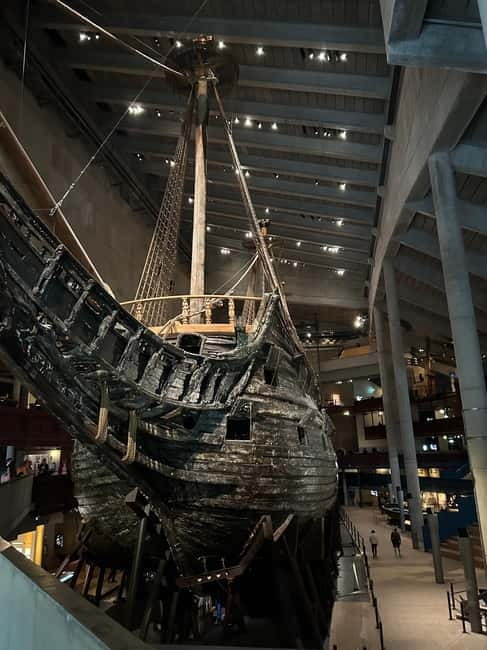
- The Vasa sank on its maiden voyage: It went down on August 10, 1628, still within sight of the shipyard where it was built.
- A guide puts the ship into context: You learn about Sweden’s empire, the war behind the ship’s construction, and warnings about its seaworthiness.
- Skip-the-line entry is useful: Your guide meets you at the groups entrance and enters with you, avoiding the regular ticket queue.
- Salvage is part of the main story: The tour covers the maps, searches, engineering, and difficult work used to locate and raise the wreck.
- Guide quality is a major strength: Gaia, Katherine, Aggie, Sophie, Carlota, Kyra, and others have been praised for clear storytelling, humor, and energy.
- It works for families and limited mobility: The tour is wheelchair accessible and has engaged children as young as eight and eleven.
Meeting the guide at the Vasa Museum entrance

The practical start is simple, but you need to get it right. Your guide waits outside the museum’s groups entrance with a rainbow umbrella, not somewhere vague in the surrounding museum area. You must enter with the guide, so arriving at the proper door matters.
The company also contacts you before the activity. Make sure your phone number is entered correctly so you can receive that message. This is particularly useful if you are coming from a cruise ship, running late, or trying to coordinate with a family group.
The guide usually identifies the group and brings everyone through the entry process together. The skip-the-line benefit does not mean you can wander in whenever you like. It means the guide handles the museum entry as part of the tour, so you should arrive ready to join the group.
The tour is described as a small-group experience, which suits the Vasa well. The ship is displayed in a large museum space, and a smaller group makes it easier to hear explanations and ask questions. Still, group size can affect the experience, so do not expect a private tour unless your booking specifically says so.
More visits to the Vasa Museum:
- Stockholm Pass: Save up to 50% – Includes Vasa Museum Ticket
★ 4.1 · 2,392 reviews - Stockholm: Vasa Museum and Vrak Museum of Wrecks Combo Entry
★ 4.7 · 2,131 reviews - Vasa Museum Guided Tour, Including Ticket & Guide
★ 5.0 · 330 reviews
Your first look at the enormous Vasa
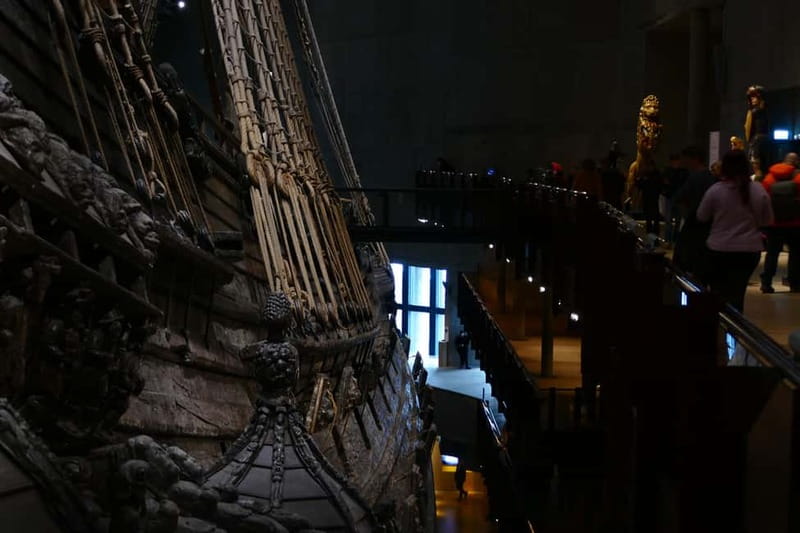
The first sight of the ship is the emotional center of the visit. The Vasa is displayed inside the museum, and the scale, carved decoration, and dark wooden hull can be startling when you first see it.
One guide has used a clever introduction: asking the group to keep its eyes on the floor until the right moment, then look up at the ship. It is a simple touch, but it shows why a guide can add value even before the historical explanation begins.
You can admire the vessel on your own, of course. The difference is that your guide gives you a way to read the object. Instead of seeing only a giant old ship, you begin to notice the relationship between its height, width, weight, weapons, decoration, and intended purpose.
The Vasa is not presented as a distant royal relic. Its story is unusually human. Ambition, haste, engineering mistakes, political pressure, and ignored warnings all helped shape what happened next.
Sweden’s empire and the ship’s dangerous purpose
The tour begins before the sinking. Your guide explains Sweden’s position as an expanding power and the war for which the ship was commissioned. That background matters because the Vasa was not built as a museum piece. It was a working warship meant to project royal power and carry heavy armament.
This political setting helps explain the ship’s extravagant decoration and demanding design. The Vasa was meant to impress as well as fight. Its carved details reflected status and royal authority, while its military role required substantial firepower.
You also hear about warnings concerning the ship’s seaworthiness. The exact tension is what makes the story memorable: problems were recognized, yet the project moved ahead. The Vasa’s failure was not simply bad luck at sea. It was tied to decisions made during construction and launch.
A strong guide keeps this section lively rather than turning it into a list of dates. Katherine has been praised for using humor and enthusiasm to make the subject clear. Gaia has received similar praise for explaining the cultural, political, and technical sides of the ship in a way that works for both adults and children.
Why the Vasa sank on August 10, 1628
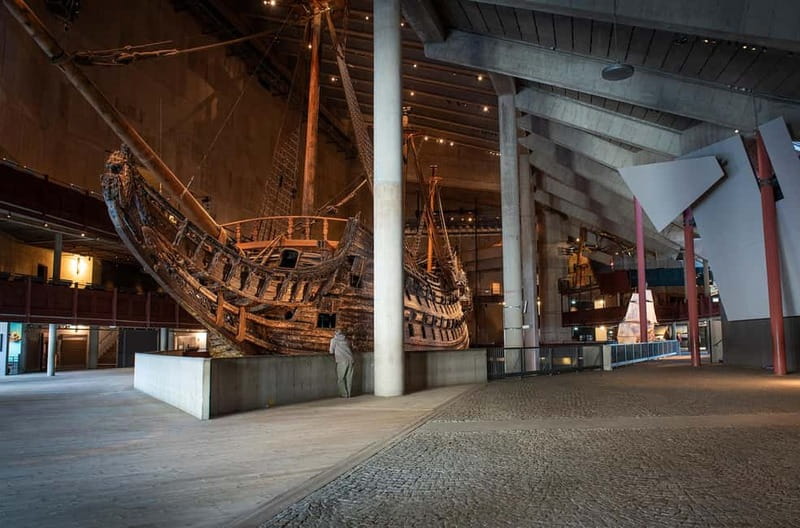
The Vasa made it only a short distance into its first voyage. On August 10, 1628, the ship sank within sight of the shipyard where it had been constructed.
That detail gives the disaster its bitter edge. The ship did not disappear during a distant battle or a storm far from help. It failed almost immediately, in view of the people who had built it and the public who had gathered to watch its launch.
Your guide explains the factors behind the accident and returns to the earlier warnings about stability. The story is easier to grasp while looking directly at the ship because you can see how much structure and decoration rose above the waterline.
This is also where the tour turns a technical failure into a wider story about authority. The Vasa reflects a time when royal orders, military pressure, and public display could push a major project forward even when practical concerns remained.
You do not need a special interest in ships to enjoy this section. The basic question is universal: how could an expensive, carefully constructed vessel fail so quickly? The answer involves design, balance, expectations, and decision-making, and the guide gives you the pieces in an understandable order.
More museums worth an afternoon in Stockholm:
- Stockholm: ABBA The Museum Entrance Ticket
★ 4.7 · 11,280 reviews - Stockholm: Skansen Open-Air Museum Admission Ticket
★ 4.5 · 3,427 reviews - Stockholm: Paradox Museum Entry Ticket
★ 4.2 · 3,031 reviews - Stockholm: Nobel Prize Museum and Exhibition Entry Ticket
★ 4.3 · 994 reviews
The 19th-century maps and the search for the wreck
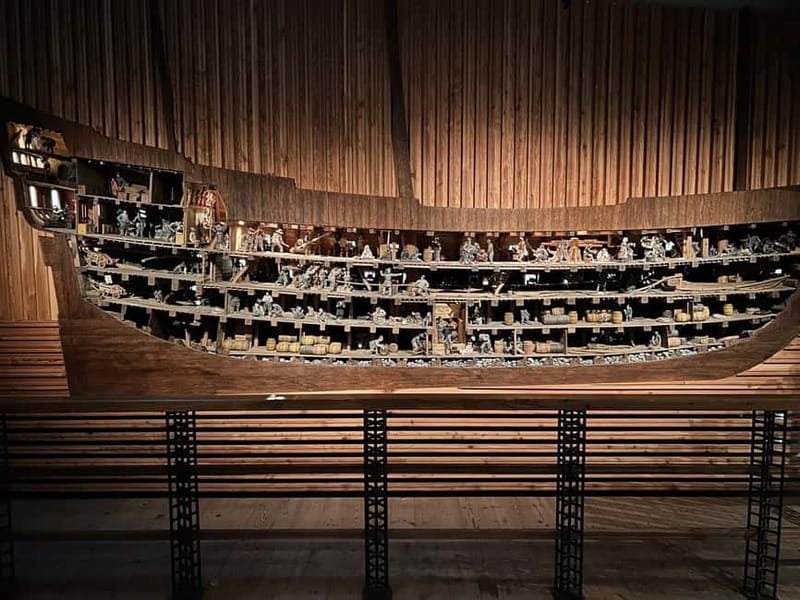
The Vasa’s story did not end when it sank. One of the more unusual parts of the tour is the search for the ship centuries later.
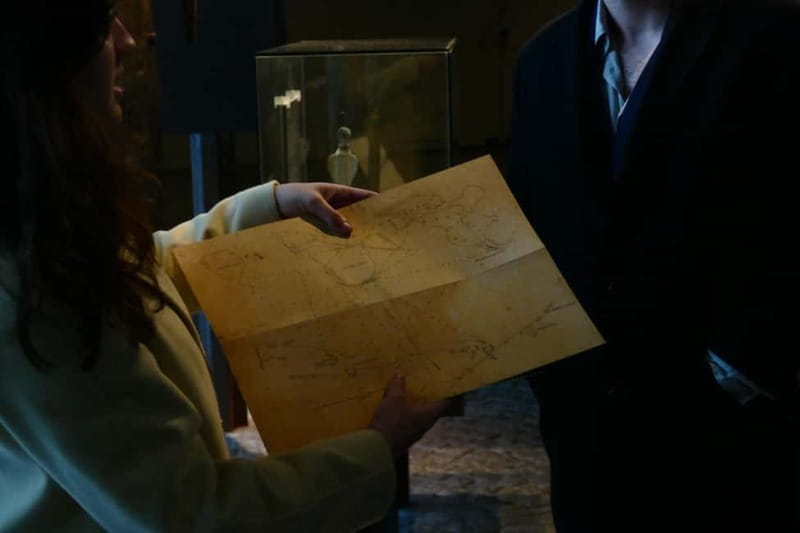
You see the 19th-century maps used to help locate the wreck. These maps make the recovery feel like an investigation rather than a lucky discovery. The ship had to be found in the waters where it had gone down, and old records offered important clues.
This section adds a different kind of drama. The sinking happened quickly, but the recovery depended on patience, research, and technical skill. Your guide explains how the ship was ultimately located and what made the salvage possible.
I especially like this part because it prevents the museum from becoming only a story about failure. The Vasa survived because people later chose to search for it, study it, and take on the difficult task of bringing it back to the surface.
Raising the wreck and preserving the wood
Salvaging the Vasa was a major engineering undertaking. The tour explains the work involved in raising the wreck and the care needed afterward.
The ship’s preservation is not a single completed event. It is an ongoing responsibility. The museum exists not only to display the Vasa, but also to protect it and explain the methods used to keep it stable for future generations.
Several guides make a point of discussing the restoration and continuing preservation work. Kyra, for example, has been praised for explaining both the initial salvage and the work still required to care for the ship. That is useful context because the Vasa can look solid and permanent from the viewing platforms, even though preserving an old wooden wreck is a delicate task.
The engineering story also balances the emotional story of the sinking. The same ship that failed in 1628 became a demanding scientific and technical project centuries later. You leave with a better sense of why the Vasa is important beyond its appearance.
What the guide adds to the museum visit
The best reason to book this tour is the guide. The ship is impressive without help, but the story can become scattered if you walk through the museum without knowing what to focus on.
Guides such as Gaia, Katherine, Aggie, Sophie, Carlota, Kyra, Viola, Dante, and Joanes have been praised for different strengths. Common themes include clear explanations, warmth, humor, strong pacing, and genuine enthusiasm for Stockholm and the Vasa.
Aggie is known for making the tour playful while stopping at important areas for explanation. Sophie has been praised for turning what could be a dry subject into a lively story. Katherine is often described as especially strong with children and as a gifted storyteller. Gaia has been praised for her energy, clarity, and ability to include everyone in the group.
You cannot assume you will receive a particular guide, and guide assignments can change. The useful point is that the company has a strong record of hiring guides who do more than recite information. They answer questions, adjust their pace, and give you time to look at the ship.
Some guides also offer tips for the rest of your Stockholm visit. That can be handy early in your stay, especially if the Vasa is one of your first major stops.
Two hours inside the museum: the right amount of time?
The planned tour lasts two hours. That gives your guide enough time to cover the ship’s construction, sinking, discovery, salvage, and preservation without rushing through the main story.
For many people, two hours is a good length. The museum has a great deal to see, and the Vasa rewards patient observation. You need time to listen, move between viewpoints, take photographs, and ask questions.
The tradeoff is that two hours can feel long if you mainly want a quick look at the ship. One person found the duration a little excessive, while others stayed for nearly another hour after the guided portion ended. That difference tells you something important: the tour works best when you enjoy explanation and context, not just visual highlights.
The guided experience ends back at the Vasa Museum, so you are free to continue looking around afterward if museum access permits. Several people have used the remaining time to study the exhibition at their own pace.
A good choice for families and mixed-age groups
This tour suits families because the story has a strong hook. A huge warship sinks on its first voyage, disappears underwater, and is later raised. Children can follow that sequence easily, and the visual evidence is right in front of them.
Guides have successfully included eight-year-olds and eleven-year-olds by using demonstrations, humor, and questions. Katherine has been praised for involving an eight-year-old in demonstrations, while another guide kept an eleven-year-old engaged throughout the visit.
That does not mean every child will want two full hours of museum explanation. If your child has a short attention span, explain beforehand that the tour includes history, engineering, and preservation, not only a quick look at the vessel.
Adults who are not interested in naval history can still enjoy the visit. The themes are broader: leadership, failed planning, technology, archaeology, conservation, and the strange afterlife of a national embarrassment.
Accessibility, languages, and practical comfort
The activity is wheelchair accessible and is described as suitable for people with limited mobility. One guide helped a visitor’s father secure a wheelchair at the museum, which shows the practical value of asking for assistance if needed.
The tour is offered in English, Spanish, and German. Check the available starting time and language when you book, since the schedule may vary.
The guide is also the person who brings you into the museum, so communication matters. Keep your phone available before the start time, and use the pre-tour message if you need to clarify the meeting point or report a delay.
The tour does not include transportation around Stockholm. You make your own way to the Vasa Museum and return to that same location after the guided visit. Plan extra time if you are coming from a cruise arrival or fitting the museum between other Djurgården sights.
Is $66 a fair price for the Vasa experience?
At $66 per person, this is a premium museum visit rather than the cheapest way to see the Vasa. The fee includes museum admission, skip-the-line entry, and the live guide.
The value depends on how you like to visit museums. If you read every display carefully and prefer setting your own pace, buying admission alone may suit you better. If you want the ship’s story organized clearly, the guided format earns its price.
The skip-the-line entry is useful on a busy day, though the tour’s larger benefit is the guide’s interpretation. You are paying to understand why the ship sank, how it was found, how it was raised, and why preservation remains difficult.
The strongest value appears when you have limited time in Stockholm. In two hours, you receive a focused introduction and avoid spending your whole visit trying to decide which displays matter most.
Free cancellation up to 24 hours before the start and the option to reserve now and pay later also reduce the risk of fitting the tour into a changing itinerary. Those terms are practical, especially if your Stockholm plans depend on a cruise schedule.
Who should book this guided Vasa visit?
I would choose this tour if you are visiting Stockholm for the first time, have only a day in the city, or want a clear explanation rather than a self-guided museum walk.
It is a particularly good fit for:
- Families who want a historical story with a dramatic beginning
- Visitors interested in archaeology, shipbuilding, or conservation
- Cruise passengers with limited time
- Anyone who values questions and personal explanation
- People with limited mobility who want a wheelchair-accessible museum tour
- Visitors who want an English, Spanish, or German guide
I would think twice if you strongly prefer silence, spontaneous browsing, or a short museum stop. The two-hour structure is focused, and the guide sets the rhythm.
Should you book the Stockholm Vasa Museum tour?
Yes, if you want the Vasa’s full story, not just its spectacular first impression. The ship is the reason to visit, but the sinking, the old maps, the salvage work, and the preservation effort are what make the museum memorable.
Book it when the price fits your budget and you value a lively guide. You may be assigned Gaia, Katherine, Aggie, Sophie, Carlota, Kyra, or another guide, and the repeated praise for their energy, humor, and clarity is one of the tour’s strongest selling points.
Skip the guided option only if you are confident you will enjoy exploring alone and have plenty of time to read the displays. For most first-time visitors, the direct entry and two hours of well-shaped storytelling make this a smart Stockholm booking.
FAQ
Where do I meet the guide?
Meet outside the groups entrance to the Vasa Museum. Look for a guide carrying a rainbow umbrella.
Is museum admission included?
Yes. The Vasa Museum entry fee is included in the tour price.
Does the tour skip the ticket line?
Yes. You enter the museum with the guide through the groups entrance and skip the regular ticket line.
How long does the tour last?
The guided tour lasts two hours and begins and ends at the Vasa Museum.
What languages are available?
Live guides are available in English, Spanish, and German.
Is the tour wheelchair accessible?
Yes. The tour is wheelchair accessible and is described as suitable for people with limited mobility.
New around Stockholm
- World War II Stockholm Old Town Walking Tour and Army Museum★ 4.6 · 4 reviews
- 3 Hours Guided Shopping Tour in Stockholm Thrifting Stores★ 5.0 · 4 reviews
- Scandinavian Art, Architecture and Design Tour in Stockholm★ 4.5 · 11 reviews
- Wolf and Wildlife Tracking in Sweden★ 5.0 · 9 reviews
- Private Tour: Swedish History Day Trip to World Heritage Candidate Markim-Orkesta from Stockholm★ 5.0 · 8 reviews
- Drottningholm Palace Private Guided Tour★ 4.5 · 15 reviews
- Voyage of the Vikings: Guided Exploration Through Sweden’s Past★ 5.0 · 2 reviews
- Vaxholm Day Trip From Stockholm: Cruise, Fortress, Swedish Fika★ 5.0 · 2 reviews
Vasa Museum Tours, compared.

Stockholm Pass: Save up to 50% – Includes Vasa Museum Ticket
Read our review →
Vasa Museum and Vrak Museum of Wrecks Combo Entry
Read our review →
Vasa Museum Guided Tour, Including Ticket & Guide
Read our review →
Old Town & Vasa Museum Skip-the-Line Private Tour
Read our review →
Stockholm Pass: Save up to 50% – Includes Vasa Museum
Read our review →
Stockholm Old Town and the Vasa Museum, a Small Group Walking Tour.
Read our review →
Stockholm Must See: City Hall, Gamla Stan and Vasa Museum
Read our review →
Exclusive Grand Stockholm Tour Vasa & Skansen*****
Read our review →Browse the lists this tour appears in