Reviewed · GUIDED
Stockholm: Underground Metro Art Ride with a Local Guide
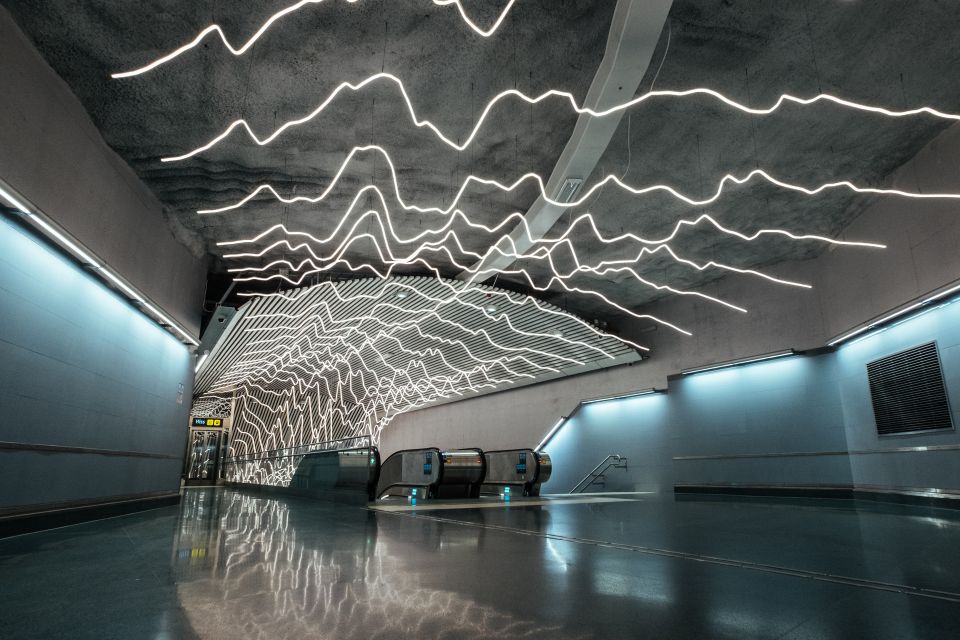
Look beneath Stockholm for its best surprise. The city’s subway is more than a way to get around: more than 150 artists have turned over 90 of its 110 stations into a public art show covering work from the 1950s to today. I like the small groups of up to eight, which make it easier to ask questions and keep a steady pace. I also like that your subway ticket is included. The main drawback is the price: at $128 per person for 1.5 to 2 hours, this is a costly way to see public art.
This tour suits you best if you want context, not just a quick ride between stations. A local guide explains the art, points out details you could easily miss, and shares advice on cafes, bars, and restaurants. The route can change with the group’s interests, pace, and weather, so you get a flexible outing rather than a fixed checklist.
In This Review
- Key points about the Stockholm metro art tour
- Starting at T-Centralen and finding your guide
- Why Stockholm’s subway became an art gallery
- The first stations: an easy introduction to the art
- Paintings, mosaics, sculptures, and reliefs underground
- Archaeological details beneath the city
- Local advice that continues above ground
- What the small-group format is really worth
- Timing, walking, and practical comfort
- Is $128 a fair price?
- Who should book this metro art experience?
- Should you book the Stockholm metro art ride?
- FAQ
- How long does the Stockholm underground art tour last?
- Where does the tour meet?
- Is the subway ticket included?
- How many people are in the group?
- Which languages does the guide speak?
- Can the route change during the tour?
- Is the tour suitable for people with mobility impairments?
Key points about the Stockholm metro art tour
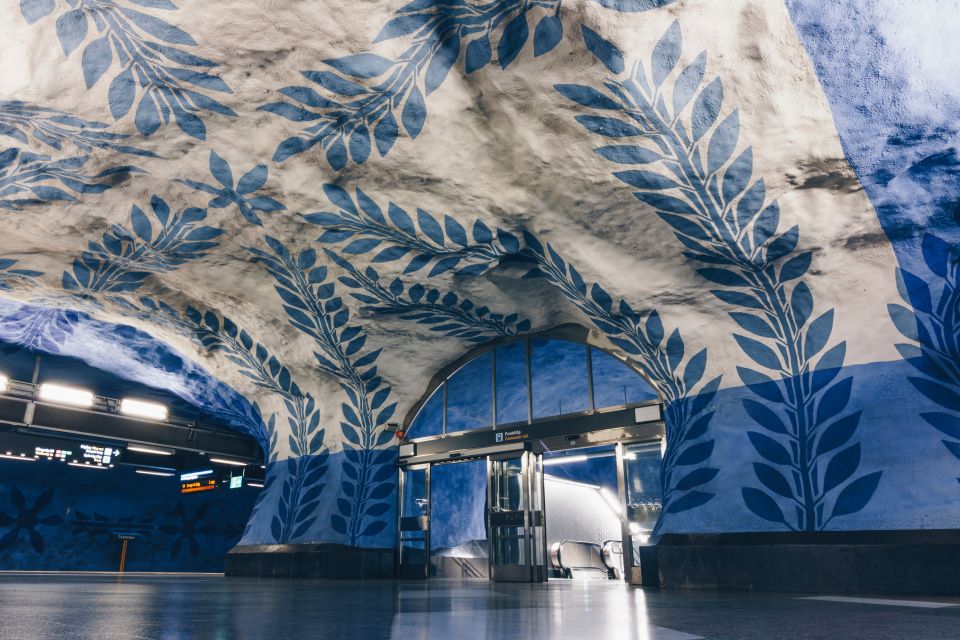
- Over 90 art stations: The subway contains paintings, mosaics, sculptures, reliefs, and changing installations spread across 110 stations.
- A story of Swedish art: The works trace artistic and cultural changes from the 1950s through the 2000s and into the present.
- Small groups: You may tour with no more than eight people, with private options also available.
- A local view of Stockholm: Along with art, your guide offers tips for cafes, restaurants, bars, and less obvious places to see.
- Flexible route: Stops may change according to your interests, walking speed, and weather.
- Simple meeting point: Meet beside T-Centralen metro station, in front of the Nils Ericson statue.
Starting at T-Centralen and finding your guide
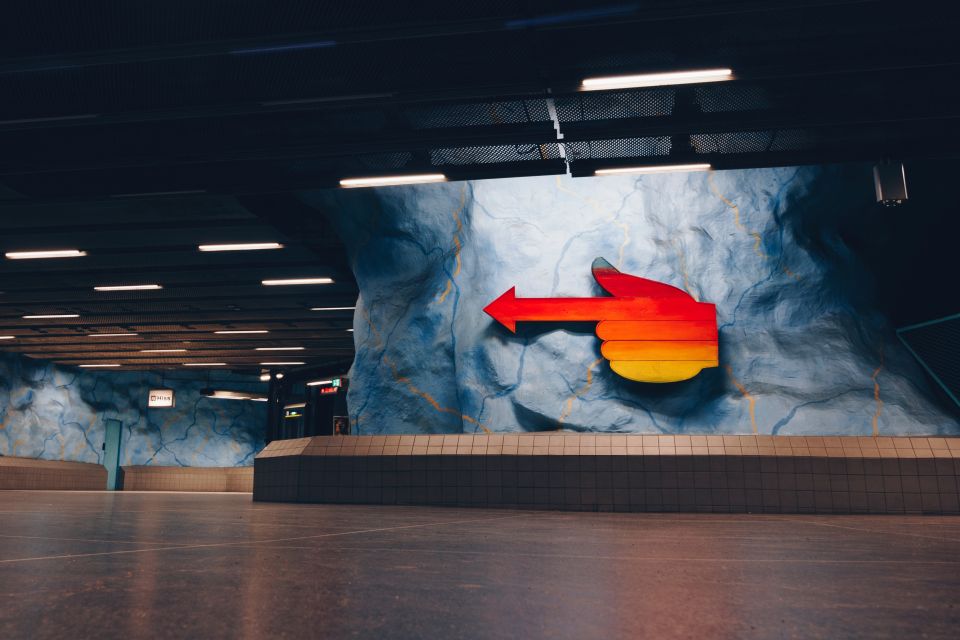
The meeting point is beside T-Centralen, in front of the Nils Ericson statue. That location matters because T-Centralen is one of Stockholm’s main subway points, and it gives the group a clear place to gather before heading below street level.
Bring comfortable shoes. This is a walking tour through several stations, not a ride where you sit in one carriage and watch the city pass. You should also bring a charged smartphone, which may be useful for keeping track of your meeting details and staying in touch with your guide if needed.
The guide speaks English or Swedish. The activity is hosted by an independent local rather than a large museum operation, so the tone may feel personal and informal. That is a strength if you enjoy asking questions and adjusting the route. It also means the exact experience can depend on the individual guide.
The group limit of eight is a good middle ground. You get more personal attention than on a large sightseeing tour, but you still have the social feel of a shared outing. Private groups are available if you want the route and pace to focus more closely on your own interests.
A few more Stockholm options to compare
- Stockholm: ABBA The Museum Entrance Ticket
★ 4.7 · 11,280 reviews - Stockholm: City Archipelago Sightseeing Cruise with Guide
★ 4.3 · 10,798 reviews - Stockholm: Skansen Open-Air Museum Admission Ticket
★ 4.5 · 3,427 reviews
Why Stockholm’s subway became an art gallery
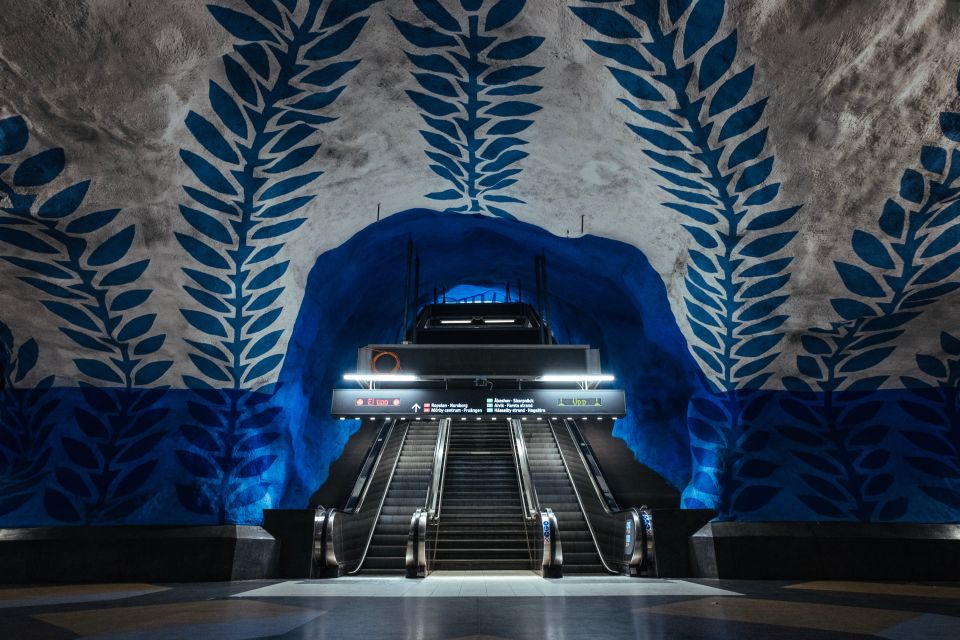
Stockholm’s metro system is often described as the world’s longest art gallery because art appears throughout the network rather than in one enclosed museum. More than 150 artists have contributed work, with installations spread across over 90 stations.
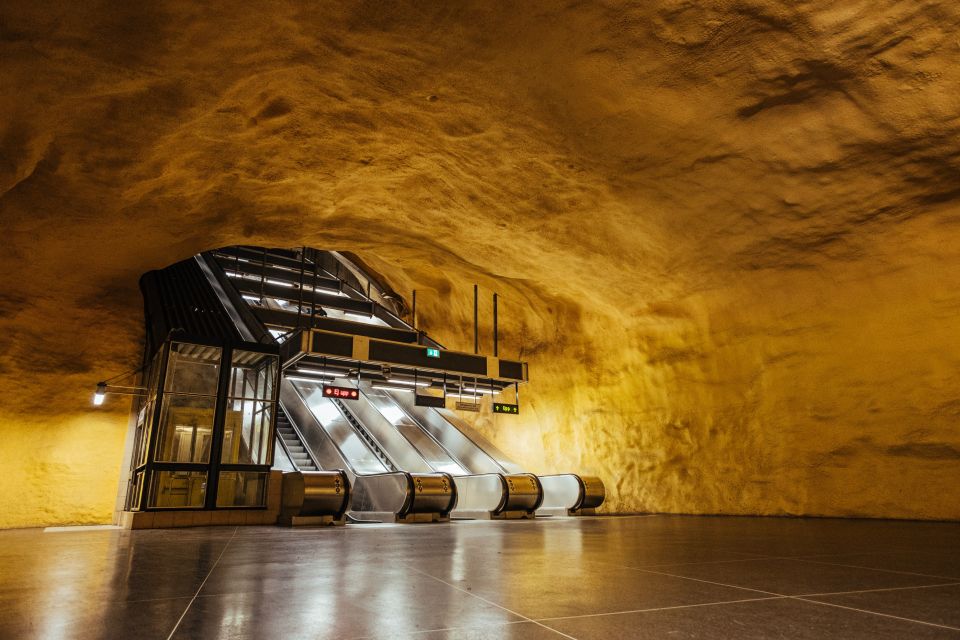
The useful point for you is that this art is part of everyday life. You are not entering a formal gallery with quiet rooms and carefully separated exhibits. You are seeing art in spaces built for commuters, with platforms, passageways, columns, rock surfaces, and station structures forming part of the setting.
The work also gives you a way to follow Swedish art across several decades. The tour covers pieces from the 1950s to the present, so your guide can explain how public art changed over time and how different artists used the subway as a working space.
Expect a mix of forms rather than one house style. The route may include bold paintings, detailed mosaics, sculptures, reliefs, and installations that change over time. Some work is easy to spot. Other pieces may be tucked into a corner or built into the architecture, which is where a guide earns the fee.
The first stations: an easy introduction to the art
The opening part of the tour will likely help you get used to reading the stations as art spaces. Instead of rushing from one famous stop to another, your guide can show you how color, material, scale, and placement affect the way each station feels.
You may see work that uses the station walls as a large canvas, alongside smaller details that would be lost during an ordinary commute. The guide’s job is not only to name an artist or date a piece. It is to direct your attention to what you are looking at and explain why it matters.
This is one reason the small group helps. If you are curious about a particular material or image, you can ask. The itinerary adapts to the group’s interests, so the route may spend more time on the stations that catch your attention.
Do not expect every famous station or every artwork in the entire network. With only 1.5 to 2 hours, the guide has to make choices. The value comes from seeing a well-selected group of stops with explanation, rather than trying to cover the whole system at speed.
Paintings, mosaics, sculptures, and reliefs underground
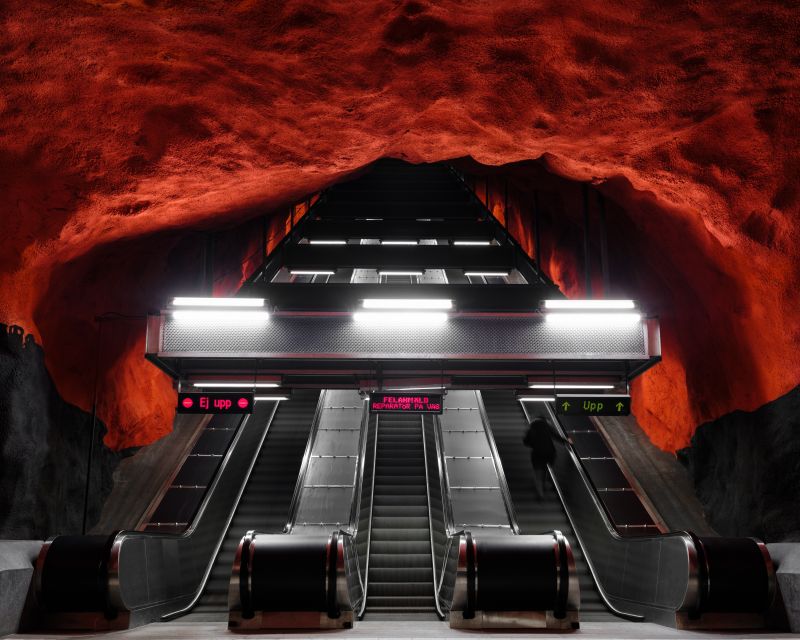
The central part of the outing focuses on the range of art beneath the city. Paintings provide the largest visual hits, but mosaics and reliefs reward a slower look. Sculptures can alter how you move through a station, while architectural details may turn a plain passage into part of the exhibition.
This variety keeps the tour from becoming repetitive. One station may feel open and dramatic, while another offers small details close to eye level. The contrast is useful because it shows how artists responded to different station designs instead of treating the subway as one giant room.
Some installations are changing works. That means the exact appearance of a station may not remain fixed forever. If you have visited Stockholm before, a later tour could offer something different, even if the route includes familiar stops.
A guide is especially useful with public art because the setting can distract you. Commuters, signs, trains, and the practical business of getting around are always part of the scene. Your guide gives you a reason to pause and look carefully, while also keeping the group moving through the system.
A different sort of day, still within reach:
- Stockholm: Hop-On Hop-Off Bus or Boat Option
★ 4.0 · 3,260 reviews - Stockholm: Archipelago Boat Tour
★ 4.4 · 3,110 reviews - Stockholm: Paradox Museum Entry Ticket
★ 4.2 · 3,031 reviews - Stockholm: Highlights Boat Tour
★ 4.2 · 2,845 reviews
Archaeological details beneath the city
The tour is not limited to modern art. It also points out archaeological features, including ancient columns found in the underground setting.
These details add another layer to the experience. You are not only seeing Swedish art from the last several decades; you are also encountering physical reminders of older history below the modern city. The contrast between ancient objects and recent public art gives the subway a wider sense of time.
The information provided does not identify the exact stations where these features appear, so you should not expect a fixed list in advance. Stops may change, and the guide may choose different examples depending on the day, weather, and interests of the group.
That flexibility is useful, but it also means you should think of this as a guided selection rather than a guaranteed tour of one specific station. If a particular artwork is essential to you, ask about it when you meet the guide.
Local advice that continues above ground
A pleasant bonus is the city advice woven into the walk. Your guide can suggest cafes, restaurants, bars, and other places to explore after the tour.
This is more useful than a generic list because you can ask for advice that fits the rest of your day. You might want a quick coffee, a relaxed meal, or a bar for the evening. The guide’s local perspective can help you make better use of your time in Stockholm.
Keep your expectations sensible. The experience is primarily a metro art tour, not a food tour or a nightlife outing. Personal expenses are not included, and the activity does not promise tastings, reservations, or visits inside those businesses.
Still, the advice can improve the rest of your stay. A short conversation with a local often helps you decide where to go next, especially when you have limited time and do not want to rely only on familiar tourist spots.
What the small-group format is really worth
The group limit of eight is one of the strongest features. Public art works best when you can stop, listen, and ask questions without being pushed to the back of a crowd.
The guide can adjust the walking pace and respond to your interests. If your group wants more time with a particular station, the route may adapt. If the pace needs to be quicker, the guide can keep the tour moving.
The personal service can go beyond the official meeting point. One guest described guide Agneta as informative and kind, and said she met the group in a hotel lobby and stayed beyond the scheduled time to show another station. That should not be treated as a guaranteed part of every booking, but it gives you a useful sense of the individual attention that may be possible.
Another highly praised guide, Rikta, was described as professional, interesting, accommodating, and clear. The repeated praise for the guides focuses on engagement and flexibility, not just on knowing facts. That matters here because a dry lecture would make a subway ride feel much longer.
The flip side is that the quality depends heavily on the guide assigned to your group. LocalBini AG arranges the activity, but an independent local hosts it. You are buying access to a person’s interpretation and city knowledge, not a standardized museum presentation.
Timing, walking, and practical comfort
The tour lasts between 1.5 and 2 hours. That is long enough to see several stations and get an overview of the art, but short enough to fit into a day of sightseeing.
You will spend the time walking through stations and changing parts of the route. Comfortable shoes are important, especially if you plan to continue exploring Stockholm afterward. The tour is not suitable for people with mobility impairments, so consider the amount of walking and the underground setting before booking.
Weather can affect the stops. The route may change according to conditions, as well as the group’s pace and interests. This is not a weakness by itself, but it means you should avoid booking it if you need a tightly fixed sequence of stations.
The subway ticket is included, so you do not need to buy a separate ticket for the tour. That removes one small task and means the guide can lead you through the system without stopping the group to sort out fares.
The activity has no food, drinks, or personal purchases included. Plan those costs separately, particularly if you want to follow the guide’s suggestions for a cafe, restaurant, or bar afterward.
Is $128 a fair price?
At $128 per person, this is expensive for a 1.5 to 2 hour experience. Your ticket is included, but the ticket itself is only a small part of the price. The real cost pays for the guide, planning, interpretation, and small-group format.
I can see the value if you care about art and want help noticing details you would otherwise pass. Stockholm’s subway is free to enter only in the sense that regular riders use it as transport. Without guidance, you may see striking stations but miss the wider story linking artists, materials, dates, and cultural change.
The price is harder to justify if you only want to photograph a few stations. You can use the metro on your own, and the tour does not include a meal, a museum admission, or a long city walk above ground.
The best test is simple: ask yourself if you would pay for an art guide in a museum. If yes, this can be a creative alternative, with the added benefit of seeing ordinary Stockholm transport spaces. If your main goal is low-cost sightseeing, $128 is likely too much.
The overall rating is 4.6 from 39 ratings, with strong praise for engaging guides and useful detail. One five-star rating still called the tour too expensive, which is a fair warning. The experience appears to deliver good guiding, but the price remains the key decision point.
Who should book this metro art experience?
I would recommend it to first-time Stockholm visitors who enjoy public art, urban design, and local stories. It is also a good choice if you have already seen the main outdoor sights and want a different side of the city.
Art students, museum fans, photographers, and curious city walkers should get the most from it. The mix of modern art, older archaeological features, and practical local advice gives the outing more range than a simple station-to-station ride.
Families may appreciate the unusual setting, but the 1.5 to 2 hours of walking and the need to keep pace with the group should be considered. The lack of suitability for people with mobility impairments is important, and the flexible route does not remove the physical demands.
You may want to skip it if you dislike underground spaces, need a fully fixed itinerary, or are watching your budget closely. You should also avoid expecting a complete survey of all 90-plus art stations. The tour offers a guided sample, not the entire network.
Should you book the Stockholm metro art ride?
Book it if you want a personal introduction to Stockholm’s public art and value a guide who can explain what you are seeing. The small group, included subway ticket, flexible route, and local food and nightlife tips make it more useful than simply riding the metro alone.
Think twice if $128 feels high for two hours. The strongest part is the guide, so the experience will depend on who leads your group. If you decide to go, bring comfortable shoes, keep your phone charged, and tell the guide what kinds of art or city advice interest you.
Free cancellation up to 24 hours before the start gives you some flexibility, and you can reserve now and pay later. Those policies help, but they do not change the central question: you are paying for interpretation and personal attention. If that is what you want, this is an inventive way to see Stockholm. If not, ride the subway independently and spend the savings on a cafe or museum.
FAQ
How long does the Stockholm underground art tour last?
The tour lasts between 1.5 and 2 hours. Starting times vary, so you need to check availability for the date you want.
Where does the tour meet?
You meet beside T-Centralen metro station, in front of the Nils Ericson statue.
Is the subway ticket included?
Yes. The subway entry ticket is included in the tour price.
How many people are in the group?
The small group can include up to eight people. Private groups are also available.
Which languages does the guide speak?
The live guide speaks English or Swedish.
Can the route change during the tour?
Yes. The itinerary can adapt to the group’s interests and walking pace. Stops may also change because of weather conditions.
Is the tour suitable for people with mobility impairments?
No. The activity is not suitable for people with mobility impairments. Comfortable shoes are recommended, and you should bring a charged smartphone.
New around Stockholm
- World War II Stockholm Old Town Walking Tour and Army Museum★ 4.6 · 4 reviews
- 3 Hours Guided Shopping Tour in Stockholm Thrifting Stores★ 5.0 · 4 reviews
- Scandinavian Art, Architecture and Design Tour in Stockholm★ 4.5 · 11 reviews
- Private Tour: Swedish History Day Trip to World Heritage Candidate Markim-Orkesta from Stockholm★ 5.0 · 8 reviews
- Wolf and Wildlife Tracking in Sweden★ 5.0 · 9 reviews
- Drottningholm Palace Private Guided Tour★ 4.5 · 15 reviews
- Voyage of the Vikings: Guided Exploration Through Sweden’s Past★ 5.0 · 2 reviews
- Vaxholm Day Trip From Stockholm: Cruise, Fortress, Swedish Fika★ 5.0 · 2 reviews
Guided, compared.

City Archipelago Sightseeing Cruise with Guide
Read our review →
Stockholm Gamla Stan: Old Town Walking Tour with Local Guide
Read our review →


Royal Bridges & Canal Boat Tour with Audio Guide
Read our review →