
Reviewed · CITY TOURS
Uppsala Must See 2h city walk – 2h tour of all big attractions!
History comes quickly in Uppsala. This two-hour walk links the city’s cathedral, Viking runestones, university buildings, botanical garden, castle, river, and old squares in one compact outing. I especially like the focus on Uppsala’s Viking past and the guide’s willingness to connect grand buildings with darker local stories, including the castle’s murders and the Swedish race biology institute.
I also like the small-group limit of 20 people and the chance to enter several buildings if they are open. The main drawback is the pace: with so many stops packed into two hours, several sights receive only a short explanation, and some are viewed from the outside.
The walk begins at 5:30 pm from Riddartorget, or Knights’ Square, and returns to the same place. At $110.15 per person, it is not a bargain-priced orientation walk, but it can be useful if you have limited time and want a guide to connect Uppsala’s major sights rather than visit each one in depth.
In This Review
- What makes this Uppsala walk worth considering
- Starting at Riddartorget beside Uppsala Cathedral
- Viking runestones near the cathedral
- Uppsala University Main Building in ten minutes
- Dekanhuset and Uppsala’s troubling twentieth-century past
- Carolina Rediviva and the Silver Bible
- Botaniska Trädgården, one of the oldest botanical gardens
- Uppsala Castle and its murders
- The old main square, Dombron, and the river
- Gustavianum’s anatomical theatre from outside
- Sankt Eriks Kalla and the story of Saint Erik
- What $110.15 per person gets you
- Who should book this two-hour walk
- A practical way to get the most from the walk
- Should you book the Uppsala Must See walk?
- FAQ
- How long is the Uppsala Must See city walk?
- Where does the tour begin?
- What time does the tour start?
- Where does the tour end?
- Is the tour offered in English?
- Does the tour enter Uppsala Castle?
- Are admissions included?
- How many people can join the tour?
What makes this Uppsala walk worth considering
- A cathedral and Viking runestones start the story: You see Uppsala Cathedral from the outside, then examine Viking Age runestones nearby.
- The route handles Uppsala’s darker past: Dekanhuset introduces the history of the Swedish race biology institute from 1920 to 1958.
- Historic interiors depend on opening hours: The tour may enter the University Main Building, Carolina Rediviva Library, and Botanical Garden if they are open.
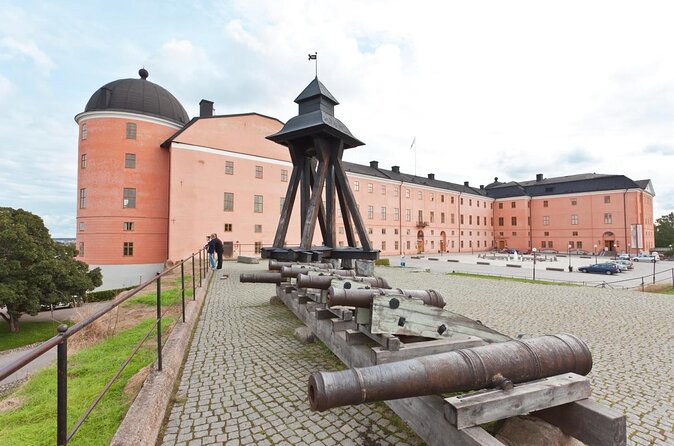
- Uppsala Castle brings a grim tale: You visit the courtyard and hear about murders connected with the castle, but the castle itself is closed to visitors.
- The guide keeps the walk personal: One highly praised guide helped a lost party find the meeting point and adjusted the pace to suit their needs.
- You get a broad city orientation in two hours: The route is best for first-time visitors who want context and a list of places to revisit.
Starting at Riddartorget beside Uppsala Cathedral
Your meeting point is Riddartorget on Biskopsgatan, a central location close to the cathedral. The tour starts at 5:30 pm, so the timing may work well after a day of independent sightseeing. You finish back at the same meeting point, which makes it easier to continue on foot afterward.
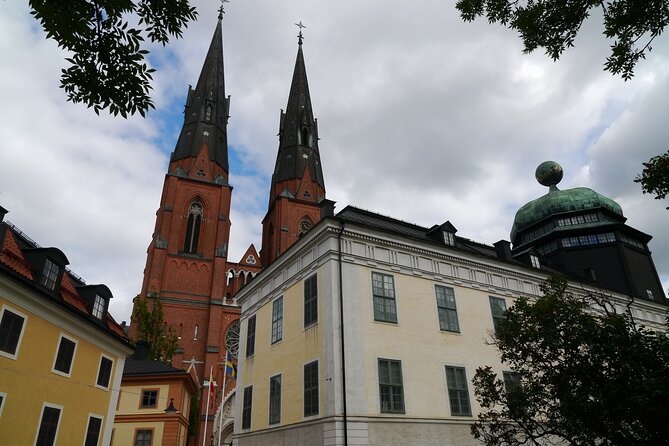
The first major sight is Uppsala Cathedral, viewed from outside. It is described as the city’s biggest cathedral, and its scale gives the walk an immediate sense of place. Since the listed visit is exterior-only, you should not book this walk expecting a cathedral interior tour.
That limitation is worth noting. The cathedral is an important visual introduction, but the guide’s role here is mainly to explain its place in Uppsala rather than provide an extended architectural visit. If you want to see the inside, you will need to arrange that separately.
More walking tours in Uppsala:
- Uppsala: City Highlights and Hidden Gems Walking Tour
★ 4.7 · 12 reviews - Best of Uppsala: Private Walking Tour with a Local
★ 3.9 · 7 reviews - Uppsala Private Guided Walking Tour
★ 5.0 · 3 reviews
Viking runestones near the cathedral
The next stop brings you close to Viking Age runestones. This is a useful change of scale. Instead of looking only at monumental buildings, you get a direct connection to the people and beliefs of the Viking period through carved stones.
The visit lasts about 20 minutes and has no separate admission charge. I like this part of the route because the stones make the Viking past feel local and physical, rather than something presented only in a museum display.
The supplied tour details do not specify the exact inscriptions or names on the stones, so you should expect a general introduction rather than a specialist runology lecture. Still, this stop gives the rest of the walk an older foundation. Uppsala’s story did not begin with the university or castle. The runestones help make that clear.
Uppsala University Main Building in ten minutes
The route then moves to the University Main Building. If the building is open, the guide will take you inside. If not, you receive an exterior explanation instead.
The planned stop is about 10 minutes, so this is a brief look rather than a full university visit. That can be enough to understand why the university matters to the city, but it will not leave much time for detailed architecture or exhibits.
The indoor option is a pleasant bonus, not something to rely on. Opening access is clearly conditional, and the tour needs to keep moving to fit all the stops into two hours. If you have a strong interest in university interiors, treat this as an introduction and plan a separate visit if needed.
Dekanhuset and Uppsala’s troubling twentieth-century past
Dekanhuset offers one of the most unusual stops on the walk. Here you learn about the Swedish race biology institute and its history from 1920 to 1958.
This subject gives the tour more weight than a standard highlights walk. Uppsala is not presented only through beautiful buildings, royal stories, and Viking symbols. The route also acknowledges a disturbing chapter in Swedish academic and social history.
The stop lasts about 10 minutes. That is enough for an overview, but the subject is serious and complex. You may want to ask the guide questions if you want more detail. The tour description does not promise an extended discussion, so the value here depends heavily on how much context the guide can provide in a short time.
For me, this is one of the strongest reasons to choose a history-focused walk instead of a simple sightseeing circuit. The guide is expected to connect places with difficult events, not just point out attractive façades.
A few more Uppsala options to compare
- Stockholm Viking History Full Day Tour to Sigtuna + Uppsala
★ 4.7 · 283 reviews - Cube of Art Uppsala Museum of Interactive Art
★ 4.5 · 69 reviews - Roofwalking on the worlds greatest pink castle!
★ 5.0 · 15 reviews - Stockholm: Uppsala Half-Day Swedish Oxford & Cathedral Tour
★ 4.9 · 11 reviews
Carolina Rediviva and the Silver Bible
The walk continues to Carolina Rediviva, Uppsala University’s library. If it is open, you enter to see the historical museum and the famous Silver Bible, written in Gothic language. If access is unavailable, the guide’s planned indoor experience may not be possible.
The stop is scheduled for about 20 minutes, making it one of the longer visits on the route. That matters because the Silver Bible is not a minor display. It gives the tour a chance to move from city streets into a collection connected with writing, religion, and early European culture.
The supplied details do not confirm exactly how long the Silver Bible can be viewed or whether the museum will always be accessible at the 5:30 pm start time. Keep your expectations flexible. The library is an important potential highlight, but the tour cannot guarantee entry.
This stop also shows the tradeoff built into the walk. You cover many major sites, but access and timing can change the experience from a proper visit into a short exterior explanation.
Botaniska Trädgården, one of the oldest botanical gardens
At Botaniska Trädgården, you explore the botanical garden with the guide if it is open. The planned stop lasts about 10 minutes.
The garden adds a welcome break from churches, libraries, and royal buildings. You get a chance to consider Uppsala through its plant collections and scientific traditions. The tour describes it as one of the world’s oldest botanical gardens, which gives the stop historical importance beyond its flowers and paths.
Ten minutes is a very short time for a botanical garden. You will not see everything, and the walk should not be treated as a full garden visit. Instead, think of it as a guided introduction that can help you decide if you want to return later.
Again, opening access matters. The garden is included in the route, but the guided visit is conditional on it being open. This is a recurring feature of the tour, so I would judge it by its overall route rather than by any single indoor or garden entry.
Uppsala Castle and its murders
Uppsala Castle is the tour’s most dramatic stop. You visit the castle courtyard and hear about murders connected with the building. The castle itself is closed to visitors, and admission is not included.
That wording is important. You should expect the courtyard and the story, not a castle interior tour. The guide’s historical explanation is the main experience here.
The planned visit lasts about 20 minutes, giving the castle story enough time to develop. A tale of murder can easily become cheap entertainment, but the value depends on how the guide places it within Uppsala’s wider political history. The supplied information does not give the names or details of the victims, so ask questions if the story catches your interest.
I like the balance of this stop. After the cathedral, university, library, and garden, the castle brings power and conflict into the picture. It also gives you a reason to look closely at a building that might otherwise seem like just another grand landmark.
The old main square, Dombron, and the river
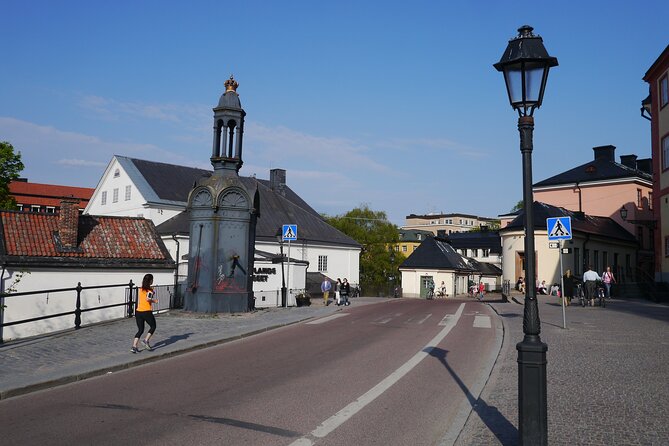
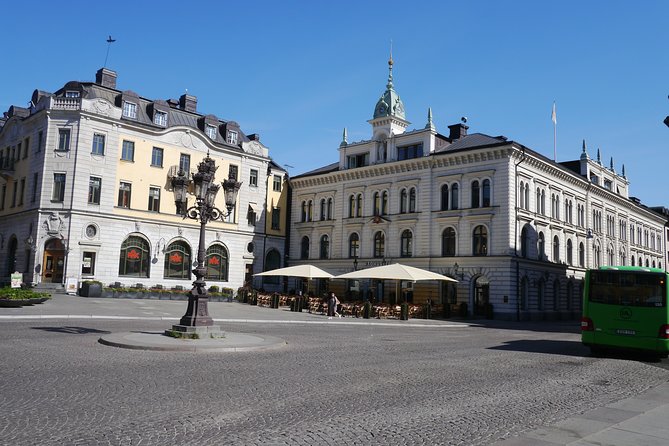
The route then reaches Uppsala’s old main square and Dombron, the bridge over the river. This stop lasts only about five minutes, so expect a quick orientation rather than a long riverside pause.
The guide explains the river and mercantile Uppsala, linking the city’s growth to movement, trade, and daily business. That is useful context. A city is not only its monuments, and the river helps explain how ordinary commerce shaped the place.
The short timing is the main weakness. Five minutes allows for a few clear points and a look at the surroundings, but not much more. If you enjoy riverside streets or old squares, make a note to return after the tour when you can set your own pace.
The walk also passes the old mill that houses Upplandsmuseet. The details do not list an interior visit, so treat this as an exterior sight and a quick introduction to the museum building.
Gustavianum’s anatomical theatre from outside
At Museum Gustavianum, you walk by and see the anatomical theatre from the outside. The stop lasts about 10 minutes, and admission is not included.
This is another place where the tour provides orientation rather than entry. Gustavianum is associated with the university, and the anatomical theatre gives you a glimpse of the older teaching traditions connected with the institution. The exterior view can be interesting, but anyone hoping to see the theatre inside will need to arrange a separate museum visit.
The tour is upfront about this limitation. That makes the stop more useful for planning. You learn where the museum is and why it matters, then decide if it deserves more of your time later.
Sankt Eriks Kalla and the story of Saint Erik
The final listed stop is Sankt Eriks Kalla, or Saint Erik’s Spring. The walk passes the spring and covers the battle and Saint Erik’s sainthood. The stop lasts about three minutes.
This is a very quick look, but it gives the tour one more layer of religious and medieval history. The spring connects a physical place with a story of battle and sainthood, which fits naturally after the cathedral and castle.
Do not expect a long pause here. Three minutes is enough to hear the basic account and see the spot, not enough for a detailed treatment of Saint Erik or medieval religious practice.
Because the walk returns to Riddartorget, the route ends close to where it began. You can then use the guide’s suggestions, if offered, to choose which sites deserve a longer independent visit.
What $110.15 per person gets you
At $110.15 per person, this is a premium price for a two-hour walking tour. The cost includes all fees and taxes, but gratuities are not included. There is no separate admission charge listed for most stops, while Uppsala Castle and Museum Gustavianum are not included as interior admissions. In practice, the price pays mainly for the guide’s time, route planning, and historical interpretation.
The value is strongest if you have only a short stay in Uppsala or prefer a guide to organize the city’s major sights. You cover a lot of ground without arranging separate visits to the cathedral area, university, library, castle, river, and spring.
The value is weaker if you want long interior visits or quiet time at each sight. Several stops are exterior-only, and three buildings or the garden may be accessible only if open. If you already know Uppsala well, the price may feel high for a broad orientation.
The group can include up to 20 people. That is still limited enough to keep a walking tour manageable, though it is not the same as a private visit. One especially positive detail is the guide’s flexibility. A guide helped a lost party find the meeting point and adjusted the pace around what the group needed. That suggests the human side of the tour can make a real difference.
Who should book this two-hour walk
I would recommend this experience to you if:
- You are visiting Uppsala for the first time.
- You want a clear overview before exploring on your own.
- You enjoy history that includes difficult subjects, not just famous buildings.
- You want to connect Viking, medieval, royal, academic, and commercial stories.
- You have moderate physical fitness and can manage a brisk urban walk.
- You value a guide who can adjust the pace and respond to questions.
I would be more cautious if you need step-free certainty, since the available information only says the tour requires a moderate fitness level. I would also hesitate if your main goal is to enter the cathedral, castle, Gustavianum, or university buildings. The route may enter some places if open, but no interior access is guaranteed.
The tour is offered in English and uses a mobile ticket. It is near public transportation, and service animals are allowed. These details make the outing practical, but they do not change the basic point: this is a guided city walk, not a series of full museum visits.
A practical way to get the most from the walk
Arrive at Riddartorget before the 5:30 pm start. One person previously needed help after getting lost, and the guide found the group, but you will have a smoother start if you confirm the meeting point in advance.
Wear shoes suited to two hours of walking and keep your schedule flexible. The tour includes many stops, and the guide may need to move briskly to reach them all. If an interior is closed, use the exterior explanation as a preview and mark the place for a later visit.
Ask about the Silver Bible, the race biology institute, and the castle murders if those subjects interest you. The tour’s strongest feature is its range, but short stops mean you may need to ask for the extra context you want.
Free cancellation is available when you cancel at least 24 hours before the local start time. Changes or cancellations made less than 24 hours before the start are not refunded, and the experience requires a minimum number of people to operate.
Should you book the Uppsala Must See walk?
Book it if you want a fast, guided introduction to Uppsala with a serious historical edge. The cathedral, Viking runestones, castle courtyard, university district, library, river, and Saint Erik’s Spring create a useful first picture of the city. The guide’s praised flexibility is another reason to consider it, especially if you appreciate a walk that can adapt to your pace.
Skip it if you want extended time inside museums and historic buildings, or if $110.15 feels high for a two-hour orientation. The best choice depends on your priorities. For a first visit with limited time, this walk can help you get your bearings and choose where to spend the rest of your day. For detailed sightseeing, use it as an introduction, then return independently to the places that permit entry.
FAQ
How long is the Uppsala Must See city walk?
The walking tour lasts approximately two hours.
Where does the tour begin?
It begins at Riddartorget, also called Knights’ Square, on Biskopsgatan in Uppsala.
What time does the tour start?
The scheduled start time is 5:30 pm.
Where does the tour end?
The activity ends back at the meeting point at Riddartorget.
Is the tour offered in English?
Yes. The tour is offered in English.
Does the tour enter Uppsala Castle?
No. The castle is closed to visitors, but the tour visits the courtyard and includes the story of murders connected with the castle.
Are admissions included?
All fees and taxes are included, but admission is not included for Uppsala Castle or Museum Gustavianum. Entry to the University Main Building, Carolina Rediviva, and Botaniska Trädgården depends on whether those places are open.
How many people can join the tour?
The tour has a maximum of 20 travelers.
New around Uppsala
- Uppsala Private Guided Walking Tour★ 5.0 · 3 reviews
- Uppsala: Mountain Bike Rental with Helmet★ 5.0 · 4 reviews
- Uppsala city and Sigtuna city 8h tour from Stockholm★ 4.7 · 3 reviews
- Uppsala Self Guided Sherlock Holmes Murder Mystery Game★ 4.0 · 4 reviews
- Uppsala Scavenger Hunt and Sights Self Guided Tour★ 5.0 · 2 reviews
- Self Guided Secrets of Uppsala Exploration Game★ 3.5 · 2 reviews
- Stockholm: Uppsala Half-Day Swedish Oxford & Cathedral Tour★ 4.9 · 11 reviews
- Best of Uppsala: Private Walking Tour with a Local★ 3.9 · 7 reviews
City Tours, compared.

City Archipelago Sightseeing Cruise with Guide
Read our review →

Guided City Sightseeing Open Electric Boat Tour
Read our review →


Go City All-Inclusive Pass with 20+ Attractions
Read our review →
Browse the lists this tour appears in