
Reviewed · 2-HOUR EXPERIENCES
Bloody Stockholm 2h – ghosts, horror and Dark Folklore Tour
Dark stories hide beneath Stockholm’s pretty streets. This walking tour turns a gentle stroll through Gamla Stan and central Stockholm into a lesson about executions, curses, restless spirits, trolls, and Swedish folklore. I like the way it connects old stories to real places, especially Stortorget and the narrow lane once called Hell. I also like that the guide brings in lesser-known figures such as Näcken, the bäckahästen, and the Skogsrået. The main point to consider is tone: this is not a nonstop haunted-house ghost tour. It is more of an entertaining history walk with supernatural material woven through it.
The experience is advertised as Bloody Stockholm 2h, while the tour details describe an approximate duration of 1 hour 30 minutes. One guide, Jonathan, once talked for more than two and a half hours, so the pace may vary. That can be a bonus if you enjoy questions and extra stories, but it is wise not to schedule a tight dinner reservation immediately afterward.
In This Review
- Key points to know before you book
- Starting with blood at Stortorget
- Prästgatan and the lane once called Hell
- Iron, newborns, and the Swedish Tomte
- Water spirits at Logårdstrappan
- Kungsträdgården and the forest creatures
- Saint Jacob’s Church and the weak points of a church
- How the storytelling affects the experience
- Is it really a ghost tour?
- Group size, walking conditions, and practical value
- Who will enjoy Bloody Stockholm?
- Should you book this Stockholm dark folklore walk?
- FAQ
- How long does Bloody Stockholm last?
- Where does the tour begin?
- Where does the tour end?
- How far is the end from the starting point?
- Is the tour offered in English?
- What is included?
- What is the maximum group size?
- Can service animals join the tour?
- What is the cancellation policy?
Key points to know before you book
- Start at Stortorget: The meeting point is outside the Nobel Prize Museum at Stortorget 2, right in Stockholm’s Old Town.
- Expect dark folklore, not staged scares: The focus is executions, death customs, curses, ghosts, trolls, and dangerous supernatural beings.
- The walk ends near Kungsträdgården: Finish outside Saint Jacob’s Church, about a 10-minute walk from the starting point.
- The guide makes the difference: Jonathan and Åsa are both praised for clear storytelling, humor, and strong knowledge of Stockholm.
- Small groups are possible, but not guaranteed: The maximum group size is 30 people, though one booking had only three participants.
- No admission fees are needed: The guide is included, and all stops are viewed from public streets and outdoor spaces.
Starting with blood at Stortorget
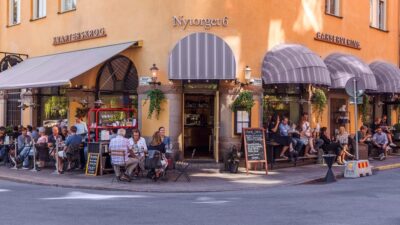
Your tour begins at Stortorget, the central square in Gamla Stan and one of the most atmospheric places in Stockholm for a talk about death. The square’s colorful buildings make a cheerful backdrop, which only sharpens the contrast with the material.
Here you hear about the execution of around 90 people connected with the Danish King Kristian’s capture of Stockholm. The story gives the tour a firm historical base before it moves into folklore. You are not simply walking past old buildings while someone recites spooky tales. You are shown how political violence, public punishment, and popular superstition shaped the way people understood danger.
The talk also covers the magical use of body parts in old beliefs. Blood from the dead could be linked with curses, while parts taken from the gallows were connected with spells or other forms of folk magic. This is grim material, and the guide does not treat it like a polished fairy tale. If you prefer your sightseeing light and tidy, this section may feel intense. If you want the less comfortable side of Stockholm’s past, it gives the tour its strongest opening.
I especially like this stop because Stortorget is easy to find and easy to picture. You get history, crime, religion, and folklore in one square. It also helps you see Gamla Stan as a place where ordinary streets have carried serious consequences for centuries.
A few more Stockholm options to compare
- Stockholm: ABBA The Museum Entrance Ticket
★ 4.7 · 11,280 reviews - Stockholm: City Archipelago Sightseeing Cruise with Guide
★ 4.3 · 10,798 reviews - Stockholm: Skansen Open-Air Museum Admission Ticket
★ 4.5 · 3,427 reviews
Prästgatan and the lane once called Hell
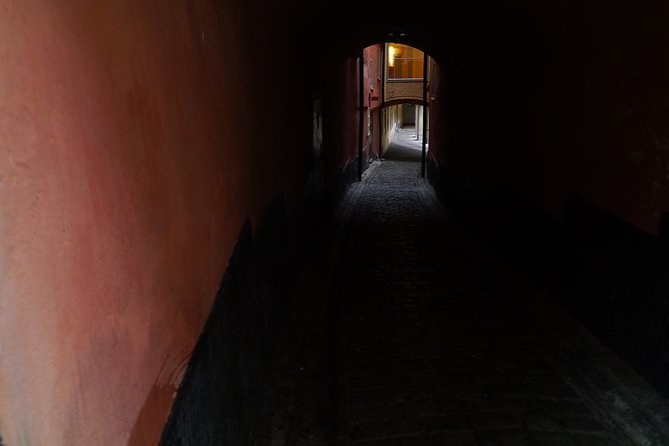
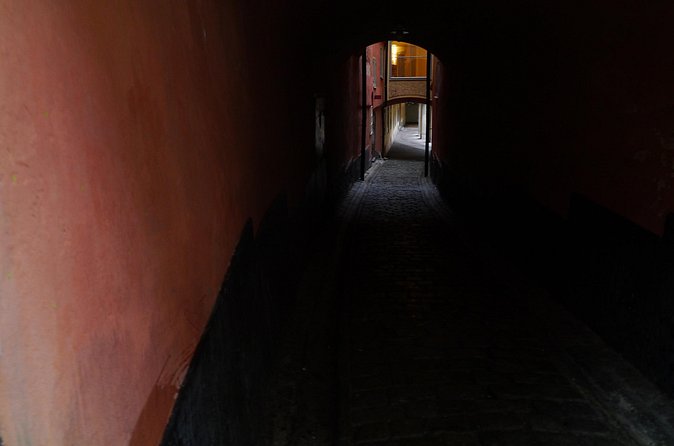
The walk continues along Prästgatan, one of the Old Town’s narrow lanes. The tour points out the part once known as Hell, where the excursionist lived. The setting matters here. Tight alleys and old walls make the stories feel close, even when the events belong to another age.
This is a short stop, listed at about 10 minutes, but it adds useful context to the layout of Gamla Stan. You begin to notice how little space there is between homes, churches, and public squares. In a modern city, a lane is just a lane. On this walk, it becomes a place connected with occupation, belief, and fear.
Do not expect a long architectural explanation at every corner. The emphasis is on the people and stories linked to the street. The appeal is atmospheric storytelling rather than a detailed survey of building styles.
Iron, newborns, and the Swedish Tomte
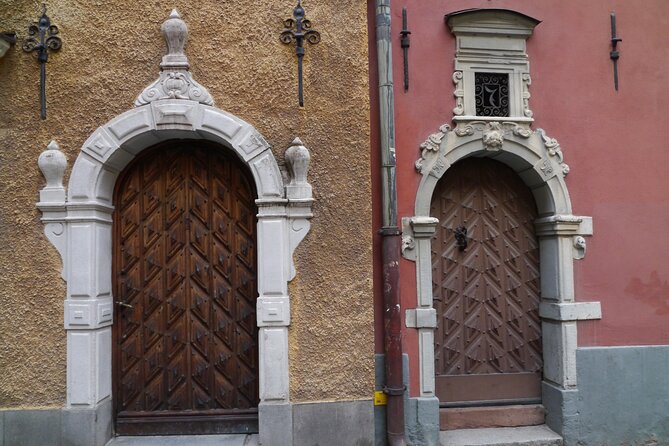
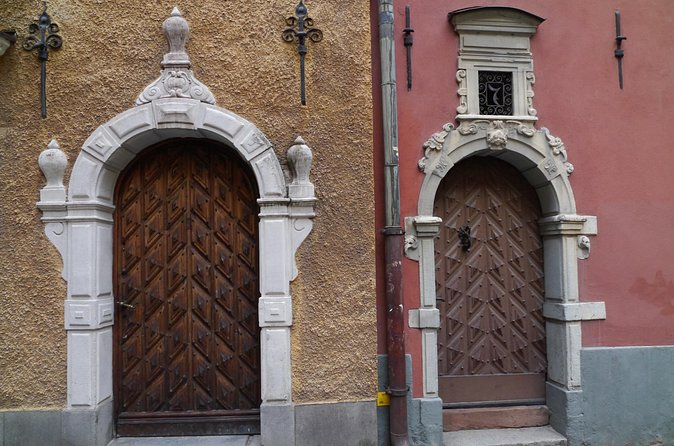
At a doorway in the Old Town, the guide explains how iron was used as protection against supernatural beings, or vaesen. The material includes elves arriving with the mist, which were associated with souls that had not found rest. You also hear about the Swedish Tomte, a figure familiar to many people today through Christmas imagery but presented here in an older folklore setting.
The door itself becomes the lesson. The guide discusses ways people tried to protect a home and its occupants, including the importance of the threshold. Newborn babies were considered especially exposed before baptism, when they lacked the protection provided by Christian ritual. Trolls and the Devil were part of the danger imagined around this vulnerable stage of life.
This stop is valuable because it shows how folklore was practical for the people who believed in it. These were not only stories told for entertainment. They explained illness, bad luck, strange sounds, dangerous weather, and the uncertain period before a child joined the religious community.
You may also appreciate the contrast between Swedish folklore and the familiar modern image of the Tomte. The tour treats these beings as part of a larger system of household protection and supernatural risk. It is a good example of how a seasonal character can have an older, stranger background.
Water spirits at Logårdstrappan
At Logårdstrappan, the subject shifts from houses and thresholds to water. The guide introduces several Swedish water beings, including Näcken, the bäckahästen, the Sjörå, and the skepps-rå.
Näcken is associated with dangerous water and a lure that could draw people to their death. The bäckahästen is presented as the Swedish version of the Kelpie, a creature that could tempt people onto its back before carrying them into the depths. The Sjörå and skepps-rå connect the folklore to the sea and ships.
This is one of the more distinctive sections of the walk. Many European cities have ghost stories, but Swedish folklore has its own cast of beings tied to forests, lakes, rivers, boats, and mist. You get a clearer picture of how water shaped fear in a country where travel and daily life were closely linked to the sea and inland waterways.
The stop is outdoors, so weather can affect the experience. One person still enjoyed the tour in less-than-ideal weather, but you should dress for a walking tour rather than an indoor museum visit. The walk is not presented as physically demanding, but wet streets and cold air can make a folklore tour less comfortable.
A different sort of day, still within reach:
- Stockholm: Hop-On Hop-Off Bus or Boat Option
★ 4.0 · 3,260 reviews - Stockholm: Archipelago Boat Tour
★ 4.4 · 3,110 reviews - Stockholm: Paradox Museum Entry Ticket
★ 4.2 · 3,031 reviews - Stockholm: Highlights Boat Tour
★ 4.2 · 2,845 reviews
Kungsträdgården and the forest creatures
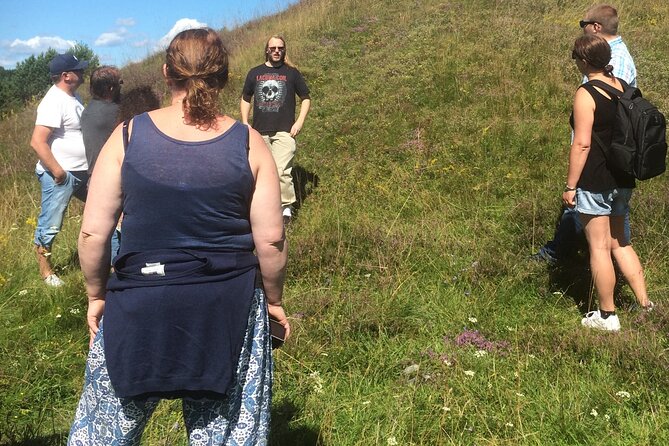
The route then reaches Kungsträdgården, where the focus broadens to other vaesen. The Skogsrået, also called the Huldra, is among the figures discussed. This dangerous forest spirit belongs to a different kind of folklore from the water beings. Instead of pulling people beneath the surface, the Skogsrået is connected with the forest and its ability to confuse, attract, or threaten those who enter.
The guide also introduces the Myrling, an undead child. This is one of the darker stories on the route because it reflects fear around death, abandoned children, and restless spirits. The material may be too grim for very young children, even though a 10-year-old was reported to have found the experience exciting, interesting, and educational.
Kungsträdgården offers a useful change of mood and space after the tight lanes of Gamla Stan. You can listen in a more open city setting while still hearing about supernatural figures from the countryside and older Swedish belief. I like this part because it reminds you that dark folklore is not limited to castles and crime scenes. Forests, farms, water, childbirth, and ordinary household life all supplied material for frightening stories.
One point to keep in mind is that the amount of folklore can vary. Jonathan acknowledged that one version of the tour focused more on general Stockholm history and less on dangerous beings than intended. If you book specifically for Swedish monsters and spirits, ask the guide questions and let them know that this is your main interest.
Saint Jacob’s Church and the weak points of a church
The final stop is outside Saint Jacob’s Church on Västra Trädgårdsgatan. The talk examines the church door and the weak points where supernatural danger might enter. The guide also discusses an exorcism involving a child at baptism and ways people might punish a worst enemy through folk belief.
This closing section ties together several themes from earlier in the walk: protection, baptism, doors, evil forces, and the uneasy border between Christian practice and older beliefs. The church is not simply a backdrop. It helps explain how religious spaces were viewed as places of safety, but also as buildings with vulnerable points.
The tour ends outside the church, on the north side of the Old Town near Kungsträdgården. From there, you are about a 10-minute walk back to the starting point. This ending is practical if you plan to continue toward central Stockholm, but less convenient if you left belongings near Stortorget and need to return immediately.
How the storytelling affects the experience
The strongest part of Bloody Stockholm is the guide. The tour depends on spoken storytelling, so personality and preparation matter more here than on a standard sightseeing route.
Jonathan is praised for facts, humor, and detailed knowledge of Stockholm’s darker past. Åsa is described as highly engaged and effective with a very small group. The comments about both guides suggest a style that welcomes questions rather than delivering a stiff speech.
That flexibility can work in your favor. You may get extra history about Gamla Stan, explanations of Swedish terms, or a longer discussion of a story that catches your attention. It can also make the timing less predictable. One session lasted more than two and a half hours, far beyond the stated approximate 90 minutes.
The tour has a high rating of 4.8 from 14 reviews, and 100 percent of respondents recommend it. Those figures suggest a strong experience, but the sample is small. I would treat them as encouraging rather than a promise that every tour will feel identical.
Is it really a ghost tour?
The answer depends on what you expect from the word ghost. The tour includes restless souls, undead figures, spirits, curses, and supernatural creatures. It does not appear to rely on actors, jump scares, props, haunted-house effects, or theatrical performances.
One useful way to think about it is as a dark history and folklore walk. The guide explains why people feared certain places and beings, while also covering executions, murder, plots, and other unpleasant parts of Stockholm’s past.
That balance is a strength if you want context. You learn about the city as well as its stories. It may disappoint you if you want two hours of pure ghost anecdotes with a frightening performance style.
Group size, walking conditions, and practical value
The maximum group size is 30 people. That is large enough to affect how easily you hear the guide in a narrow street, especially if the group gathers around a doorway or church exterior. On the other hand, one booking had only three participants, creating a much more personal experience.
The tour uses public streets and outdoor stops. There are no admission tickets to budget for, and the guide is included. Since no price is provided here, I cannot judge the exact cost. The value is strongest if you want a live guide, local folklore, and historical context rather than a self-guided audio walk.
The route begins at the Nobel Prize Museum and ends at Saint Jacob’s Church. Both points are near public transportation. A mobile ticket makes it easy to keep the booking on your phone, and service animals are allowed. The activity states that most people can participate.
Allow extra time around the scheduled duration. The published information gives approximately 1 hour 30 minutes, while the title uses 2h and one session ran much longer. That variation may come from questions, group size, or the guide’s storytelling pace. Plan for flexibility.
Free cancellation is available if you cancel at least 24 hours before the local start time. Cancellations within 24 hours are not refunded, and late changes are not accepted. Confirmation normally arrives at booking, although bookings made within 18 hours of departure are confirmed as soon as possible, subject to availability.
Who will enjoy Bloody Stockholm?
I would choose this tour if you:
- Like history that includes crime, punishment, and uncomfortable subjects
- Want Swedish folklore rather than only famous Stockholm sights
- Enjoy walking through old streets while hearing stories tied to specific places
- Prefer a guide who can answer questions and add local context
- Are comfortable with stories about death, murder, curses, exorcism, and undead children
I would hesitate if you want a polished theatrical ghost show. I would also think twice about bringing a very young child because some subjects are disturbing, even though a 10-year-old enjoyed the experience in one small group.
The tour works well early in a Stockholm visit because it gives Gamla Stan another layer. Afterward, familiar streets may feel less decorative and more human. A doorway can suggest a protective charm, a waterfront can recall a dangerous spirit, and a church entrance can bring up old fears about what might cross the threshold.
Should you book this Stockholm dark folklore walk?
Book it if you want a smart, story-led walk through Stockholm’s unsettling past. The strongest reasons are the specific locations, the Swedish folklore, and the guides’ ability to mix serious history with humor.
Skip it if you want constant scares or a tightly timed 90-minute program. The experience can become longer than advertised, and the balance may lean toward general history on some departures. For the right audience, though, the walk offers unusual value: no extra admission fees, a route through central Stockholm, and stories you are unlikely to encounter on a standard city tour.
FAQ
How long does Bloody Stockholm last?
The experience is described as approximately 1 hour 30 minutes, while its title refers to 2 hours. One guide also reported conducting a tour that lasted more than two and a half hours, so you should allow extra time.
Where does the tour begin?
It begins at the Nobel Prize Museum, Stortorget 2, 103 16 Stockholm, Sweden.
Where does the tour end?
The tour ends outside Saint Jacob’s Church at Västra Trädgårdsgatan 2A, 111 53 Stockholm. This is just outside the Old Town near Kungsträdgården.
How far is the end from the starting point?
The end point is about a 10-minute walk back to the starting point.
Is the tour offered in English?
Yes. English is one of the available tour languages listed for this experience.
What is included?
A guide is included. Admission tickets are not needed for the listed stops.
What is the maximum group size?
The maximum group size is 30 people. Smaller groups are possible, including a reported group of three participants.
Can service animals join the tour?
Yes. Service animals are allowed.
What is the cancellation policy?
You can cancel at least 24 hours before the start time for a full refund. Cancellations or changes made within 24 hours are not accepted for a refund.
New around Stockholm
- World War II Stockholm Old Town Walking Tour and Army Museum★ 4.6 · 4 reviews
- 3 Hours Guided Shopping Tour in Stockholm Thrifting Stores★ 5.0 · 4 reviews
- Scandinavian Art, Architecture and Design Tour in Stockholm★ 4.5 · 11 reviews
- Private Tour: Swedish History Day Trip to World Heritage Candidate Markim-Orkesta from Stockholm★ 5.0 · 8 reviews
- Wolf and Wildlife Tracking in Sweden★ 5.0 · 9 reviews
- Drottningholm Palace Private Guided Tour★ 4.5 · 15 reviews
- Voyage of the Vikings: Guided Exploration Through Sweden’s Past★ 5.0 · 2 reviews
- Vaxholm Day Trip From Stockholm: Cruise, Fortress, Swedish Fika★ 5.0 · 2 reviews
2-Hour Experiences, compared.



Bloody Stockholm: ghosts, horror and dark folklore 2h
Read our review →
Stockholm Old Town 2h Private Walking Tour – Private local guide
Read our review →
Uppsala Must See 2h city walk – 2h tour of all big attractions!
Read our review →Browse the lists this tour appears in